An ankle sleeve is a short pull-on tube that squeezes the ankle joint only, from just above the ankle bone to the top of the foot. It is NOT compression socks, which cover the foot and run up the leg.
It is NOT an ankle brace, which holds the joint with stays, laces or pads.
It is NOT an ankle weight, which adds weight to the leg for training. It is NOT a calf sleeve, which squeezes the leg above the ankle. And it is NOT a foot or arch sleeve, which covers the arch of the foot with an open toe.
An ankle sleeve covers the ankle joint only, with no foot, no laces and no stays. The McDavid 195 lace-up ankle brace is the adjustable-strap neighbour — a brace, not a sleeve — and it is named here so you do not buy it by mistake.
This guide follows our previous guide, Best Thigh Sleeves for Home Gyms — a sleeve squeezes one limb alone, whether that limb is a thigh or an ankle. Many home-gym lifters and runners look at both before deciding which joint needs the squeeze.
The six picks below run from a classic McDavid knit sleeve to the only two stated mmHg levels in this guide, CEP and Tommie Copper. Each one states its own sizing honestly, including the lookalikes you should not buy past.
Every photo in this guide is an honest gym, race or field-sport scene, not a product shot. No photo shows the named sleeve itself, because free-license photos of these exact products were not available — the captions say what each photo actually shows, and nothing is presented as a product photo.
One safety note before the picks: this guide is general information only. A sleeve does not treat or cure ankle pain, sprains, swelling or any ankle condition, and it is not a substitute for medical advice.
If you have persistent pain, swelling, bruising, numbness, colour change, or a recent injury, talk to a clinician first — and never train through sharp pain to test a sleeve.
A sleeve that hurts, numbs, or leaves marks that do not fade quickly is the wrong size — take it off and reassess. And a sleeve that slides down every set is the wrong size too, whatever the size chart says.
⚡ Quick Picks
Six ankle sleeves at a glance — a classic McDavid knit sleeve, a graduated CEP sleeve, a targeted Zensah single, a gel Zensah Elite sleeve, a copper-infused Copper Compression sleeve and a light Tommie Copper sleeve.
If your sport needs hand protection rather than ankle compression, a glove does a different job — grip and padding for the hands, not squeeze for the ankle — and our MMA gloves guide covers that half of the kit.
Photo: U.S. Marine Corps, Wikimedia Commons — Runners surging off the start line of a 5K on a city street, an honest race scene, not a product shot.
- McDavid Sport Compression Knit Ankle Sleeve with Gel Buttress — Best Classic: a knit sleeve with gel buttresses on both sides of the ankle, the classic court-sport pick.
- CEP Mid Support Compression Ankle Sleeve — Best Graduated: a medical-grade 20–30 mmHg sleeve in six sizes, the only maker-stated graduated level here.
- Zensah Compression Ankle Support — Best Targeted: a seamless single sleeve with 3D Geo Tech ribbing aimed at the ankle.
- Zensah Elite Gel Compression Ankle Sleeve — Best Gel: a gel sleeve with inserts on both sides and a removable strap.
- Copper Compression Ankle Sleeve — Best Copper-Infused: a copper-infused sleeve that is fully latex free.
- Tommie Copper Ankle Compression Sleeve — Best Light Compression: a light 15–20 mmHg sleeve with a non-slip band.
1️⃣ McDavid Sport Compression Knit Ankle Sleeve with Gel Buttress — Best Classic
Photo: TigerNet.com, Wikimedia Commons — A Clemson player rising for a layup against Alabama, an honest game scene, not a product shot.
Specs: Knit compression sleeve; gel buttresses on both sides of the ankle; sold for court sports and running; pull-on fit with no laces or straps.
The McDavid is the classic pick: a knit sleeve whose gel buttresses sit on both sides of the ankle, where the joint rolls. The knit stretches with the ankle, and the buttresses give the sleeve its shape.
The honest limit is the sizing. Reviews say the sizing chart runs off — S/M fits very snug, and the sleeve can be hard to pull on and off. Measure the ankle and check the chart before ordering.
Pros:
- Gel buttresses on both sides of the ankle, where the joint rolls.
- Simple knit pull-on — no laces, straps or stays to adjust.
- A classic court-sport sleeve with a long track record.
Cons:
- Sizing runs off — S/M fits very snug, per buyer reviews.
- Can be hard to pull on and off when the fit is tight.
- No mmHg level published for this sleeve.
Who it’s for: court-sport players who want a classic knit sleeve with gel on both sides of the ankle, and who measure first because the chart runs snug.
⚠️ Confirm the gel-buttress sleeve, not the brace: McDavid also sells the 195 lace-up ankle brace, which tightens with laces and stays — a different product from this pull-on sleeve. Confirm the words “Compression Knit Ankle Sleeve with Gel Buttress” on the listing.
Separately, the snug fit is the main complaint in reviews, so a between-size ankle should check the chart rather than guessing down — a too-tight sleeve numbs, and a too-loose one slides.
👉 Check McDavid Sport Compression Knit Ankle Sleeve with Gel Buttress on Amazon
2️⃣ CEP Mid Support Compression Ankle Sleeve — Best Graduated
Photo: Richard Humphrey, Wikimedia Commons — Half-marathon runners on a city street in Cambridge, an honest race scene, not a product shot.
Specs: Medical-grade 20–30 mmHg graduated compression; 76% polyamide, 14% spandex, 10% polyester; six sizes, I–VI, by ankle circumference; pull-on fit.
The CEP is the graduated pick: the strongest stated mmHg level in this guide, 20–30 mmHg. The graduated squeeze is strongest at the ankle and eases upward, and six sizes leave smaller steps between them.
The honest limit is the measuring. Six sizes help only if you measure the ankle circumference the chart asks for — a shoe-size guess lands on the wrong size. Measure the ankle, not the shoe.
Pros:
- Maker-stated 20–30 mmHg — the strongest stated level in this guide.
- Six sizes, I–VI, by ankle circumference — smaller steps between sizes.
- Graduated squeeze, strongest at the ankle and easing upward.
Cons:
- Needs an ankle-circumference measure — a shoe-size guess will misfit.
- Firmer feel than the light picks here — not for buyers who want barely-there.
- CEP’s Max Support is a different, firmer model (see the flag below).
Who it’s for: runners who want a stated 20–30 mmHg level with a fine size run, and who measure the ankle circumference before ordering.
⚠️ Confirm the Mid Support, not the Max Support: CEP also sells a Max Support ankle sleeve, a firmer model with its own size chart — a different product from this Mid Support sleeve. Confirm the words “Mid Support” on the listing.
Separately, CEP’s calf sleeves carry the same 20–30 mmHg figure, but that is a different product — do not borrow the calf-sleeve size chart for this ankle sleeve.
👉 Check CEP Mid Support Compression Ankle Sleeve on Amazon
3️⃣ Zensah Compression Ankle Support — Best Targeted

Photo: Alexander Redl, Wikimedia Commons — A runner tying his shoe on a city street before a run, an honest training scene, not a product shot.
Specs: 75% nylon, 25% spandex; 3D Geo Tech ribbing aimed at the ankle; seamless knit; sold as a single sleeve; pull-on fit.
The Zensah is the targeted pick: a light single sleeve whose 3D Geo Tech ribbing is aimed at the ankle, not spread evenly across the foot. The seamless knit means nothing chafes over a long session, and the single format suits one sore ankle.
The honest limit is the pressure. Zensah publishes no mmHg level for this sleeve, so judge it on fit and targeted feel, not on a number it does not carry. Confirm the single before ordering.
Pros:
- 3D Geo Tech ribbing aimed at the ankle — targeted, not even.
- Seamless knit with a full range of motion.
- Single-sleeve format — buy one when only one ankle needs it.
Cons:
- No mmHg level published for this sleeve.
- Sold singly — two ankles need two orders.
- Zensah’s thigh and calf sleeves share the brand name (see the flag below).
Who it’s for: runners who want a light, targeted single sleeve and who check the unit count before ordering.
⚠️ Confirm the ankle support, not the thigh or calf sleeve: Zensah sells compression sleeves for the thigh and calf under the same brand name, and our thigh sleeves guide’s Zensah pick is one of them. Confirm the words “Compression Ankle Support” on the listing.
Separately, the blend is 75% nylon and 25% spandex on the listing — the same blend as Zensah’s thigh sleeve, which is a different product, so confirm the word “Ankle”, not just the blend.
👉 Check Zensah Compression Ankle Support on Amazon
4️⃣ Zensah Elite Gel Compression Ankle Sleeve — Best Gel
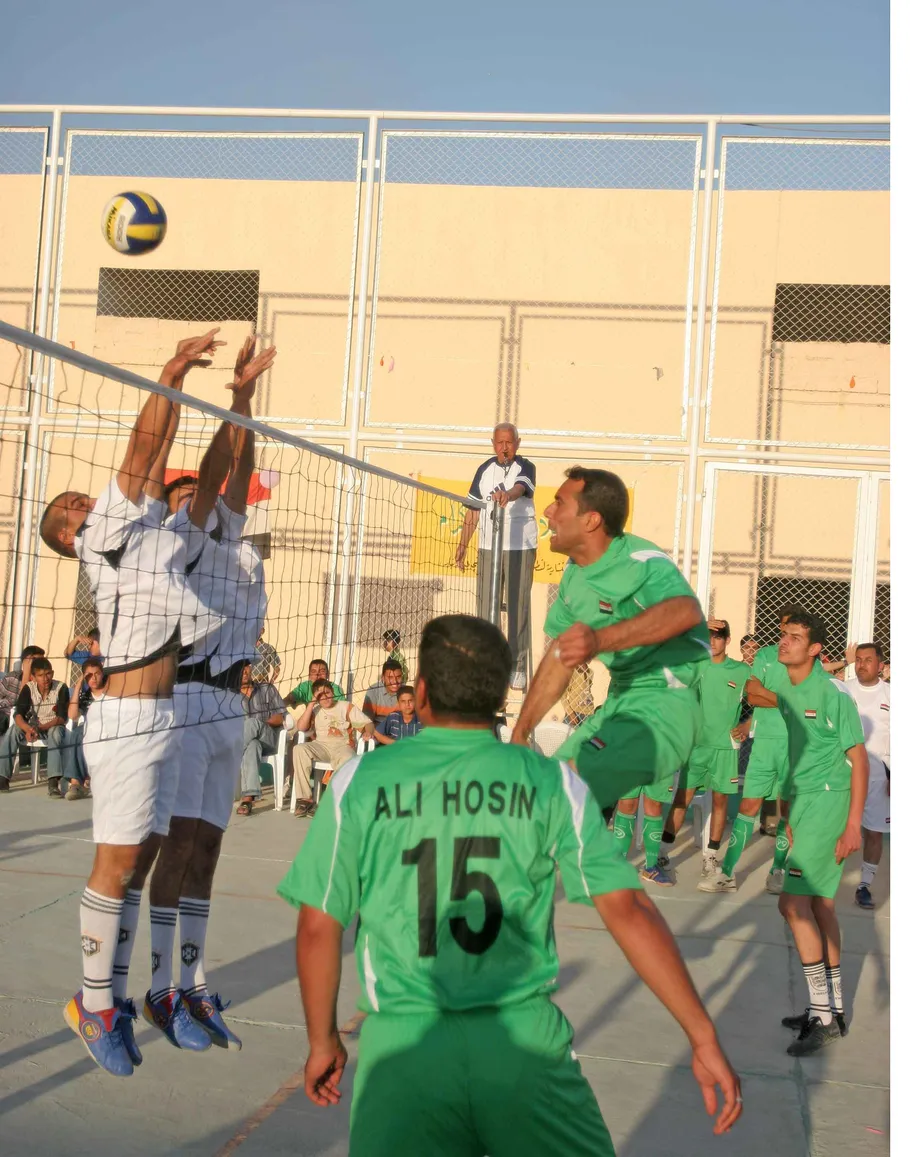
Photo: Sgt. Sean McGinty, Wikimedia Commons — Two volleyball players jumping to block at the net, an honest game scene, not a product shot.
Specs: Gel inserts on both sides of the ankle; removable strap; 60% nylon, 36% spandex, 4% polyester; pull-on fit with the strap as a second step.
The Zensah Elite is the gel pick: a sleeve whose gel inserts sit on both sides of the ankle, like the McDavid buttresses, with a removable strap for extra hold. The strap comes off when you do not want it, so the sleeve works two ways.
The honest limit is the stock. The sleeve was out of stock at Road Runner Sports when last checked, so confirm a current offer before ordering — and check the size chart, since the strap does not fix a wrong size.
Pros:
- Gel inserts on both sides of the ankle.
- Removable strap — extra hold when you want it, plain sleeve when you do not.
- A gel sleeve with a published blend, 60/36/4.
Cons:
- Out of stock at Road Runner Sports when last checked.
- No mmHg level published for this sleeve.
- The strap adds a step — it is not a pure pull-on like the others here.
Who it’s for: buyers who want gel on both sides of the ankle plus a strap they can remove, and who confirm stock before ordering.
⚠️ Confirm the Elite Gel, not the plain Zensah ankle support: Zensah also sells the plain Compression Ankle Support — the pick above — which has ribbing but no gel inserts and no strap. Confirm the words “Elite Gel” on the listing.
Separately, the gel inserts are a cushioning feature, not a brace — they do not hold the joint rigid, so do not buy this sleeve when a stayed brace is what you need.
👉 Check Zensah Elite Gel Compression Ankle Sleeve on Amazon
5️⃣ Copper Compression Ankle Sleeve — Best Copper-Infused

Photo: Johann Conus, Wikimedia Commons — Trail runner Dani Moreno running uphill at Sierre-Zinal 2022, an honest race scene, not a product shot.
Specs: 88% copper nylon, 12% spandex; 100% latex free; copper-infused fabric; pull-on fit.
The Copper Compression is the copper pick: a sleeve whose copper-infused nylon is the fabric feature, with spandex for stretch. The latex-free build suits buyers who react to latex, and the pull-on fit keeps it simple.
The honest limit is the copper itself. Copper adds no support beyond compression, so judge this sleeve on fit, not on the metal. And the brand name is shared — confirm it before ordering.
Pros:
- 100% latex free — the only latex-free pick in this guide.
- Copper-infused nylon blend with spandex for stretch.
- Simple pull-on fit — no straps, laces or stays.
Cons:
- No mmHg level published for this sleeve.
- Copper adds no support beyond compression.
- A similar-named sleeve shares the same 88/12 blend (see the flag below).
Who it’s for: buyers who want a latex-free copper-infused ankle sleeve and who judge it on fit, not on the copper claim.
⚠️ Confirm the brand, not just the blend: CopperJoint sells a sleeve with the same 88% copper nylon and 12% spandex blend under a similar name — a different product from this one. Confirm the words “Copper Compression” on the listing.
Separately, copper is a fabric feature, not proof of stronger healing — no pick in this guide claims a sleeve heals a sprain, and neither should the listing you order from.
👉 Check Copper Compression Ankle Sleeve on Amazon
6️⃣ Tommie Copper Ankle Compression Sleeve — Best Light Compression
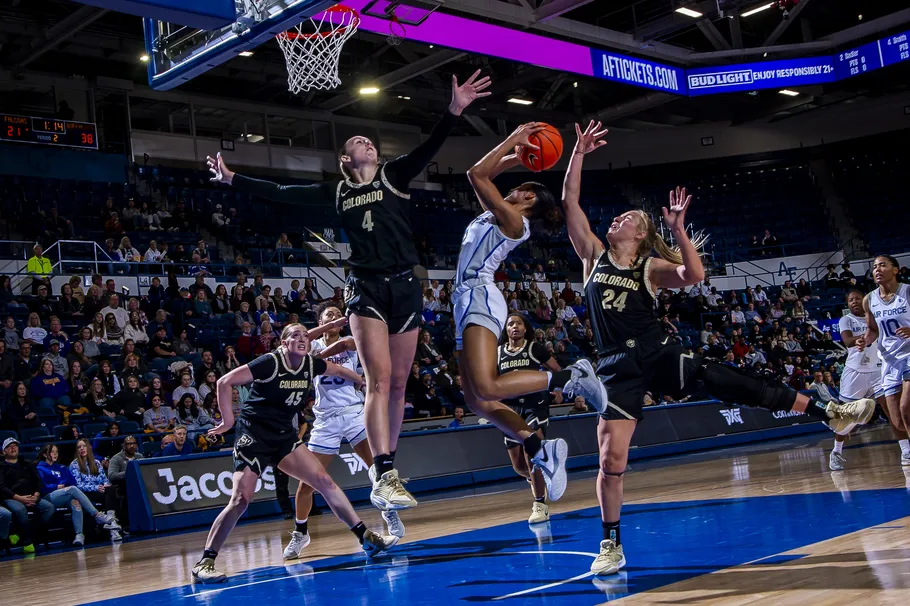
Photo: Justin R. Pacheco, Wikimedia Commons — Players jumping for a rebound in a women’s college basketball game, an honest game scene, not a product shot.
Specs: 15–20 mmHg light compression; 86% nylon, 14% spandex; Copper Znergy fabric; non-slip band at the top; sizes listed to L/XL — check the chart.
The Tommie Copper is the light pick: the only sleeve here besides CEP with a stated mmHg level, at 15–20 mmHg. The Copper Znergy fabric and the non-slip band are the features, and the light squeeze suits all-day wear.
The honest limit is the fabric. Reviews call the material thin, and some buyers say it gives little compression — so expect a light sleeve, not a firm one. Check the size chart before ordering.
Pros:
- Stated 15–20 mmHg — the light level in this guide.
- Non-slip band at the top resists sliding.
- Copper Znergy fabric with a published 86/14 blend.
Cons:
- Thin material, per buyer reviews — some report little compression.
- Lightest squeeze here — not for buyers who want a firm hold.
- Tommie Copper’s elbow sleeve shares the brand name (see the flag below).
Who it’s for: buyers who want a light, stated-level sleeve for all-day wear, and who expect a gentle squeeze, not a firm one.
⚠️ Confirm the ankle sleeve, not the elbow sleeve: Tommie Copper also sells an elbow compression sleeve under the same brand name — a different product for a different joint. Confirm the words “Ankle Compression Sleeve” on the listing.
Separately, the thin-material reports are the main complaint, so a buyer who wants a firm hold should look at the CEP pick instead — this sleeve is light by design.
👉 Check Tommie Copper Ankle Compression Sleeve on Amazon
📊 Comparison Table
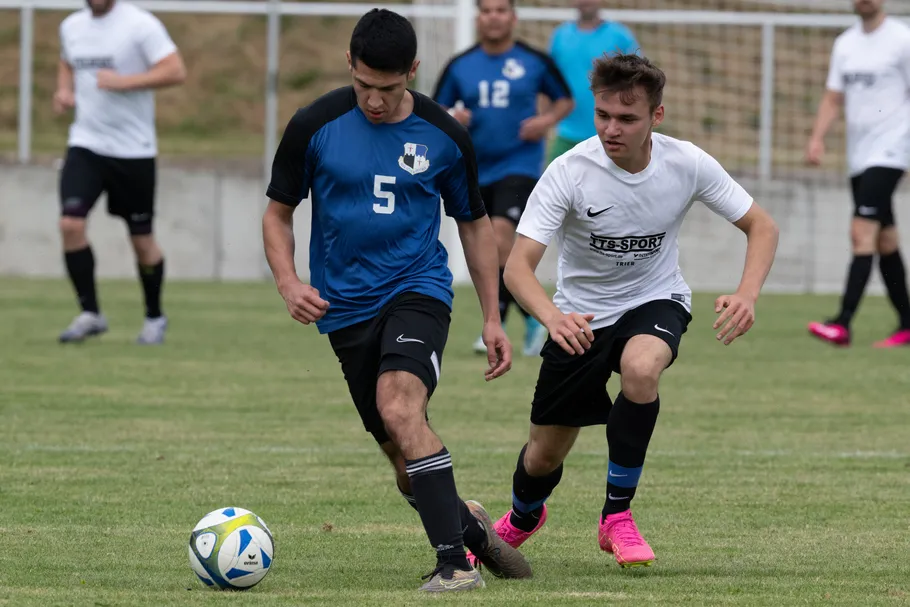
Photo: Staff Sgt. Max Daigle, Wikimedia Commons — Two soccer players contesting the ball on grass, an honest game scene, not a product shot.
| Pick | Type | Fit | Standout | Watch out |
| McDavid Sport Compression Knit Ankle Sleeve with Gel Buttress | Knit, gel buttress | S/M runs very snug | Gel both sides | Sizing confusion |
| CEP Mid Support Compression Ankle Sleeve | 20–30 mmHg, polyamide blend | Six sizes I–VI, ankle circumference | Only maker-stated graduated level | Measure the ankle, not the shoe |
| Zensah Compression Ankle Support | Seamless knit, 3D Geo Tech | Single — check the chart | Targeted ribbing | No mmHg published |
| Zensah Elite Gel Compression Ankle Sleeve | Gel inserts, removable strap | Check the chart + stock | Gel both sides, strap off | Stock check |
| Copper Compression Ankle Sleeve | Copper-infused nylon | Check the listing’s chart | Latex free | Similar-named blend lookalike |
| Tommie Copper Ankle Compression Sleeve | 15–20 mmHg, Copper Znergy | Sizes listed to L/XL | Light level, non-slip band | Thin material reports |
Table honesty note: the Fit column mixes different measures on purpose, because that is how the makers publish them — CEP sizes by ankle circumference in six sizes, McDavid’s S/M runs snug, and the rest ask you to check the listing’s own chart.
Do not compare the numbers directly across rows, and do not crown any pick the firmest in this guide: only CEP and Tommie Copper publish an mmHg level for their sleeves, so there is no firmness ranking across all six.
Judge the other four by fit and feel, not by a number they do not carry.
And do not borrow levels across products: the 20–30 mmHg quoted for the KEMFORD open-toe sleeve belongs to a sock-style sleeve with an open toe, which is not picked here — and CEP’s 20–30 mmHg belongs to this ankle sleeve, not to CEP’s calf sleeve.
Measure the ankle the chart asks for, then check the listing you order from.
🧭 How to Choose the Right Ankle Sleeve
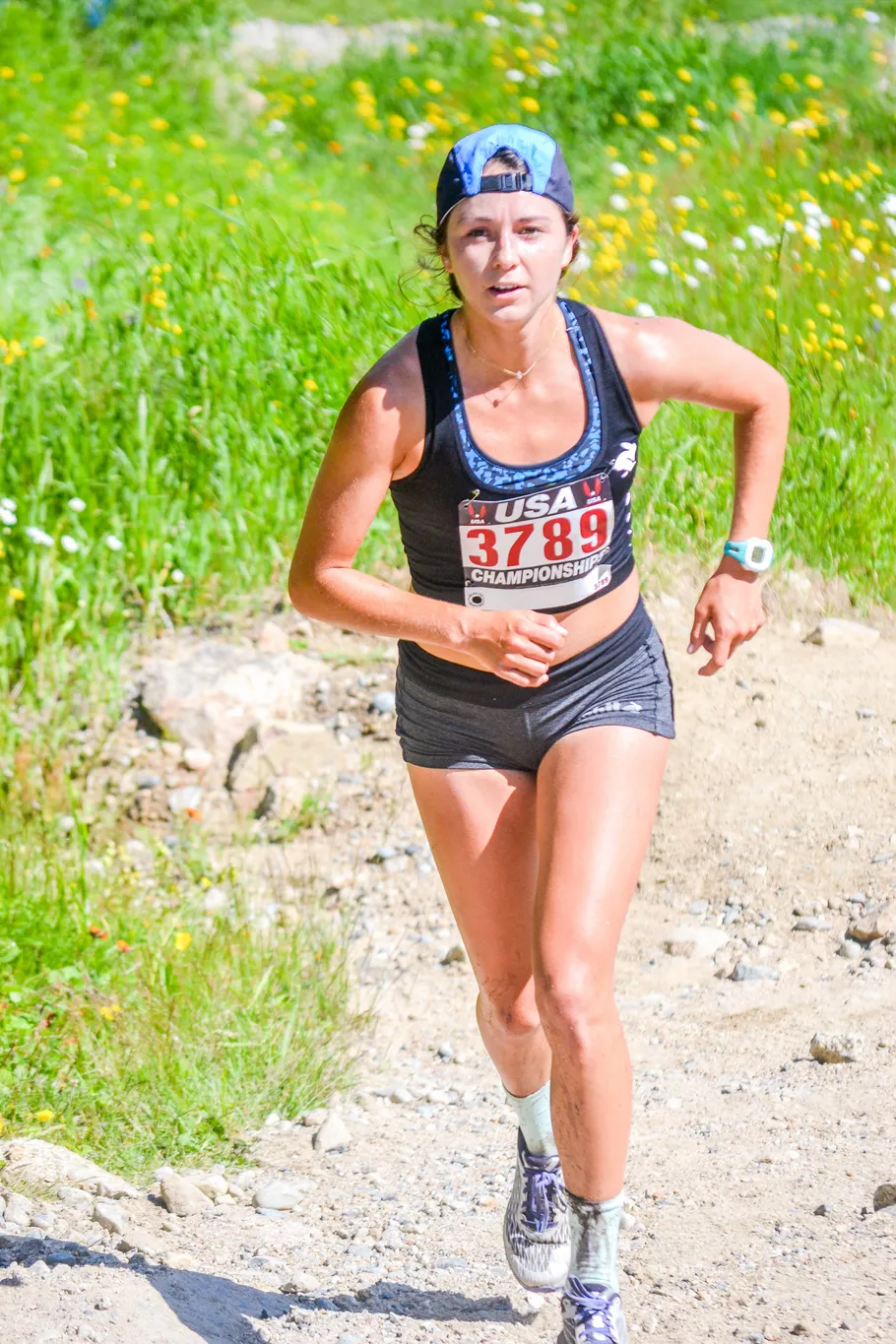
Photo: Gianina Lindsey, Wikimedia Commons — A trail runner on a rocky uphill trail at the 2016 Loon Mountain Race, an honest race scene, not a product shot.
Start with the type. A pull-on sleeve (all six picks here) slides on and squeezes the ankle evenly. A brace (McDavid 195, lace-up with stays) tightens with laces instead.
A brace suits buyers who want to adjust the tightness per session or hold the joint rigid. A sleeve suits buyers who want the same squeeze every time, with nothing to lace or adjust.
None of these is a compression sock, an ankle brace, an ankle weight, a calf sleeve or a foot sleeve.
If it covers the foot and leg, laces up with stays, adds weight, squeezes above the ankle, or covers the arch with an open toe, it is not an ankle sleeve, whatever the listing title says.
Then measure properly. Ankle sleeves are sized by different points, and the picks in this guide split two ways. CEP needs the ankle circumference, in six sizes from I to VI; most others size by shoe size or by S–XL letters.
Measure the point the chart asks for, not the one you guessed, then match it against the listing’s own chart.
For McDavid, the between-size rule is to check the chart first, since S/M runs very snug and guessing down numbs the foot. For CEP, the between-size rule is to trust the tape — six sizes leave smaller steps, so the tape usually lands on one.
Think about length, pack count and fabric. All six picks here are short ankle tubes, so length is not the split — pack count is. Zensah sells singly, so two ankles need two orders; confirm the pack count on every listing before ordering.
Fabric matters for feel: the knit sleeves breathe better, while the gel sleeves add cushioning on both sides of the ankle. Copper Compression is the only pick here that states latex free, so check the allergy note on the others before ordering.
Copper adds no support beyond compression, and no pick here publishes a treatment result — judge the fabric on feel, not on the label.
A sleeve that slides down, rolls at the top or cuts in at the ankle is usually the wrong size, not broken — re-measure before re-ordering.
An ankle sleeve also pairs with joint support, not instead of it — our ankle braces guide covers the stayed support for the ankle itself, and our calf sleeves guide covers the squeeze above the ankle, so the leg is covered in two pieces.
Finally, kit out the rest of the session honestly. A sleeve squeezes one ankle; it does not cover the waist and both legs, where compression shorts do a different job — shorts cover the waist down to mid-thigh, not one ankle.
And the lifting that keeps ankles useful — squats, lunges, presses and carries — still needs the basics, which is why our adjustable dumbbells guide sits alongside this one in a home gym.
❓ Frequently Asked Questions
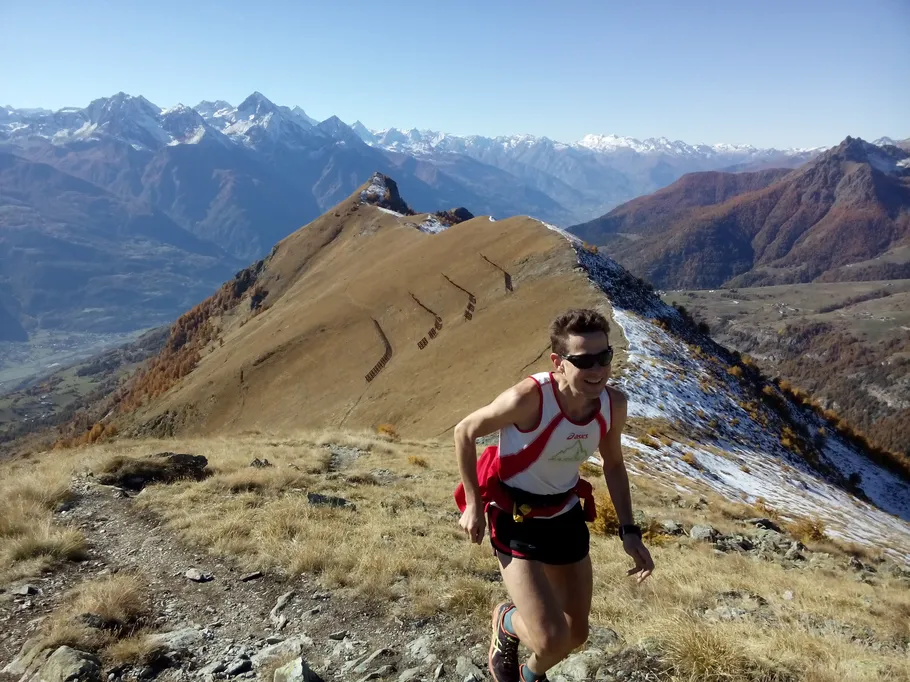
Photo: Rollopack, Wikimedia Commons — A trail runner on a mountain ridge with snowy peaks behind him, an honest race scene, not a product shot.
Will an ankle sleeve fix my ankle pain or sprain?
No. An ankle sleeve squeezes the ankle while you move; it does not treat or cure pain, sprains, swelling, or any ankle condition, and no pick in this guide claims otherwise.
Persistent pain, swelling, bruising, numbness, colour change, or a recent injury belongs with a clinician first — a sleeve is not a diagnosis, and training through sharp pain to test one is a bad idea.
What is the difference between an ankle sleeve, a compression sock, an ankle brace, an ankle weight, a calf sleeve and a foot sleeve?
An ankle sleeve is a short pull-on tube covering the ankle joint only. Compression socks cover the foot and run up the leg, and a calf sleeve squeezes above the ankle.
An ankle brace holds the joint with stays, laces or pads, an ankle weight adds weight for training, and a foot sleeve covers the arch with an open toe.
They cover different things — buying a brace when only a squeeze is needed, or a sock when only the ankle needs it, is the most common mistake in this category.
How do I measure for an ankle sleeve?
Measure the point the chart asks for, then match it against the listing’s own chart. Charts differ by maker — CEP sizes by ankle circumference in six sizes, most others by shoe size or S–XL letters.
So the listing you order from is the authority, not any single measure. And a snug chart is a warning, not a challenge — McDavid’s S/M runs very snug, so measure twice before guessing down.
Do ankle sleeves have an mmHg level?
Only two of the six picks in this guide publish one — CEP states 20–30 mmHg and Tommie Copper states 15–20 mmHg. The other four publish no level at all.
So you cannot rank the six by firmness on paper — judge them by fit and feel, and do not trust a listing that invents a level for a pick that publishes none.
And do not borrow levels across products: the 20–30 mmHg quoted for the KEMFORD open-toe sleeve belongs to a sock-style sleeve that is not picked here.
Should I buy a single sleeve or a pair?
It depends on the pick. Zensah sells singly, so two ankles need two orders — and the other picks vary by listing, so the pack count is not safe to guess from the brand name.
Check the unit count on the listing you order from, not the brand name, and count ankles before you count the price.
What should I do if my sleeve slides down or cuts in at the ankle?
Re-measure first — a sleeve that slides down is usually too big or the wrong measuring point, and one that cuts in is usually too small — and confirm the size against the listing’s chart, since a shoe-size guess can misfit a wide ankle.
Check the grip band is sitting flat and the fabric is not worn out at the top; and pair support work with gentle mobility, since our foam rollers guide covers the recovery side of a home-gym routine.
Thanks for reading — we hope this guide helps you pick an ankle sleeve that fits properly and does the job you actually need. If a size chart disagrees with what you measured, trust the tape, not the listing headline.
Disclosure: As an Amazon Associate, we earn from qualifying purchases made through links in this article, at no extra cost to you. Product details and availability can change, so please check the listing before ordering.