A compression sock is a knee-high sock with graduated compression that covers the foot AND the leg, squeezing hardest at the ankle and easing up the calf. It is NOT a calf sleeve, which is footless and covers the calf only. It is NOT a regular workout sock, which has no stated mmHg level and no graduated squeeze — the everyday training socks our tikkaykhan.com workout-socks guide covers are a different category. It is NOT an ankle brace, which steadies the ankle joint with stays or straps. And it is NOT a shin guard, which is hard protection against impact. A compression sock covers foot and leg together, holds nothing rigid, and states its squeeze in mmHg — everything else on that list covers something else or works differently.
This guide follows our previous guide, Best Calf Sleeves for Home Gyms — a sleeve covers the calf only and leaves the foot free, while a sock covers the foot too, so many home-gym runners and lifters look at both before deciding which end of the leg needs the squeeze. The six picks below run from a classic 20–30 mmHg knit to a light 15–20 mmHg runner, and each one states its own sizing honestly, including the chart conflicts you should not buy past.
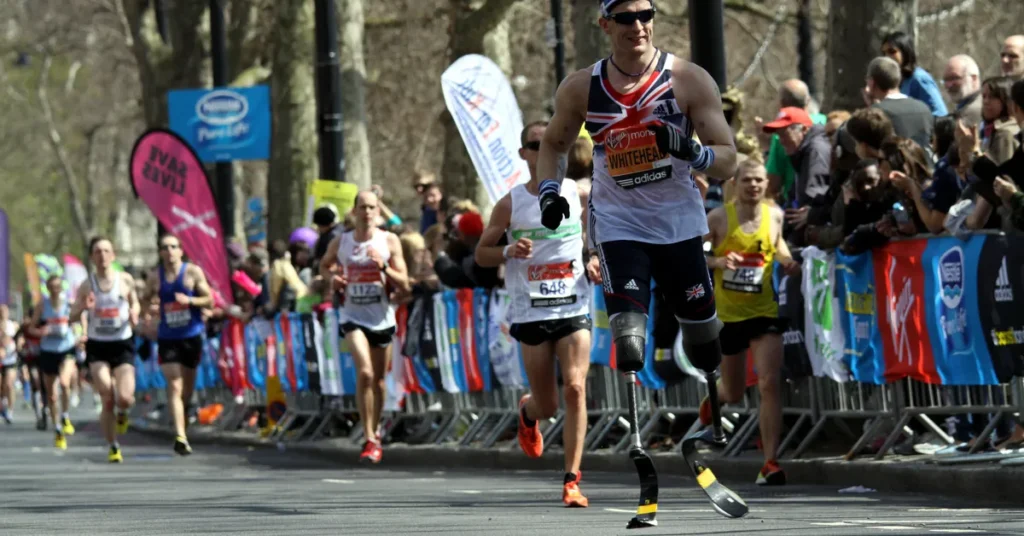
Every photo in this guide is an honest gym or sport scene, not a product shot. No photo shows the named sock itself, because free-license photos of these exact products were not available — the captions say what each photo actually shows, and nothing is presented as a product photo.
One safety note before the picks: this guide is general information only. A sock does not treat or cure leg pain, and it is not a substitute for medical advice. If you have persistent leg pain, swelling, numbness, colour change, or a recent injury, talk to a clinician first — and never train through sharp pain to test a sock. Firm 20–30 mmHg compression feels strong if you have never worn it, and if you have a circulation condition, ask a clinician before choosing a firm level. A sock that hurts, numbs, or leaves marks that do not fade quickly is the wrong size or the wrong level — take it off and reassess.
⚡ Quick Picks
Six compression socks at a glance — a classic graduated knit, an everyday knit, a value knit, a light-cushion runner, a light-cushion knee-high and a soft cotton blend. If your sessions also include sparring, our MMA gloves guide covers the hand side of that kit.
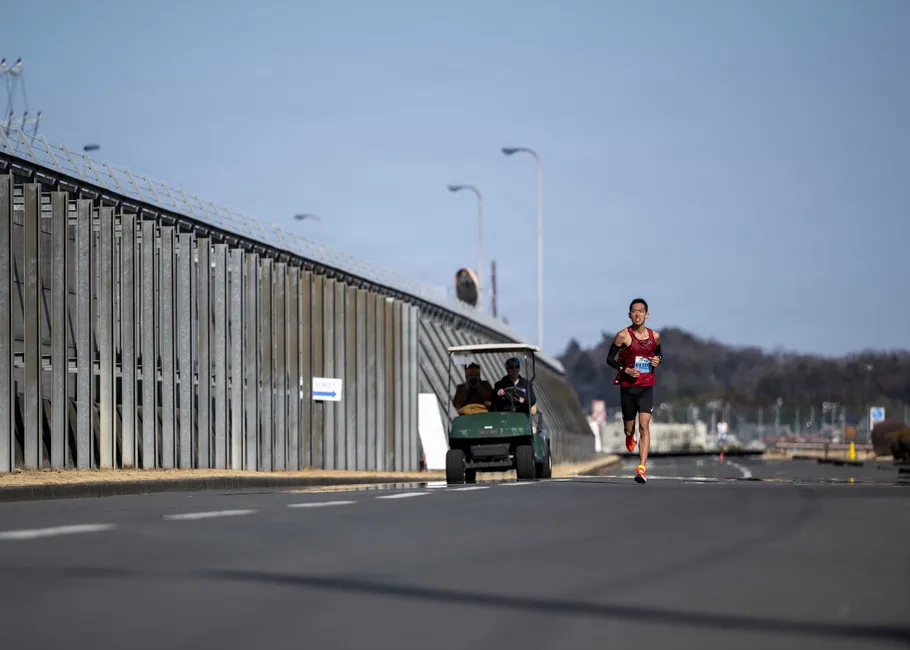
Photo: Senior Airman Samantha White, Wikimedia Commons — A runner mid-race at the 45th Annual Frostbite Road Race at Yokota Air Base, Japan, an honest race scene, not a product shot.
- CEP The Run Compression Tall Socks — Best Classic: the straightforward graduated knit with a stated 20–30 mmHg level and left/right-specific fit.
- Physix Gear Sport Compression Socks — Best Everyday: a simple 20–30 mmHg knit with a seamless toe and shoe-plus-calf sizing.
- SB SOX Compression Socks — Best Value: a plain 20–30 mmHg knit with wide calf bands and OEKO-TEX fabric.
- 2XU Vectr Cushion Full Length Compression Socks — Best Running: a light-cushion runner with X-LOCK arch support and a two-zone mmHg split.
- Feetures Graduated Compression Light Cushion Knee High — Best Light Cushion: a light 15–20 mmHg knee-high with light cushioning, sized by shoe.
- Bombas Performance Compression Socks — Best Softest: a soft cotton-blend 20–30 mmHg sock, sized by shoe only.
1️⃣ CEP The Run Compression Tall Socks — Best Classic
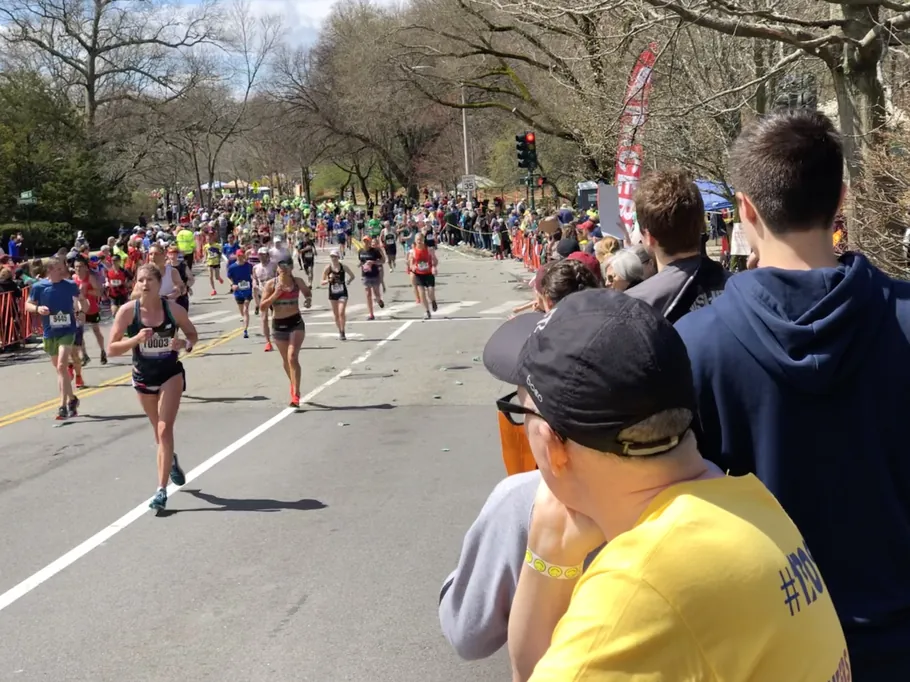
Photo: ArnoldReinhold, Wikimedia Commons — Marathon runners on the course at the 2019 Boston Marathon, with spectators watching from the roadside, an honest race scene, not a product shot.
Specs: Graduated compression, 20–30 mmHg, tighter at the ankle and easing up the calf; sizes II–V by calf circumference — II 9.5–12 inches, III 12.5–15 inches, IV 15.5–17.5 inches, V 18–20 inches; left/right specific; sold as a pair.
The CEP is the classic of this guide: a graduated knit that states its compression level plainly, which not every sock in this guide does. The pressure starts strongest at the ankle and decreases up the calf, and the 20–30 mmHg figure puts it in the firm band — the strongest level CEP sells without a prescription. That stated number is the reason to start here: you know what level you are buying, not just that it feels tight.
The sizing is the part to check, because the range on offer depends on where you look. The maker’s chart runs II to V by calf, and the guidance is to size down when you fall between sizes — the opposite of the size-up advice some other brands give for their socks. Generations also tangle the search: 3.0, 4.0 and 5.0 versions exist, with the 5.0 listed at 84% nylon and 16% elastane, so confirm the generation, the calf band and the left/right fit on the listing you order from.
Pros:
- Stated 20–30 mmHg graduated compression — a real number, not a feel.
- Left/right-specific fit, shaped for each foot.
- Calf-based sizing in four bands, II to V.
Cons:
- Generation tangle — 3.0, 4.0 and 5.0 versions all appear in search (see the flag below).
- Between-size advice conflicts with other brands.
- Firm 20–30 mmHg can feel strong for a first-time wearer.
Who it’s for: buyers who want a stated firm compression level and a classic graduated knit, and who measure their calf before ordering.
⚠️ Confirm the generation, and the between-size rule: CEP has sold The Run Compression Tall Socks in 3.0, 4.0 and 5.0 generations, so two listings with the same name can be different socks — check the generation, the fabric blend and the calf band on the listing you order from. Separately, CEP’s guidance is to size down when you fall between sizes, while some other brands advise sizing up — if your calf sits on a boundary, follow CEP’s rule for this pick, and check the fit on arrival rather than assuming either rule fits every brand.
👉 Check CEP The Run Compression Tall Socks on Amazon
2️⃣ Physix Gear Sport Compression Socks — Best Everyday
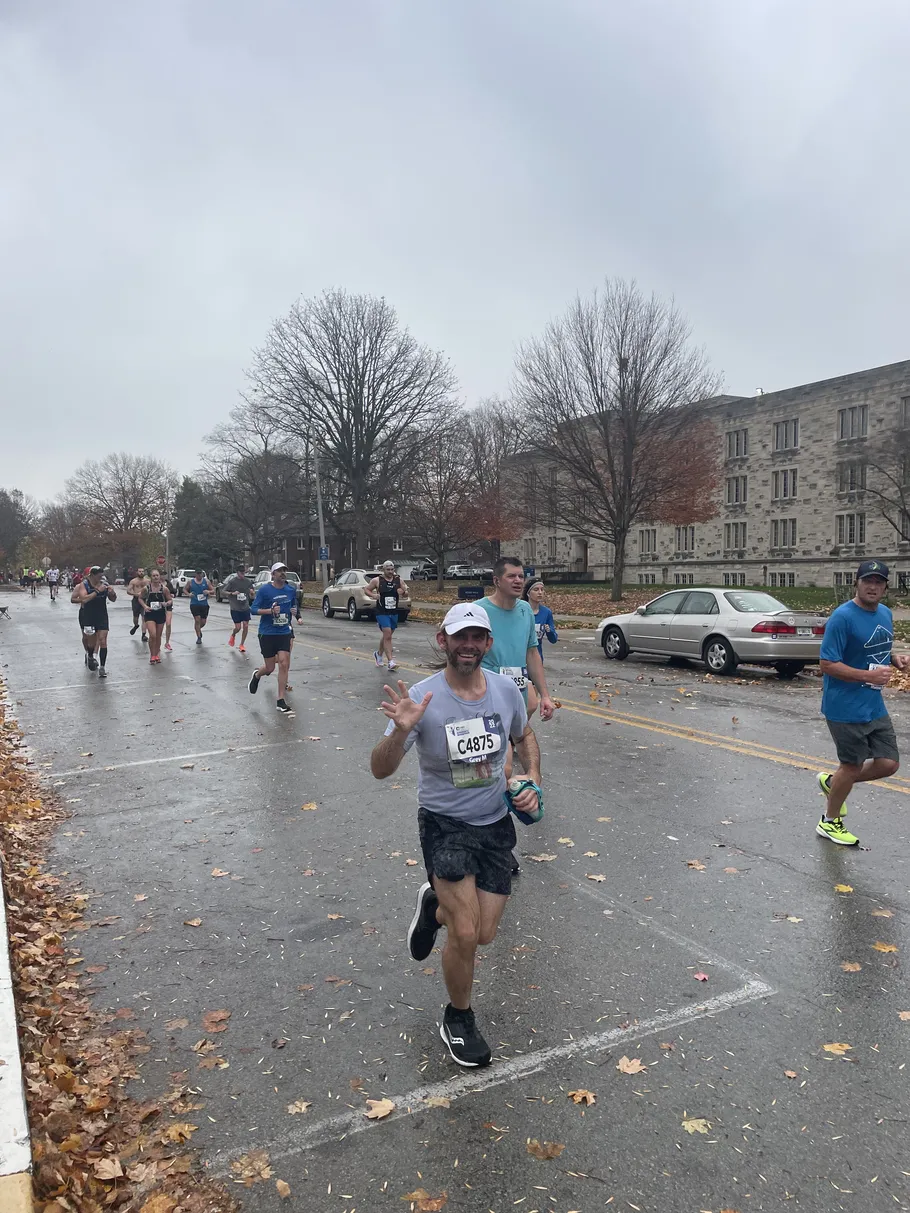
Photo: Jaireeodell, Wikimedia Commons — Runners in the wet 2022 Monumental Marathon, an honest race scene, not a product shot.
Specs: Graduated compression, 20–30 mmHg; nylon and spandex knit with a seamless toe; sizes S/M, L/XL and XXL by shoe size and calf — S/M women’s shoe 5.5–8.5 and calf 9–15 inches, L/XL women’s shoe 8–12.5 and calf 14–19 inches, men’s S/M shoe 5–9 and L/XL shoe 8–14; sold as a pair.
The Physix Gear Sport is the everyday pick: a straightforward 20–30 mmHg knit that does the basic job — even graduated squeeze, breathable fabric, seamless toe, pair in the box — without a measurement puzzle. Two measures instead of one (shoe and calf together) means most buyers land in a size quickly, and the seamless toe keeps nothing rubbing at the front of the foot over a long session.
The trade-off is chart care. The shoe and calf ranges overlap between sizes, so a buyer whose shoe says one size and whose calf says another has to pick a side — and the chart itself carries a mislabel on the XXL row (see the flag below). The “dual-zone” wording that appears in some roundups is not the maker’s language for a standard graduated sock, so trust the listing’s own chart rather than a roundup’s summary of it.
Pros:
- Stated 20–30 mmHg graduated compression at an everyday level of fuss.
- Seamless toe — nothing rubbing at the front of the foot.
- Shoe-plus-calf sizing in three bands, S/M to XXL.
Cons:
- Shoe and calf ranges overlap, so the two measures can disagree.
- The XXL row is mislabelled on the chart (see the flag below).
- Firm 20–30 mmHg can feel strong for a first-time wearer.
Who it’s for: buyers who want a simple, stated-level everyday compression sock and accept checking two measures against the chart.
⚠️ The XXL row is mislabelled, and the “dual-zone” wording is not the maker’s: the Amazon size chart lists the XXL row as “XXL Women” twice, while the men’s XXL shoe range is 11–17 — so read the shoe ranges, not the row labels, when you size this pick. Separately, some roundups describe this sock as “dual-zone”, which is not how the maker describes a standard graduated sock — check the listing’s own description and chart rather than a roundup’s wording.
👉 Check Physix Gear Sport Compression Socks on Amazon
3️⃣ SB SOX Compression Socks — Best Value

Photo: King Februarius, Wikimedia Commons — Cross-country runners on a muddy course at Heaton Park, an honest race scene, not a product shot.
Specs: Graduated compression, 20–30 mmHg; OEKO-TEX fabric; sizes by calf circumference — S 11–14 inches, M 13.5–16 inches, L 15.5–18.5 inches, XL 18–20 inches; upsize if your shoe size sits above the range; sold as a pair.
The SB SOX is the value pick: a plain 20–30 mmHg knit with a stated level, OEKO-TEX fabric and four calf bands, without the extras that push other socks up the range. The sizing is calf-first, which suits buyers who already know their calf number from a sleeve or an earlier sock, and the upsize note covers the foot end — if your shoe size sits above the range for your calf size, go up a size.
The honest limit is the overlap. The calf bands share inches at the edges — S runs to 14 while M starts at 13.5, M runs to 16 while L starts at 15.5, L runs to 18.5 while XL starts at 18 — so a calf on a boundary fits two bands at once, and the choice is left to feel rather than fixed by a rule. And a lighter 15–20 mmHg Lite version sells under a near-identical name, so the level on the listing is worth a second look (see the flag below).
Pros:
- Stated 20–30 mmHg graduated compression at a value level of fuss.
- OEKO-TEX fabric in four calf bands, S to XL.
- Calf-first sizing with a clear upsize note for big shoe sizes.
Cons:
- Calf bands overlap at the edges, so boundary calves fit two sizes.
- A 15–20 mmHg Lite lookalike sells under a near-identical name.
- Firm 20–30 mmHg can feel strong for a first-time wearer.
Who it’s for: buyers who want a plain, stated-level value sock and who measure their calf — and their shoe size — before ordering.
⚠️ Overlapping bands, and a Lite lookalike: the calf ranges overlap by half an inch at every boundary, so a 14-inch calf fits both S and M — check the fit on arrival rather than assuming the band edge decides it. Separately, SB SOX also sells a 15–20 mmHg Lite version under a near-identical name, so confirm the 20–30 mmHg level, the calf band and the pair contents on the listing you order from rather than trusting the headline alone.
👉 Check SB SOX Compression Socks on Amazon
4️⃣ 2XU Vectr Cushion Full Length Compression Socks — Best Running
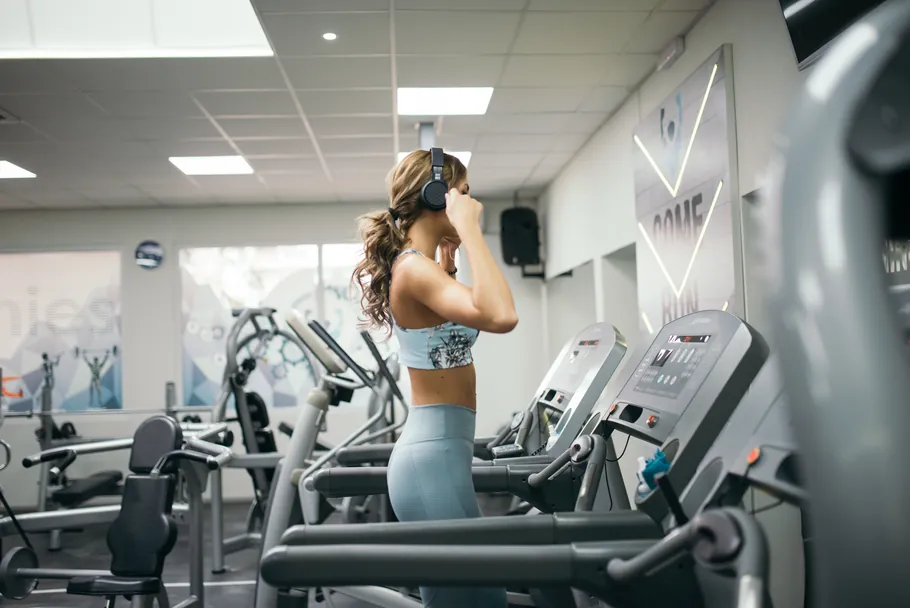
Photo: Shixart1985, Wikimedia Commons — A woman putting on her headphones beside the treadmills in a gym, an honest gym scene, not a product shot.
Specs: Graduated compression, 15–20 mmHg at the foot base and 20–30 mmHg at the ankle; 87% nylon and 13% elastane; X-LOCK arch support and light cushioning; sizes S–XL by calf circumference, 11.75–19.75 inches; sold as a pair.
The 2XU Vectr is the running pick: a light-cushion sock built for miles, with X-LOCK arch support holding the midfoot and light cushioning under the foot rather than a thick pad. The two-zone mmHg split is the point — firmer at the ankle, lighter across the foot base — so the squeeze is strongest where the leg is narrowest and eases where the foot flexes. For runners who wear compression socks for training runs and races, that split is the reason to choose it.
The trade-off is the line tangle. 2XU sells several compression socks with similar names at different levels — Performance Run at 25–30 mmHg, Recovery at 28–33 mmHg, and this Vectr at 15–20 at the foot and 20–30 at the ankle — so a search for “2XU compression socks” can land on the wrong sock entirely. Confirm the words “Vectr Cushion Full Length” on the listing, not just the brand (see the flag below).
Pros:
- Two-zone graduated compression — firmer at the ankle, lighter at the foot.
- X-LOCK arch support with light cushioning for running.
- Calf-based sizing in four bands, S to XL.
Cons:
- 2XU’s line tangle — similar names at different mmHg levels (see the flag below).
- Light cushioning only — not a thick padded sock.
- The ankle level is firm at 20–30 mmHg for a first-time wearer.
Who it’s for: runners who want a light-cushion compression sock with arch support and a stated two-zone level, and who check the exact model name before ordering.
⚠️ Confirm “Vectr Cushion Full Length”: 2XU’s Performance Run sock runs 25–30 mmHg and its Recovery sock runs 28–33 mmHg, while this Vectr Cushion Full Length runs 15–20 mmHg at the foot base and 20–30 mmHg at the ankle — three different socks under similar names. Confirm the words “Vectr Cushion Full Length”, the two-zone level and the calf band on the listing you order from, and do not judge this pick by another 2XU sock’s number.
👉 Check 2XU Vectr Cushion Full Length Compression Socks on Amazon
5️⃣ Feetures Graduated Compression Light Cushion Knee High — Best Light Cushion
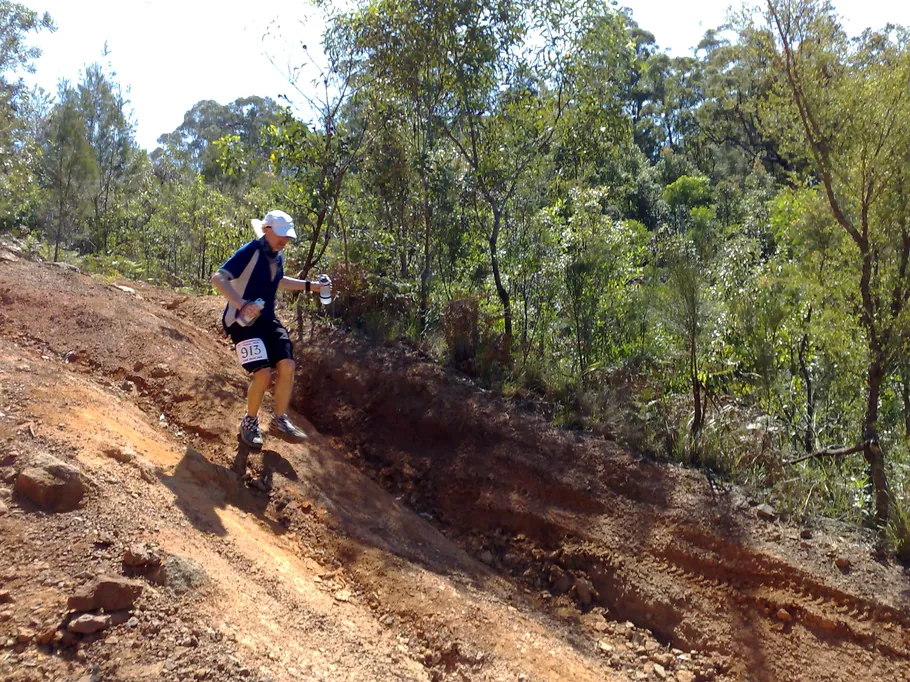
Photo: bugflickr, Wikimedia Commons — A mountain runner (bib 913) descending a steep dirt track in the bush, an honest race scene, not a product shot.
Specs: Graduated compression, 15–20 mmHg at the ankle; Active line; light cushioning; sizes by shoe size; sold as a pair.
The Feetures is the light-cushion pick: a 15–20 mmHg knee-high from the Active line, with light cushioning that adds a little padding without turning the sock into a thick padded one. The lighter level is the reason to choose it — the gentlest squeeze in this guide, suited to first-time wearers and to long sessions where a firm 20–30 mmHg sock would feel like too much. The Active line’s fit is built around the shoe size, so most buyers size it the way they size any sock.
The honest limit is the line tangle. Feetures sells an Active line and an Everyday line that both run 15–20 mmHg, with different cushioning — Light in the Active line, Max in the Everyday line — so two socks with the same level can feel very different on the foot. Confirm the words “Active” and “Light Cushion” on the listing (see the flag below), and check the shoe-size band, since no calf measure is published for this pick.
Pros:
- Light 15–20 mmHg level — the gentlest squeeze in this guide.
- Light cushioning without a thick padded feel.
- Simple shoe-size sizing, familiar to any sock buyer.
Cons:
- Active vs Everyday lines share the same level with different cushion (see the flag below).
- No calf measure published — shoe size alone decides the fit.
- Light level only — not the pick for buyers who want a firm 20–30 mmHg squeeze.
Who it’s for: buyers who want the lightest compression level in this guide with a little cushioning, and who size by shoe.
⚠️ Confirm “Active” and “Light Cushion”: Feetures’ Active line and Everyday line both run 15–20 mmHg at the ankle, but the Active line’s cushion is Light while the Everyday line’s is Max — the same level, a different sock on the foot. Confirm the words “Graduated Compression Light Cushion” and the Active line on the listing you order from, and check the shoe-size band, since this pick publishes no calf measure.
👉 Check Feetures Graduated Compression Socks on Amazon
6️⃣ Bombas Performance Compression Socks — Best Softest
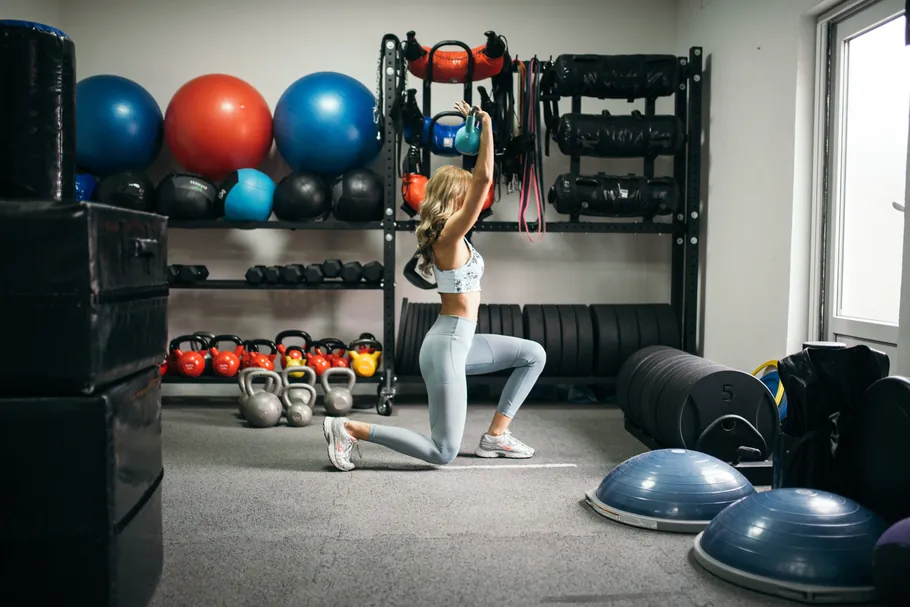
Photo: Nenad Stojkovic, Wikimedia Commons — A woman pressing a kettlebell overhead from a half-kneeling position in a gym, an honest gym scene, not a product shot.
Specs: Graduated compression, 20–30 mmHg; 71% polyester, 10% nylon, 10% Supima cotton and 9% elastane; sizes by shoe size — M 6–9, L 9.5–13, XL 13.5–16; sold as a pair.
The Bombas is the softest pick: a 20–30 mmHg sock in a cotton blend, with Supima cotton in the mix and a soft hand that the pure nylon knits in this guide do not have. The firm level is the same as CEP, Physix Gear and SB SOX — the difference is the feel on the skin, not the squeeze. For buyers who find pure synthetics scratchy or clammy over long sessions, the cotton blend is the reason to choose it.
The trade-off is fit information. Bombas sizes this sock by shoe size only — M 6–9, L 9.5–13, XL 13.5–16 — with no calf measure published, so a buyer with a thick calf and a small shoe, or a narrow calf and a big shoe, has to judge the fit on arrival. And Bombas sells non-compression performance socks under similar names, so the word “Compression” on the listing is worth a second look (see the flag below).
Pros:
- Soft cotton blend — 10% Supima cotton in a 20–30 mmHg sock.
- Stated 20–30 mmHg graduated compression.
- Simple shoe-size sizing in three bands, M to XL.
Cons:
- No calf measure published — shoe size alone decides the fit.
- Non-compression Bombas performance socks sell under similar names.
- Firm 20–30 mmHg can feel strong for a first-time wearer.
Who it’s for: buyers who want a firm 20–30 mmHg sock with the softest feel in this guide, and who size by shoe.
⚠️ Shoe-only sizing, and a similar-name tangle: this pick publishes no calf measure, so a thick calf with a small shoe can misfit even when the shoe band is right — check the fit on arrival and the return terms before ordering. Separately, Bombas sells non-compression performance socks under similar names, so confirm the words “Performance Compression” and the 20–30 mmHg level on the listing you order from rather than trusting the brand name alone.
👉 Check Bombas Performance Compression Socks on Amazon
📊 Comparison Table
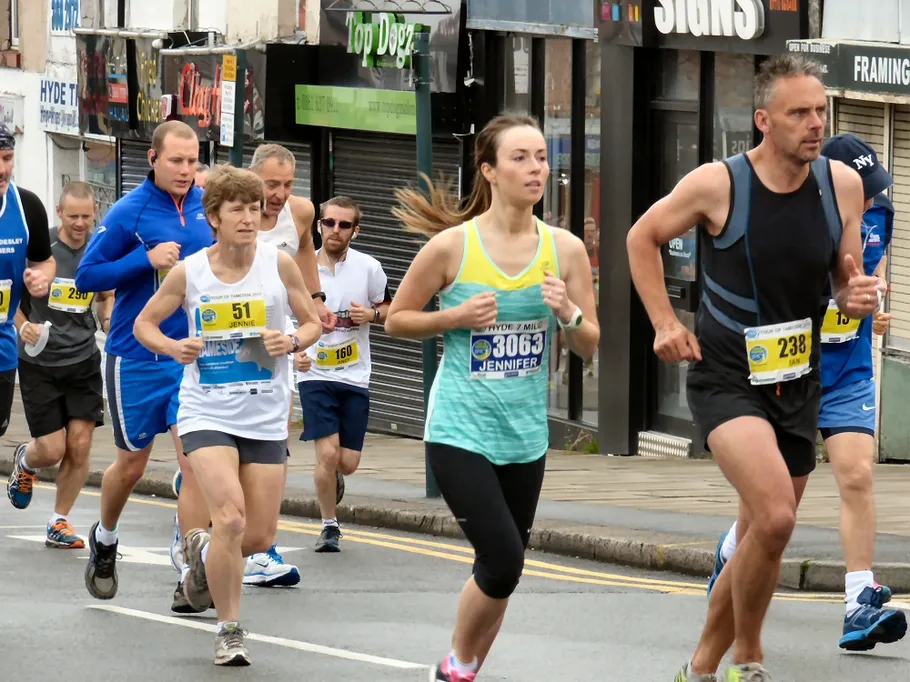
Photo: Gerald England, Wikimedia Commons — Runners in the Hyde 7 mile road race, an honest race scene, not a product shot.
| Pick | Type | Fit | Standout | Watch out |
| CEP The Run Compression Tall Socks | Graduated knit, 20–30 mmHg | Calf in, II–V, 9.5–20 in | Stated mmHg, left/right fit | Generation tangle; size-down rule |
| Physix Gear Sport Compression Socks | Graduated knit, 20–30 mmHg | Shoe + calf, S/M–XXL | Seamless toe, everyday pick | XXL row mislabelled |
| SB SOX Compression Socks | Graduated knit, 20–30 mmHg | Calf in, S–XL, 11–20 in | OEKO-TEX, value pick | Overlapping bands; Lite lookalike |
| 2XU Vectr Cushion Full Length Compression Socks | Graduated, 15–20 foot / 20–30 ankle | Calf in, S–XL, 11.75–19.75 in | X-LOCK arch, light cushion | 2XU line tangle |
| Feetures Graduated Compression Light Cushion Knee High | Graduated, 15–20 mmHg | Shoe size only | Lightest level, light cushion | Active vs Everyday lookalike |
| Bombas Performance Compression Socks | Graduated, 20–30 mmHg | Shoe size only, M–XL | Softest blend, cotton | No calf measure; similar names |
Table honesty note: the Fit column mixes different measures on purpose, because that is how the makers publish them — CEP, SB SOX and 2XU state calf circumference in inches, Physix Gear states shoe size and calf together, and Feetures and Bombas state shoe size only. Do not compare the numbers directly across rows, and do not crown any pick the widest-fitting or the most adjustable in this guide: a 9.5–20 inch calf range, a shoe-plus-calf chart and a shoe-only chart do not sit on the same scale. There is also no firmness ranking in this table, because the mmHg figures are taken at different points — 2XU’s 15–20 is at the foot base while its 20–30 is at the ankle, and Feetures’ 15–20 is at the ankle — so do not rank the six by squeeze from one number. Measure your calf at its widest and check your shoe size, then check the listing you order from.
🧭 How to Choose the Right Compression Sock
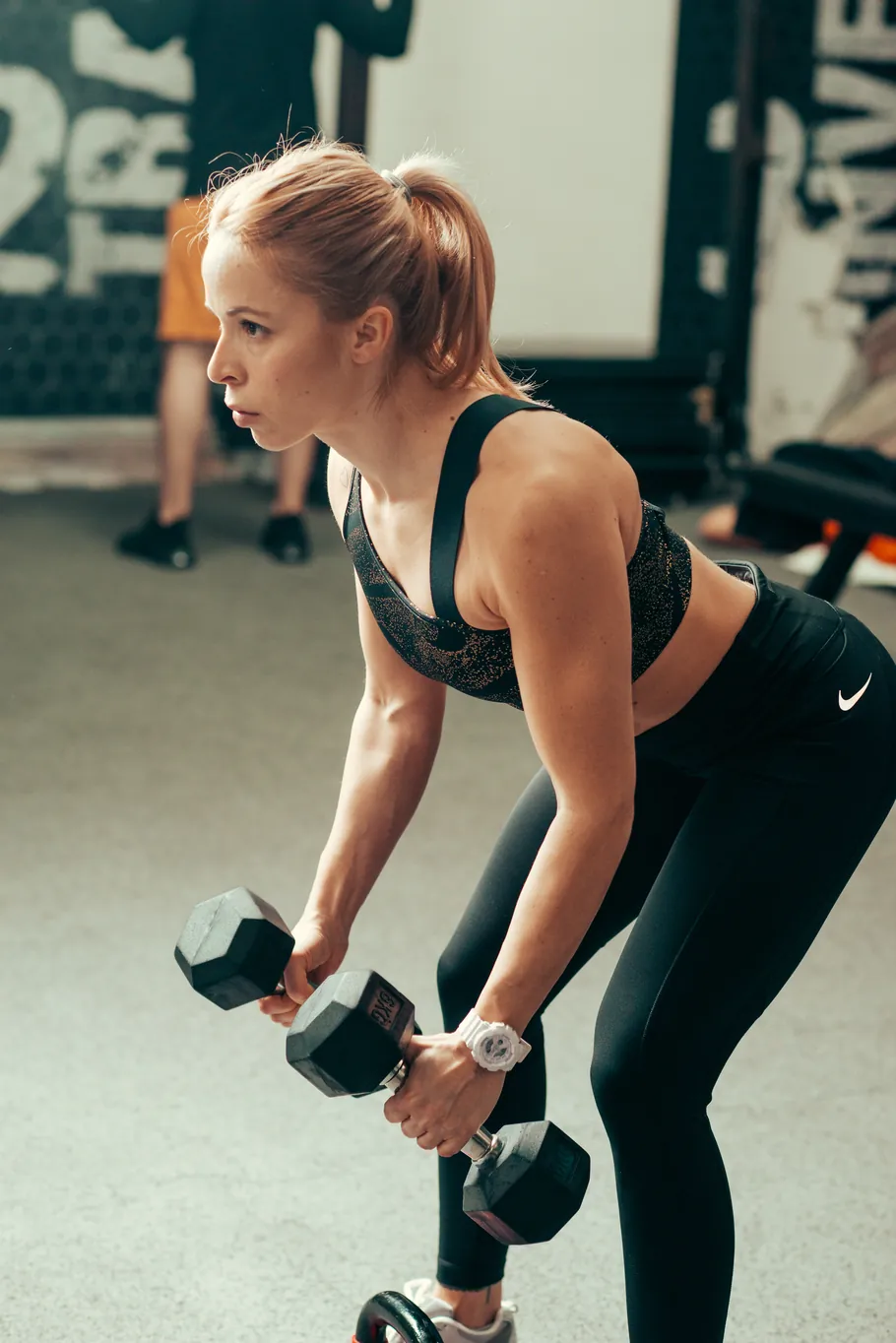
Photo: Shixart1985, Wikimedia Commons — A woman doing a bent-over dumbbell row in a gym, an honest gym scene, not a product shot.
Start with the level. A firm 20–30 mmHg sock (CEP, Physix Gear, SB SOX, Bombas) squeezes hardest and suits runners and lifters who already know they want firm compression. A light 15–20 mmHg sock (Feetures) is the gentler start, and a split-level sock (2XU Vectr, 15–20 at the foot and 20–30 at the ankle) sits between the two. If you have never worn compression socks, start light — a firm sock that feels strong on day one is usually the wrong level, not a sock to break in. And if you have a circulation condition, ask a clinician before choosing a firm level at all.
Then measure properly. Compression socks are sized by the calf at its widest point, by shoe size, or by both — and the picks in this guide split three ways. CEP, SB SOX and 2XU need the calf at its widest; Physix Gear needs calf and shoe together; Feetures and Bombas need shoe size only. Measure the calf at its widest and check your shoe size, then match both against the listing’s own chart. For CEP, the between-size rule is to size down; for SB SOX, upsize if your shoe sits above the range; for Physix Gear, read the shoe ranges rather than the row labels, since the XXL row is mislabelled. When the rules disagree, the listing you order from plus the fit check on arrival decide.
Think about cushion, fabric and fit shape. Light cushioning (2XU Vectr, Feetures) adds a little padding without a thick pad; the other picks are unpadded knits. Fabric matters for feel: Bombas blends Supima cotton for softness, CEP’s 5.0 generation runs 84% nylon and 16% elastane, and SB SOX carries OEKO-TEX fabric. Fit shape matters too: CEP is left/right specific, so the two socks are not interchangeable, while the other picks fit either foot. A sock that slips, rolls or cuts in at the top is usually the wrong size, not broken — re-measure before re-ordering.
Finally, kit out the rest of the session honestly. A compression sock squeezes the foot and leg; it does not support the joints above and below it, where an ankle brace and a knee brace do different jobs, and it does not replace the calf-only squeeze of a sleeve — our previous guide covers that half of the kit. And the leg work that keeps calves useful — raises, skips, pulls and carries — still needs the basics, which is why our adjustable dumbbells guide sits alongside this one in a home gym.
❓ Frequently Asked Questions
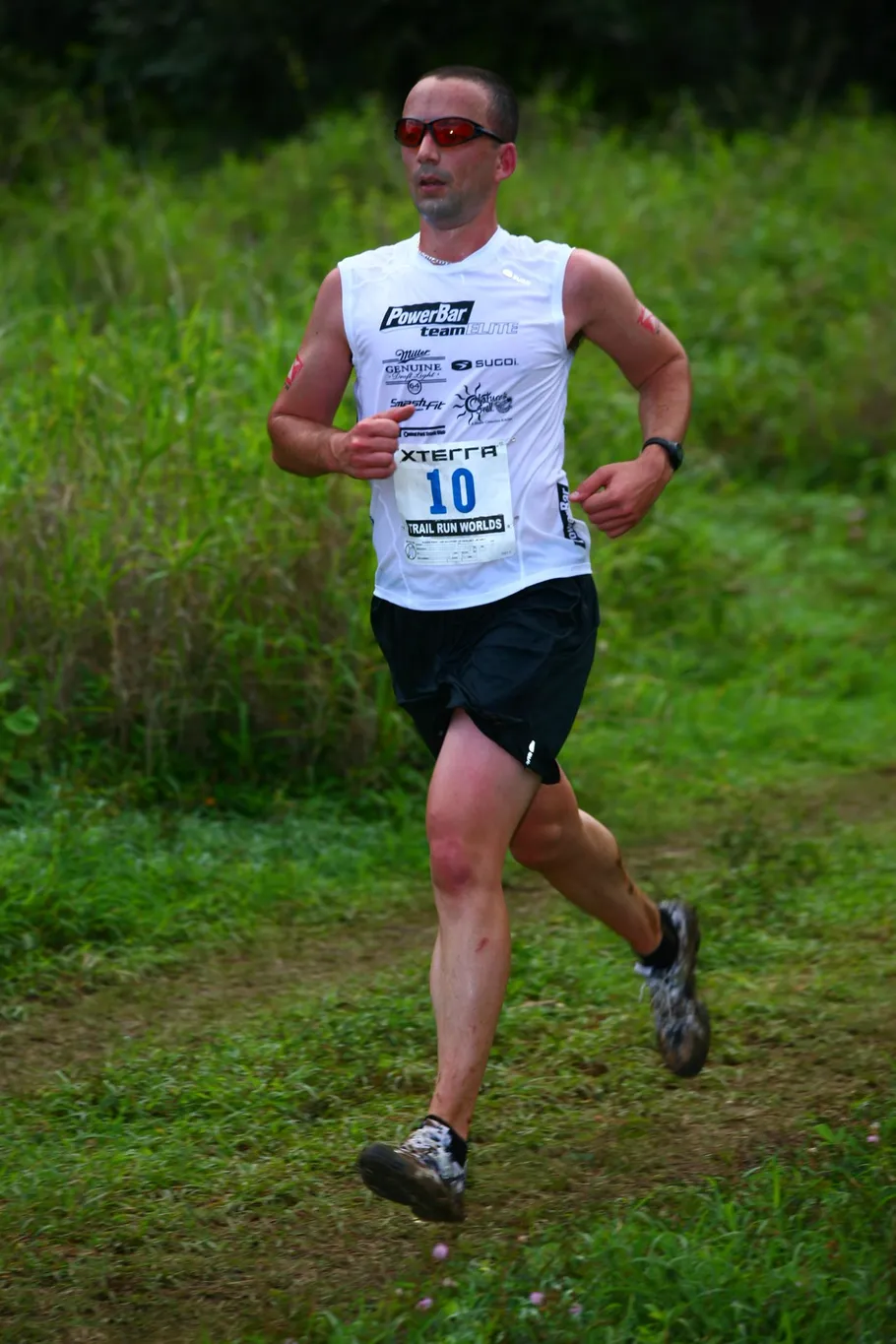
Photo: Mocan, Wikimedia Commons — A trail runner at the XTERRA Trail Running World Championship, an honest race scene, not a product shot.
Will compression socks fix my leg pain?
No. A compression sock squeezes the leg while you move; it does not treat or cure pain, injury, or any leg condition, and no pick in this guide claims otherwise. Persistent pain, swelling, numbness, colour change, or a recent injury belongs with a clinician first — a sock is not a diagnosis, and training through sharp pain to test one is a bad idea.
What is the difference between a compression sock, a calf sleeve, a regular workout sock and a brace?
A compression sock is a knee-high that covers the foot and the leg with graduated compression. A calf sleeve is footless and covers the calf only. A regular workout sock has no stated mmHg level and no graduated squeeze. A brace supports a joint with stays, pads or straps. They cover different things — buying a sleeve when the foot needs squeezing, or a brace when nothing needs supporting, is the most common mistake in this category.
How do I measure for compression socks?
Measure your calf at its widest point and check your shoe size, then match both against the listing’s own chart. Charts differ by maker — CEP, SB SOX and 2XU size by calf in inches, Physix Gear uses calf and shoe together, and Feetures and Bombas use shoe size only — so the listing you order from is the authority, not any single measure.
What mmHg level should I start with?
Start light if you have never worn compression socks: 15–20 mmHg (Feetures, or the foot zone of the 2XU Vectr) feels gentler than a firm 20–30 mmHg sock (CEP, Physix Gear, SB SOX, Bombas). The mmHg number is the pressure at the ankle unless the listing says otherwise — 2XU’s 15–20 is at the foot base, not the ankle — so compare levels at the same point of the leg. If you have a circulation condition, ask a clinician before choosing a firm level.
Can I wear compression socks all day, or to sleep?
It depends on the sock and the level. Light, breathable knits suit long wear, while firm 20–30 mmHg socks feel strong at first and suit sessions and recovery blocks better than all-day wear for a first-time user. Do not sleep in compression socks unless a clinician tells you to; and whatever the level, take the sock off if anything goes numb, tingles, or leaves marks that do not fade quickly.
What should I do if my socks slip down or cut in at the top?
Re-measure first — a sock that slips is usually too loose or the wrong length, not broken — and confirm the size against the listing’s chart, since a band edge or a shoe-only size can misfit. Check the top band is sitting flat and the fabric is not worn out at the elastic; and pair support work with gentle mobility, since our foam rollers guide covers the recovery side of a home-gym routine.
Thanks for reading — we hope this guide helps you pick a compression sock that fits properly and does the job you actually need. If a size chart disagrees with what you measured, trust the tape, not the listing headline.
Disclosure: As an Amazon Associate, we earn from qualifying purchases made through links in this article, at no extra cost to you. Product details and availability can change, so please check the listing before ordering.
Pingback: Best Ankle Sleeves for Home Gyms (2026)