An elbow sleeve is a short pull-on tube that squeezes the elbow joint only, from just above the elbow to just below it. It is NOT compression arm sleeves, which run the full length from wrist to bicep.
It is NOT an elbow brace, which holds the joint with stays, laces or pads.
It is NOT an elbow wrap, which is a long elastic band wound around the elbow per set. It is NOT a wrist brace, which holds the wrist with stays or splints. And it is NOT a compression shirt, which squeezes the torso, shoulders and arms.
An elbow sleeve covers the elbow joint only, with no wrist, no laces and no stays. The McDavid 489 tennis elbow support is the adjustable-strap neighbour — a brace with pads and a strap, not a sleeve — and it is named here so you do not buy it by mistake.
This guide follows our previous guide, Best Compression Arm Sleeves for Home Gyms — a sleeve squeezes one joint alone, whether that joint is an elbow or a whole arm. Many home-gym lifters and racket players look at both before deciding which joint needs the squeeze.
The six picks below run from a classic McDavid knit sleeve to the only three stated mmHg levels in this guide, Bauerfeind, OS1st and Tommie Copper. Each one states its own sizing honestly, including the lookalikes you should not buy past.
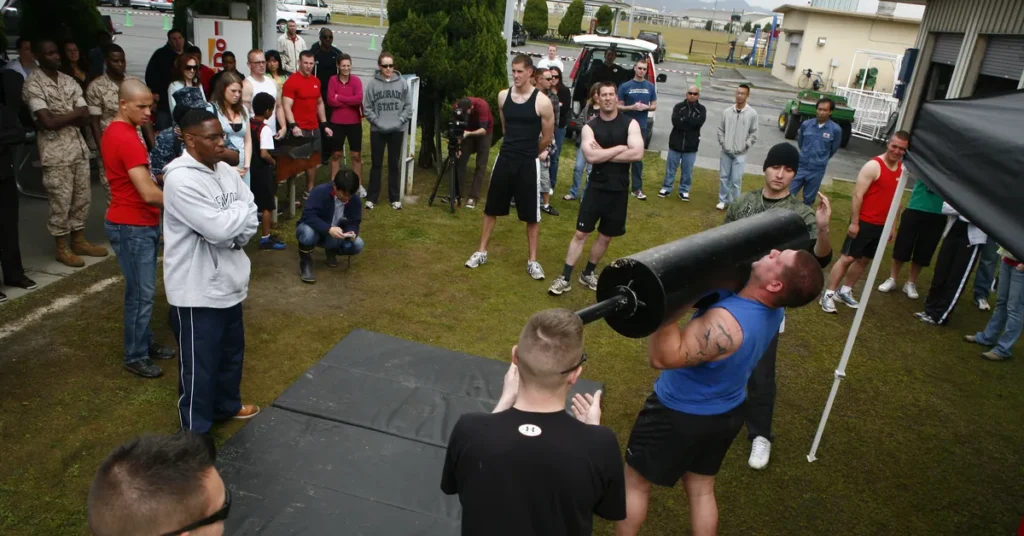
Every photo in this guide is an honest gym, court or field-sport scene, not a product shot. No photo shows the named sleeve itself, because free-license photos of these exact products were not available — the captions say what each photo actually shows, and nothing is presented as a product photo.
One safety note before the picks: this guide is general information only. A sleeve does not treat or cure elbow pain, tennis elbow, golfer’s elbow, swelling or any elbow condition, and it is not a substitute for medical advice.
If you have persistent pain, swelling, bruising, numbness, colour change, or a recent injury, talk to a clinician first — and never train through sharp pain to test a sleeve.
A sleeve that hurts, numbs, or leaves marks that do not fade quickly is the wrong size — take it off and reassess. And a sleeve that slides down every set is the wrong size too, whatever the size chart says.
⚡ Quick Picks
Six elbow sleeves at a glance — a classic McDavid knit sleeve, a premium Bauerfeind support, a zoned OS1st sleeve, a targeted Zensah single, a copper-infused Copper Compression sleeve and a light Tommie Copper sleeve.
If your sport needs hand protection rather than elbow compression, a glove does a different job — grip and padding for the hands, not squeeze for the elbow — and our MMA gloves guide covers that half of the kit.
Photo: U.S. Air Force, Wikimedia Commons — Riders in an indoor spin class, an honest gym scene, not a product shot.
- McDavid Sport Compression Knit Elbow Sleeve with Gel Buttress — Best Classic: a knit sleeve with gel buttresses on both sides of the elbow, the classic court-sport pick.
- Bauerfeind Sports Elbow Support — Best Premium: a 27–41 mmHg support with dual pads and a grip zone, the premium pick.
- OS1st ES6 Performance Elbow Sleeve — Best Graduated: a zoned sleeve with compression from 10–15 to 20–30 mmHg, the graduated pick.
- Zensah Compression Elbow Sleeve — Best Targeted: a seamless sleeve with chevron ribbing aimed at the elbow.
- Copper Compression Elbow Sleeve — Best Copper-Infused: a copper-infused sleeve from the maker’s 88/12 blend line.
- Tommie Copper Elbow Compression Sleeve — Best Light Compression: a light 15–20 mmHg sleeve with a non-slip band.
1️⃣ McDavid Sport Compression Knit Elbow Sleeve with Gel Buttress — Best Classic
Photo: Bethel University, Wikimedia Commons — A Bethel Royals player shooting over defenders in an archive basketball game, an honest game scene, not a product shot.
Specs: Knit compression sleeve; gel buttresses on both sides of the elbow; 62% nylon, 38% spandex; no neoprene, no latex; sizes S–XL by elbow circumference; pull-on fit.
The McDavid is the classic pick: a knit sleeve whose gel buttresses sit on both sides of the elbow, where the tendons attach. The knit stretches with the elbow, and the buttresses give the sleeve its shape.
The honest limit is the sizing. Reviews say the fit runs snug — buyers report the small is very tight to pull on and to bend in. Measure the elbow and check the chart before ordering, and buy up if you sit between sizes.
Pros:
- Gel buttresses on both sides of the elbow, where the tendons attach.
- Simple knit pull-on — no laces, straps or stays to adjust.
- A classic court-sport sleeve with a long track record.
Cons:
- Sizing runs snug — the small fits very tight, per buyer reviews.
- Can be hard to pull on and bend in when the fit is tight.
- No mmHg level published for this sleeve.
Who it’s for: court-sport players who want a classic knit sleeve with gel on both sides of the elbow, and who measure first because the fit runs snug.
⚠️ Confirm the gel-buttress sleeve, not the strap: McDavid also sells the 491 elbow strap and the 489 tennis elbow support with a strap and pads — both are different products from this pull-on sleeve. Confirm the words “Compression Knit Elbow Sleeve with Gel Buttress” on the listing.
Separately, the snug fit is the main complaint in reviews, so a between-size elbow should check the chart rather than guessing down — a too-tight sleeve numbs, and a too-loose one slides.
👉 Check McDavid Sport Compression Knit Elbow Sleeve with Gel Buttress on Amazon
2️⃣ Bauerfeind Sports Elbow Support — Best Premium

Photo: Nikko5555, Wikimedia Commons — Novak Djokovic playing a forehand, the ball in frame, an honest match scene, not a product shot.
Specs: 27–41 mmHg compression; dual anatomically contoured pads; 3D AirKnit fabric; GripTech silicone grip zone; sizes XS–XXL; sold singly; measure the thickest part of the forearm.
The Bauerfeind is the premium pick: the strongest stated mmHg level in this guide, 27–41 mmHg, with two pads that sit on the inside and outside of the elbow. The AirKnit breathes, and the grip zone holds the support in place.
The honest limit is the measuring. The size comes from the thickest part of the forearm, not the elbow itself — a tape around the elbow lands on the wrong size. Measure the forearm, not the joint.
Pros:
- Maker-stated 27–41 mmHg — the strongest stated level in this guide.
- Dual contoured pads on the inside and outside of the elbow.
- GripTech silicone zone holds the support in place during play.
Cons:
- Sized by the forearm, not the elbow — an elbow measure will misfit.
- Premium build at a premium price — check the listing before ordering.
- Bauerfeind’s EpiTrain is a different, medical-line product (see the flag below).
Who it’s for: players who want the strongest stated level with pads on both sides of the elbow, and who measure the forearm before ordering.
⚠️ Confirm the Sports Elbow Support, not the EpiTrain: Bauerfeind also sells the EpiTrain, a medical-line elbow brace with Epicon+ pads — a different product from this sports support, and a pick in our elbow braces guide. Confirm the words “Sports Elbow Support” on the listing.
Separately, the lighter Sports Compression Elbow Support, at 15–30 mmHg, is a different product too — a seamless knit without the dual pads — so do not borrow its level for this pick.
👉 Check Bauerfeind Sports Elbow Support on Amazon
3️⃣ OS1st ES6 Performance Elbow Sleeve — Best Graduated
Photo: Kallerna, Wikimedia Commons — A golfer at the top of his backswing on a driving range, an honest practice scene, not a product shot.
Specs: Compression Zone Technology; zones from 10–15 mmHg light to 20–30 mmHg firm; thin profile that fits under clothing; sizes by below-elbow circumference, S 8–10.5 in, M 9.5–12 in, L 10.5–14.5 in, XL 12.5–16.5 in; pull-on fit.
The OS1st is the graduated pick: the only sleeve here whose compression changes zone by zone, light at the edges and firm where the tendons need it. The thin profile slips under a shirt, and the zones do the work of a brace without the bulk.
The honest limit is the measuring. The size comes from below the elbow, not around the joint — a tape around the elbow lands on the wrong size. Measure below the elbow, not on it.
Pros:
- Zoned compression, light to firm — the only zoned sleeve here.
- Thin profile that fits under clothing and stays put.
- Four sizes by below-elbow measure, with smaller steps between them.
Cons:
- Needs a below-elbow measure — an on-joint measure will misfit.
- Zone levels are ranges, not one number — check the listing’s chart.
- An older ES3 name appears in one testimonial (see the flag below).
Who it’s for: players who want zoned compression in a thin sleeve, and who measure below the elbow before ordering.
⚠️ Confirm the ES6, not the ES3 or the arm sleeve: OS1st’s own sell sheet quotes a testimonial for an older ES3 elbow sleeve, and the AS6 is a full-arm sleeve — both are different products from this ES6. Confirm the words “ES6 Performance Elbow Sleeve” on the listing.
Separately, the zone figures are the maker’s ranges for the whole OS1st line, 10–15 to 20–30 mmHg — so judge this sleeve on fit and zones, not on a single number it does not carry.
👉 Check OS1st ES6 Performance Elbow Sleeve on Amazon
4️⃣ Zensah Compression Elbow Sleeve — Best Targeted

Photo: King Februarius, Wikimedia Commons — Cross-country runners on a muddy course at Heaton Park, an honest race scene, not a product shot.
Specs: Seamless compression sleeve; chevron 3D pinpoint ribbing aimed at the elbow; pull-on fit; check the listing’s blend and pack count.
The Zensah is the targeted pick: a seamless single sleeve whose chevron ribbing is aimed at the elbow, not spread evenly across the arm. The seamless knit means nothing chafes over a long session, and the targeted ribbing suits one sore elbow.
The honest limit is the paperwork. Zensah publishes no mmHg level for this sleeve, and the blend and pack count vary by listing — so judge it on fit and targeted feel, and confirm the unit count before ordering.
Pros:
- Chevron ribbing aimed at the elbow — targeted, not even.
- Seamless knit with a full range of motion.
- A tennis-elbow sleeve worn by a WTA professional in training.
Cons:
- No mmHg level published for this sleeve.
- Blend and pack count vary by listing — check before ordering.
- Zensah’s arm and thigh sleeves share the brand name (see the flag below).
Who it’s for: runners and racket players who want a light, targeted sleeve and who check the unit count before ordering.
⚠️ Confirm the elbow sleeve, not the arm or thigh sleeve: Zensah sells compression sleeves for the arm and thigh under the same brand name, and our compression arm sleeves guide’s Zensah pick is one of them. Confirm the words “Compression Elbow Sleeve” on the listing.
Separately, the blend is not stated here because Zensah’s own lines differ — the thigh sleeve is 75% nylon and 25% spandex, the arm sleeve 94% nylon and 6% spandex — so confirm the blend on the elbow listing, not from a sister product.
👉 Check Zensah Compression Elbow Sleeve on Amazon
5️⃣ Copper Compression Elbow Sleeve — Best Copper-Infused
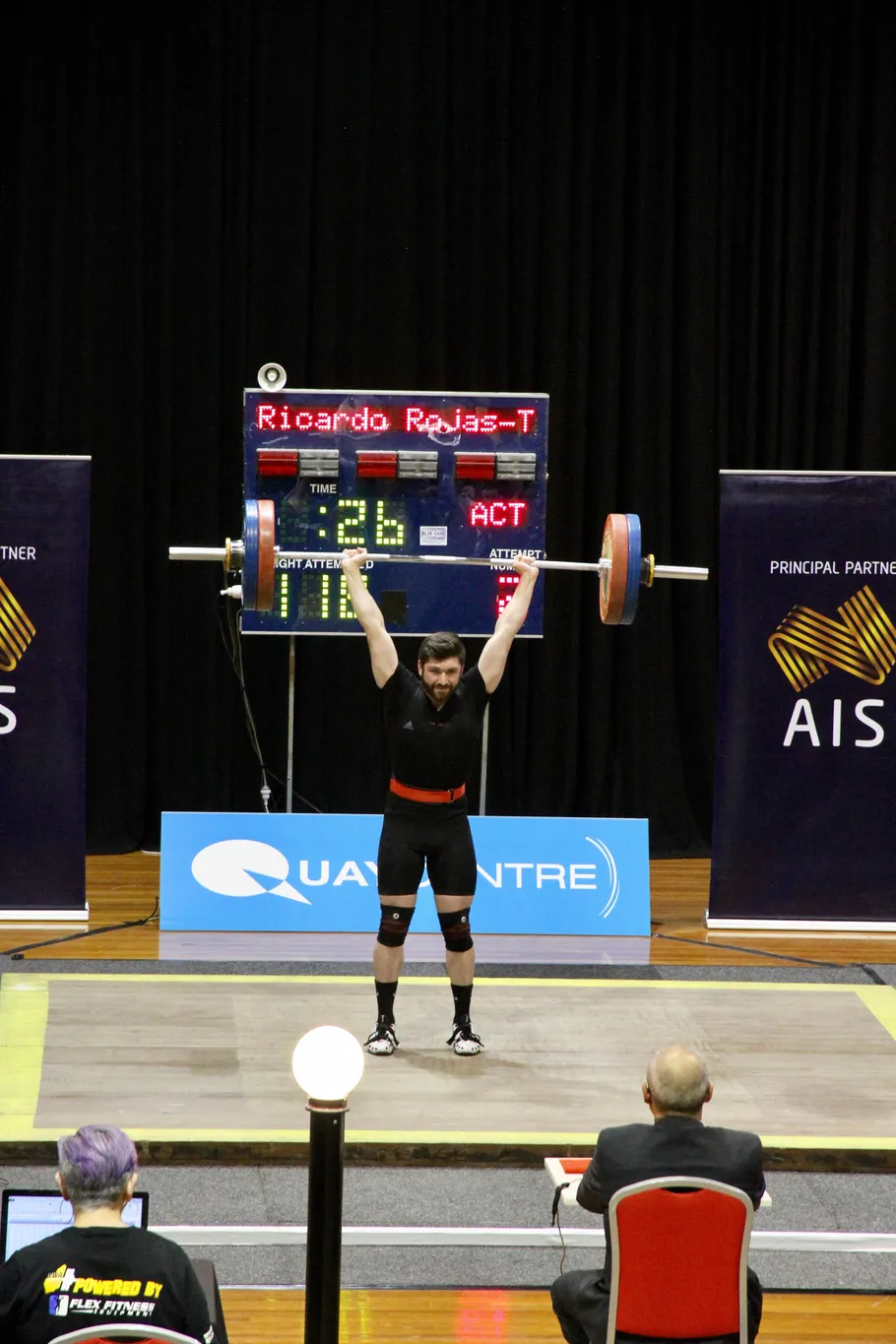
Photo: Sunbear25, Wikimedia Commons — A weightlifter holding a barbell overhead at a competition, an honest competition scene, not a product shot.
Specs: 88% copper nylon, 12% spandex, per the maker’s sleeve line; copper-infused fabric; pull-on fit; some listings state 85% copper-infused nylon — check the listing.
The Copper Compression is the copper pick: a sleeve whose copper-infused nylon is the fabric feature, with spandex for stretch. The pull-on fit keeps it simple, and the copper line is the same blend family as the ankle sleeve in our earlier guide.
The honest limit is the copper itself. Copper adds no support beyond compression, so judge this sleeve on fit, not on the metal. And the brand name is shared — confirm it before ordering.
Pros:
- Copper-infused nylon blend with spandex for stretch.
- Simple pull-on fit — no straps, laces or stays.
- Anti-odour copper fabric for all-day wear.
Cons:
- No mmHg level published for this sleeve.
- Copper adds no support beyond compression.
- Blend figures differ across listings — 88/12 vs 85% (see the flag below).
Who it’s for: buyers who want a copper-infused elbow sleeve and who judge it on fit, not on the copper claim.
⚠️ Confirm the brand, not just the blend: BraceAbility sells a sleeve with an 85% copper and nylon blend under a similar name — a different product from this one. Confirm the words “Copper Compression” on the listing.
Separately, copper is a fabric feature, not proof of stronger healing — no pick in this guide claims a sleeve heals tennis elbow, and neither should the listing you order from.
👉 Check Copper Compression Elbow Sleeve on Amazon
6️⃣ Tommie Copper Elbow Compression Sleeve — Best Light Compression
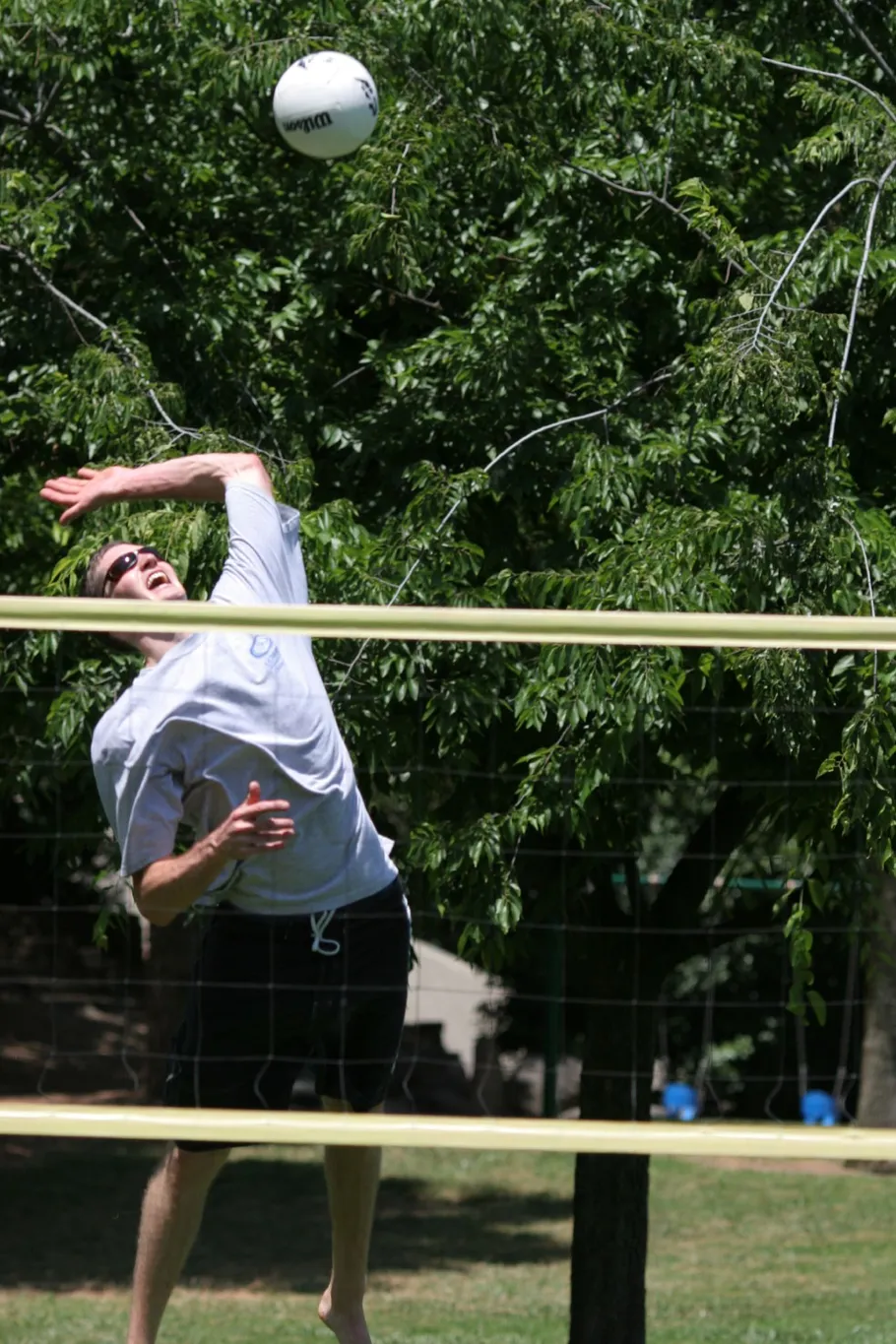
Photo: druchoy, Wikimedia Commons — A man spiking a volleyball over an outdoor net, an honest park game scene, not a product shot.
Specs: 15–20 mmHg light compression; 86% nylon, 14% spandex; Copper Znergy fabric; 4D stretch; non-slip band; measure 5 inches above the elbow.
The Tommie Copper is the light pick: the only sleeve here besides Bauerfeind and OS1st with a stated mmHg level, at 15–20 mmHg. The Copper Znergy fabric and the non-slip band are the features, and the light squeeze suits all-day wear.
The honest limit is the squeeze. Fifteen to 20 mmHg is light by design — so expect a gentle sleeve, not a firm one. Check the size chart before ordering, and measure five inches above the elbow.
Pros:
- Stated 15–20 mmHg — the light level in this guide.
- Non-slip band resists sliding during play.
- Copper Znergy fabric with a published 86/14 blend.
Cons:
- Lightest squeeze here — not for buyers who want a firm hold.
- Measure point is unusual — five inches above the elbow, not on it.
- Tommie Copper’s ankle sleeve shares the brand name (see the flag below).
Who it’s for: buyers who want a light, stated-level sleeve for all-day wear, and who expect a gentle squeeze, not a firm one.
⚠️ Confirm the elbow sleeve, not the ankle sleeve: Tommie Copper also sells an ankle compression sleeve under the same brand name — a different product for a different joint. Confirm the words “Elbow Compression Sleeve” on the listing.
Separately, the light squeeze is the point of this pick, so a buyer who wants a firm hold should look at the Bauerfeind pick instead — this sleeve is light by design.
👉 Check Tommie Copper Elbow Compression Sleeve on Amazon
📊 Comparison Table
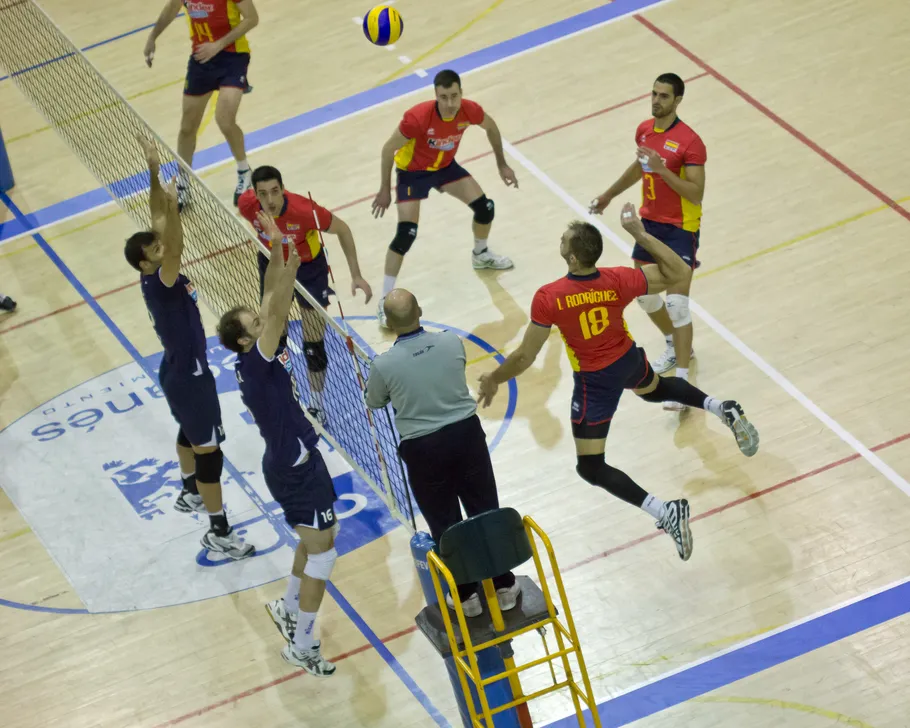
Photo: Carlos Delgado, Wikimedia Commons — Israel Rodríguez spiking against Portugal’s block in a Spain vs Portugal volleyball game, an honest game scene, not a product shot.
| Pick | Type | Fit | Standout | Watch out |
| McDavid Sport Compression Knit Elbow Sleeve with Gel Buttress | Knit, gel buttress | S–XL, elbow circumference | Gel both sides | Sizing runs snug |
| Bauerfeind Sports Elbow Support | 27–41 mmHg, dual pads | XS–XXL, forearm measure | Strongest stated level | Confirm Sports, not EpiTrain |
| OS1st ES6 Performance Elbow Sleeve | Zoned 10–30 mmHg | Below-elbow measure | Graduated zones | Confirm ES6, not ES3 |
| Zensah Compression Elbow Sleeve | Seamless knit, chevron ribbing | Check the chart | Targeted ribbing | No mmHg published |
| Copper Compression Elbow Sleeve | Copper-infused nylon | Check the listing’s chart | Copper-infused | Similar-named blend lookalike |
| Tommie Copper Elbow Compression Sleeve | 15–20 mmHg, Copper Znergy | Measure 5 in above elbow | Light level, non-slip band | Light by design |
Table honesty note: the Fit column mixes different measures on purpose, because that is how the makers publish them — Bauerfeind sizes by the forearm, OS1st by below the elbow, Tommie Copper five inches above it, and the rest ask you to check the listing’s own chart.
Do not compare the numbers directly across rows, and do not crown any pick the firmest in this guide: three picks publish a level, but Bauerfeind’s 27–41 mmHg, OS1st’s zoned 10–30 mmHg and Tommie Copper’s 15–20 mmHg are measured different ways, so there is no firmness ranking across all six.
Judge the other three by fit and feel, not by a number they do not carry.
And do not borrow levels across products: the 15–30 mmHg quoted for Bauerfeind’s lighter Sports Compression Elbow Support belongs to a different product — and CEP’s 20–30 mmHg belongs to its ankle sleeve, not to any elbow sleeve here.
Measure the point the chart asks for, then check the listing you order from.
🧭 How to Choose the Right Elbow Sleeve

Photo: AngusConnaltyPhotos, Wikimedia Commons — Two players contesting the ball in a soccer match, an honest game scene, not a product shot.
Start with the type. A pull-on sleeve (all six picks here) slides on and squeezes the elbow evenly. A brace (McDavid 489, strap and pads) tightens with a strap instead.
A brace suits buyers who want to adjust the tightness per session or press directly on one tendon. A sleeve suits buyers who want the same squeeze every time, with nothing to strap or adjust.
None of these is a compression arm sleeve, an elbow brace, an elbow wrap, a wrist brace or a compression shirt.
If it covers the wrist to the bicep, holds the joint with stays, winds on per set, holds the wrist, or squeezes the torso, it is not an elbow sleeve, whatever the listing title says.
Then measure properly. Elbow sleeves are sized by different points, and the picks in this guide split three ways. Bauerfeind needs the thickest part of the forearm; OS1st needs below the elbow; Tommie Copper needs five inches above it.
Measure the point the chart asks for, not the one you guessed, then match it against the listing’s own chart.
For McDavid, the between-size rule is to check the chart first, since the small runs very snug and guessing down numbs the arm. For Bauerfeind, the between-size rule is to trust the tape — the forearm measure usually lands on one size.
Think about length, pack count and fabric. All six picks here are short elbow tubes, so length is not the split — pack count is. Bauerfeind sells singly, so two elbows need two orders; confirm the pack count on every listing before ordering.
Fabric matters for feel: the knit sleeves breathe better, while the gel and pad sleeves add cushioning on both sides of the elbow. Copper Compression is the copper pick here, so check the allergy note on the others before ordering.
Copper adds no support beyond compression, and no pick here publishes a treatment result — judge the fabric on feel, not on the label.
A sleeve that slides down, rolls at the top or cuts in at the elbow is usually the wrong size, not broken — re-measure before re-ordering.
An elbow sleeve also pairs with joint support, not instead of it — our elbow braces guide covers the stayed support for the elbow itself, so the joint is covered in two pieces.
Finally, kit out the rest of the session honestly. A sleeve squeezes one elbow; it does not cover the wrist to the bicep, where compression arm sleeves do a different job — arm sleeves cover the whole arm, not one joint.
And the pressing that keeps elbows useful — bench, overhead press and dips — still needs the basics, which is why our adjustable dumbbells guide sits alongside this one in a home gym.
❓ Frequently Asked Questions
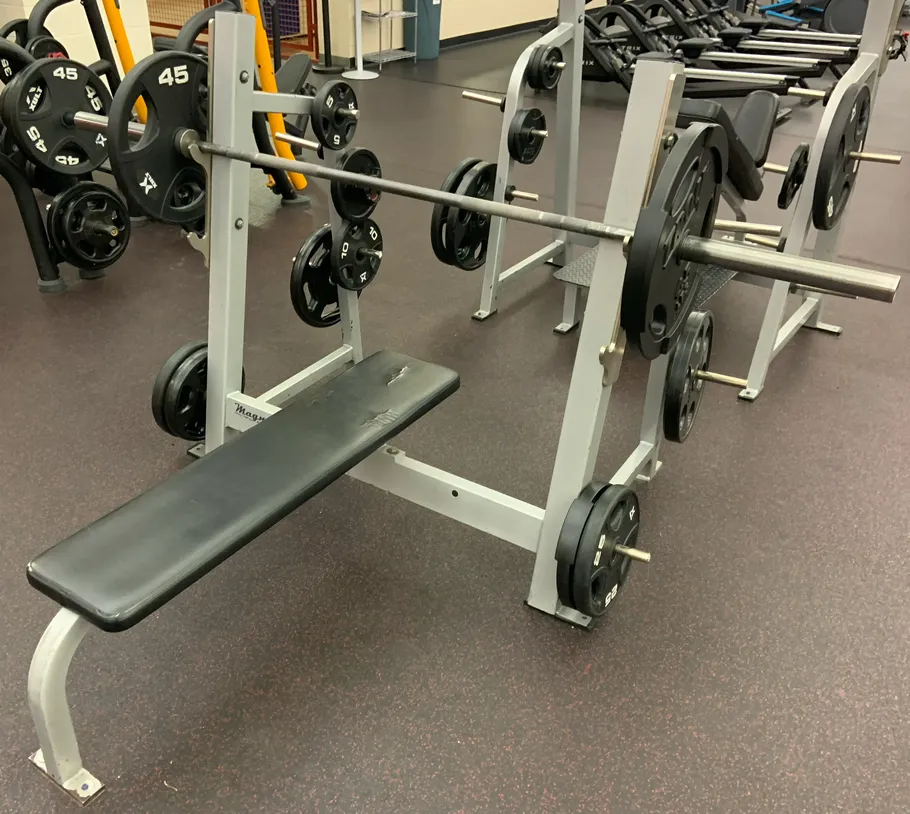
Photo: Wikideas1, Wikimedia Commons — An empty bench press rack in a gym, an honest equipment scene, not a product shot.
Will an elbow sleeve fix my elbow pain or tennis elbow?
No. An elbow sleeve squeezes the elbow while you move; it does not treat or cure pain, tennis elbow, golfer’s elbow, swelling, or any elbow condition, and no pick in this guide claims otherwise.
Persistent pain, swelling, bruising, numbness, colour change, or a recent injury belongs with a clinician first — a sleeve is not a diagnosis, and training through sharp pain to test one is a bad idea.
What is the difference between an elbow sleeve, a compression arm sleeve, an elbow brace, an elbow wrap, a wrist brace and a compression shirt?
An elbow sleeve is a short pull-on tube covering the elbow joint only. A compression arm sleeve runs from the wrist to the bicep, and a compression shirt squeezes the torso.
An elbow brace holds the joint with stays, laces or pads, an elbow wrap is a band wound around the joint per set, and a wrist brace holds the wrist with stays or splints.
They cover different things — buying a brace when only a squeeze is needed, or an arm sleeve when only the elbow needs it, is the most common mistake in this category.
How do I measure for an elbow sleeve?
Measure the point the chart asks for, then match it against the listing’s own chart. Charts differ by maker — Bauerfeind sizes by the forearm, OS1st by below the elbow, Tommie Copper five inches above it, and McDavid by the elbow itself.
So the listing you order from is the authority, not any single measure. And a snug chart is a warning, not a challenge — McDavid’s small runs very snug, so measure twice before guessing down.
Do elbow sleeves have an mmHg level?
Only three of the six picks in this guide publish one — Bauerfeind states 27–41 mmHg, OS1st zones run 10–15 to 20–30 mmHg, and Tommie Copper states 15–20 mmHg. The other three publish no level at all.
So you cannot rank the six by firmness on paper — judge them by fit and feel, and do not trust a listing that invents a level for a pick that publishes none.
And do not borrow levels across products: the 15–30 mmHg quoted for Bauerfeind’s lighter Sports Compression Elbow Support belongs to a different product that is not picked here.
Should I buy a single sleeve or a pair?
It depends on the pick. Bauerfeind sells singly, so two elbows need two orders — and the other picks vary by listing, so the pack count is not safe to guess from the brand name.
Check the unit count on the listing you order from, not the brand name, and count elbows before you count the price.
What should I do if my sleeve slides down or cuts in at the elbow?
Re-measure first — a sleeve that slides down is usually too big or the wrong measuring point, and one that cuts in is usually too small — and confirm the size against the listing’s chart, since an elbow guess can misfit a wide forearm.
Check the grip band is sitting flat and the fabric is not worn out at the top; and pair support work with gentle mobility, since our foam rollers guide covers the recovery side of a home-gym routine.
Thanks for reading — we hope this guide helps you pick an elbow sleeve that fits properly and does the job you actually need. If a size chart disagrees with what you measured, trust the tape, not the listing headline.
Disclosure: As an Amazon Associate, we earn from qualifying purchases made through links in this article, at no extra cost to you. Product details and availability can change, so please check the listing before ordering.