A calf sleeve is a footless compression tube that pulls on over the lower leg and squeezes the calf and shin evenly. It is NOT a knee brace, which supports the knee joint with stays or pads. It is NOT an ankle brace, which steadies the ankle with stays or straps. It is NOT a compression sock, which covers the foot as well as the leg. And it is NOT a shin guard, which is hard protection against impact. A calf sleeve covers the calf only, leaves the foot free, and holds nothing rigid — everything else on that list covers something else or protects differently.
This guide follows our joint-support series, and it pairs naturally with the previous guide, Best Thumb Braces for Home Gyms — thumbs carry the grip in every pull, row and hang, while calves carry every step, skip and calf raise, so many home-gym lifters look at both. The six picks below run from a classic graduated knit to a neoprene pull-on, and each one states its own sizing honestly, including the chart conflicts you should not buy past.
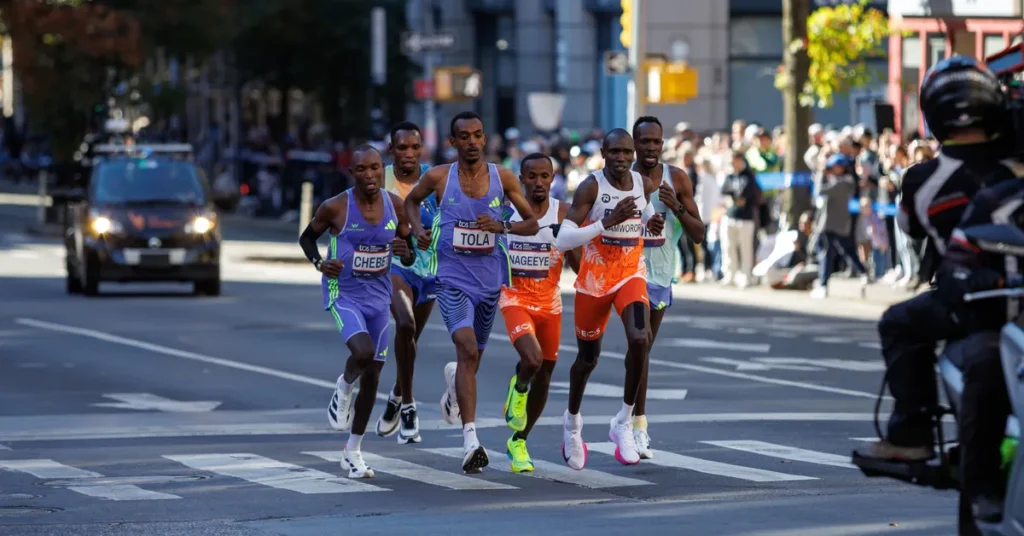
Every photo in this guide is an honest gym or sport scene, not a product shot. No photo shows the named sleeve itself, because free-license photos of these exact products were not available — the captions say what each photo actually shows, and nothing is presented as a product photo.
One safety note before the picks: this guide is general information only. A sleeve does not treat or cure calf pain, and it is not a substitute for medical advice. If you have persistent calf pain, swelling, numbness, colour change, or a recent injury, talk to a clinician first — and never train through sharp pain to test a sleeve. Firm 20–30 mmHg compression feels strong if you have never worn it, and if you have a circulation condition, ask a clinician before choosing a firm level. A sleeve that hurts, numbs, or leaves marks that do not fade quickly is the wrong size or the wrong level — take it off and reassess.
⚡ Quick Picks
Six calf sleeves at a glance — a classic graduated knit, a seamless sleeve, a three-measure knit, a neoprene pull-on, an everyday knit and a copper-infused sleeve. If your sessions also include sparring, our MMA gloves guide covers the hand side of that kit.
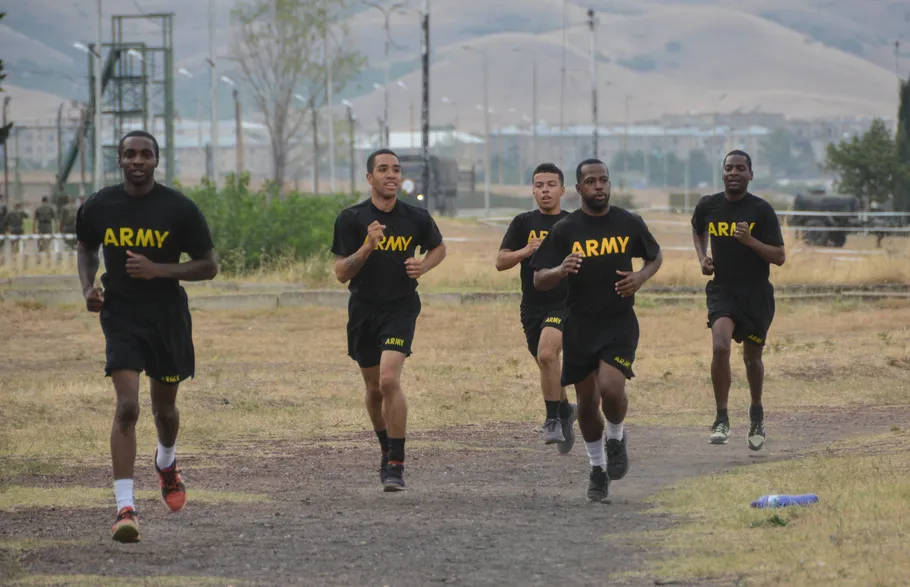
Photo: Pfc. Denice Parker, Wikimedia Commons — Soldiers on a group run outdoors, an honest training scene, not a product shot.
- CEP Compression Calf Sleeves — Best Classic: the straightforward graduated knit with a stated 20–30 mmHg level.
- Zensah Compression Leg Sleeves — Best Seamless: a soft seamless knit with no seams to rub.
- Bauerfeind Sports Compression Sleeves Lower Leg — Best Knit: a three-measure knit with Short, Long and Extra Long lengths.
- McDavid 441 Calf Sleeve — Best Neoprene: a warm 3.2 mm neoprene pull-on, sold singly.
- BLITZU Calf Compression Sleeves — Best Everyday: a simple footless knit in two broad size bands.
- Copper Compression Calf Sleeves — Best Copper-Infused: a copper-infused knit for odour control.
1️⃣ CEP Compression Calf Sleeves — Best Classic
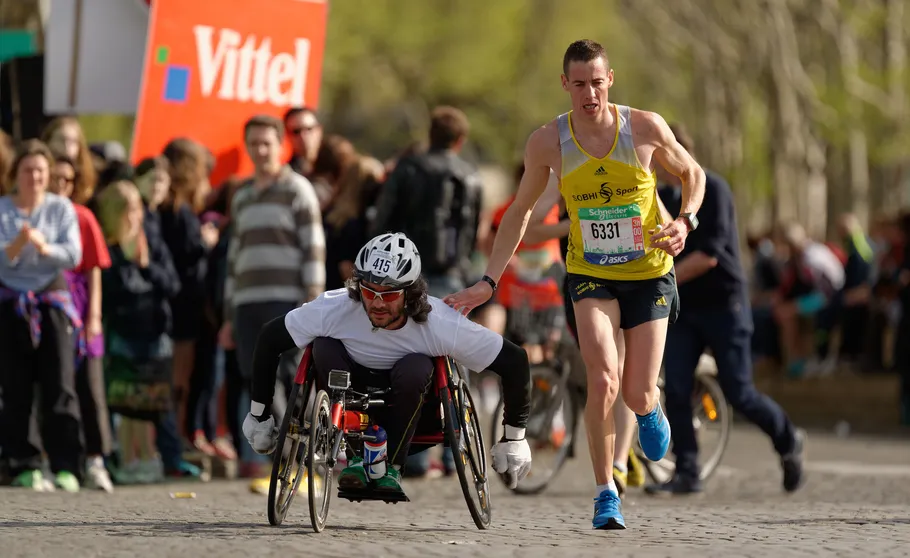
Photo: Marie-Lan Nguyen, Wikimedia Commons — A runner beside a wheelchair racer at the Paris Marathon, an honest race scene, not a product shot.
Specs: Graduated compression, 20–30 mmHg, tighter at the ankle and easing up the calf; sized by calf circumference at the widest point; sold as a pair.
The CEP is the classic of this guide: a graduated knit that states its compression level plainly, which most sleeves in this guide do not. The pressure starts strongest at the ankle and decreases up the calf, and the 20–30 mmHg figure puts it in the firm band — the strongest level CEP sells without a prescription. That stated number is the reason to start here: you know what level you are buying, not just that it feels tight.
The sizing is the part to check, because the range on offer depends on where you look. Retail listings checked show sizes III, IV and V — 32–38 cm, 39–44 cm and 45–50 cm of calf — while the maker’s own chart runs from size I to VI, including smaller calves. Measure your calf at its widest point and match it against the listing you actually order from, not against a chart from another store.
Pros:
- Stated 20–30 mmHg graduated compression — a real number, not a feel.
- Simple calf-only sizing on the listings checked.
- Sold as a pair, so both legs are covered in one purchase.
Cons:
- Size range varies by listing — small sizes appear on some charts and not others.
- Between-size advice conflicts with other brands (see the flag below).
- Firm 20–30 mmHg can feel strong for a first-time wearer.
Who it’s for: buyers who want a stated firm compression level and a classic graduated knit, and who measure before ordering.
⚠️ Check the listing’s own chart, and the between-size rule: CEP’s guidance is to size down in calf sleeves when you fall between sizes — the opposite of the size-up advice some other brands and buyer reviews give for their sleeves. If your calf sits on a boundary, follow CEP’s rule for this pick, and check the fit on arrival rather than assuming either rule fits every brand.
👉 Check CEP Compression Calf Sleeves on Amazon
2️⃣ Zensah Compression Leg Sleeves — Best Seamless
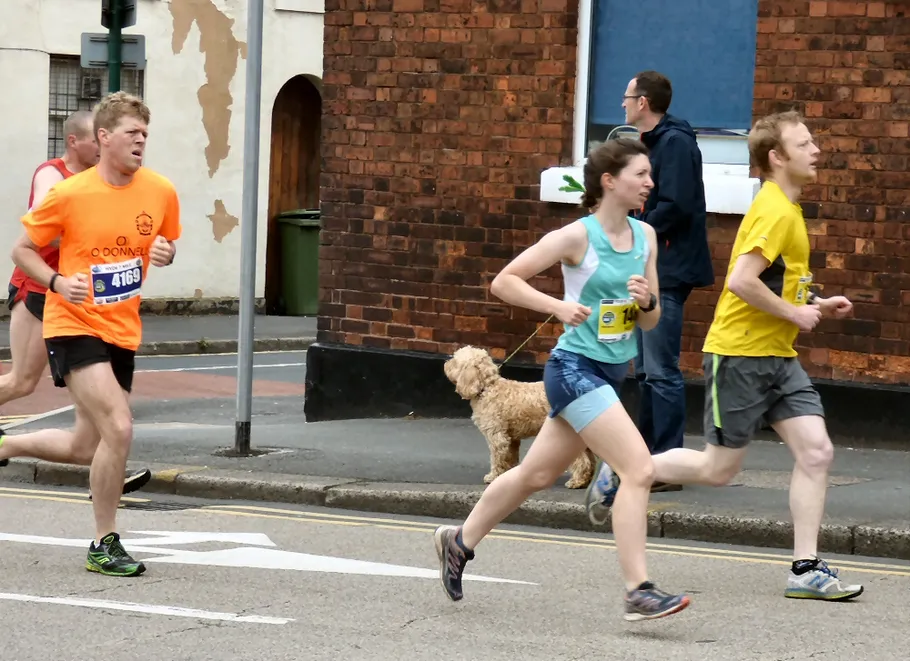
Photo: Gerald England, Wikimedia Commons — Runners in a road race, an honest training scene, not a product shot.
Specs: Seamless knit, 90% nylon and 10% spandex; graduated compression, tighter at the bottom than at the top; no mmHg rating disclosed; sizes by calf circumference — XS/S 9.5–12.5 inches, S/M 12.5–15 inches, L/XL 15–18.5 inches; sold as a pair.
The Zensah is the seamless pick: a soft knit tube with no seams to rub, made in the USA, in a wide range of colours. The graduated squeeze runs from ankle upward, and the seamless build is the reason to choose it — nothing stitched into the calf to chafe over a long session. For runners and lifters who wear sleeves for hours, that comfort is the point.
The trade-off is information. Zensah does not publish an mmHg rating for these sleeves, so you cannot compare their firmness against CEP’s or Bauerfeind’s 20–30 mmHg on paper — you can only judge by fit and feel. And the largest size stops at an 18.5-inch calf, so larger athletes need to measure first rather than assuming the range covers them.
Pros:
- Seamless knit — nothing stitched into the calf to rub.
- Soft 90% nylon and 10% spandex blend in many colours.
- Graduated compression from ankle upward.
Cons:
- No mmHg rating disclosed — firmness cannot be compared on paper.
- Largest size caps at an 18.5-inch calf.
- Length is tied to size (see the flag below).
Who it’s for: buyers who want the softest, seamless calf sleeve and accept that its firmness is judged by feel, not by a number.
⚠️ Length follows size, and the between-size advice conflicts: the two smaller sizes are 9.5 inches long while L/XL is 11 inches, so a tall lifter with a narrow calf or a short lifter with a thick calf can find the length wrong even when the circumference fits. Separately, the maker’s guidance is to size down between sizes, while some buyer reviews advise sizing up — if you sit on a boundary, check the listing’s own chart and the fit on arrival before deciding.
👉 Check Zensah Compression Leg Sleeves on Amazon
3️⃣ Bauerfeind Sports Compression Sleeves Lower Leg — Best Knit
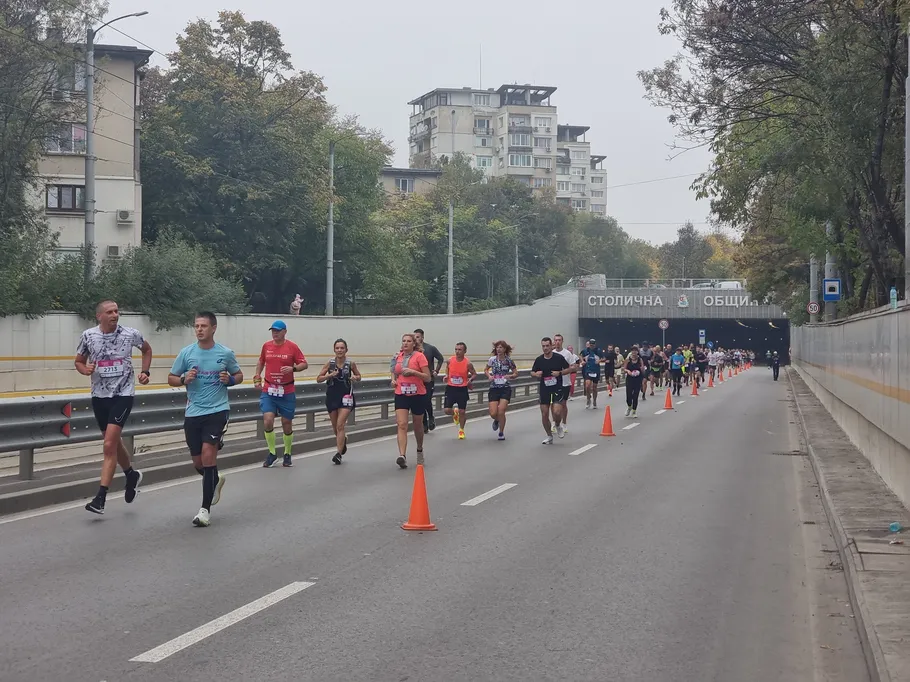
Photo: DemieK07, Wikimedia Commons — Marathon runners on a city road, an honest race scene, not a product shot.
Specs: Knit compression, 20–30 mmHg, graduated from ankle to calf; 79% polyamide and 21% elastane AirKnit fabric; three measures — calf at its widest, ankle at its narrowest, and calf length; Short, Long and Extra Long lengths; extra-wide band; sold as a pair.
The Bauerfeind is the knit pick for buyers who want the most precise fit in this guide. Three measurements instead of one, three lengths instead of one, and a stated 20–30 mmHg level put it beside CEP on paper — with the extra-wide band to keep the top from rolling. If your calves and your leg length do not scale together, this is the pick that lets you fit both.
The precision is also the work. Three measures take longer than one, and a split measurement — calf saying one size, ankle or length saying another — needs the maker’s rule, which is to take the smaller size for circumferences and the longer version for length. Get the tape out twice rather than guessing from a single number.
Pros:
- Stated 20–30 mmHg graduated compression in a breathable knit.
- Three measures plus three lengths — the most precise fit here.
- Extra-wide band helps the sleeve stay in place.
Cons:
- Most measuring of any pick — calf, ankle and length all needed.
- Variant naming is confusing (see the flag below).
- Some colour and size variants were out of stock at check.
Who it’s for: buyers who want a precise, stated-level knit sleeve and are willing to take three measurements to get it.
⚠️ Confirm the exact current variant: the maker’s US store lists an older “Sports Compression Sleeves Lower Leg” line as discontinued, while its sports and Australian stores list current calf-sleeve variants — so confirm the exact product name, size and length on the listing you order from rather than assuming every Bauerfeind calf listing is the current one. Check availability too, since at least one colour and size variant showed out of stock at check.
👉 Check Bauerfeind Sports Compression Sleeves Lower Leg on Amazon
4️⃣ McDavid 441 Calf Sleeve — Best Neoprene
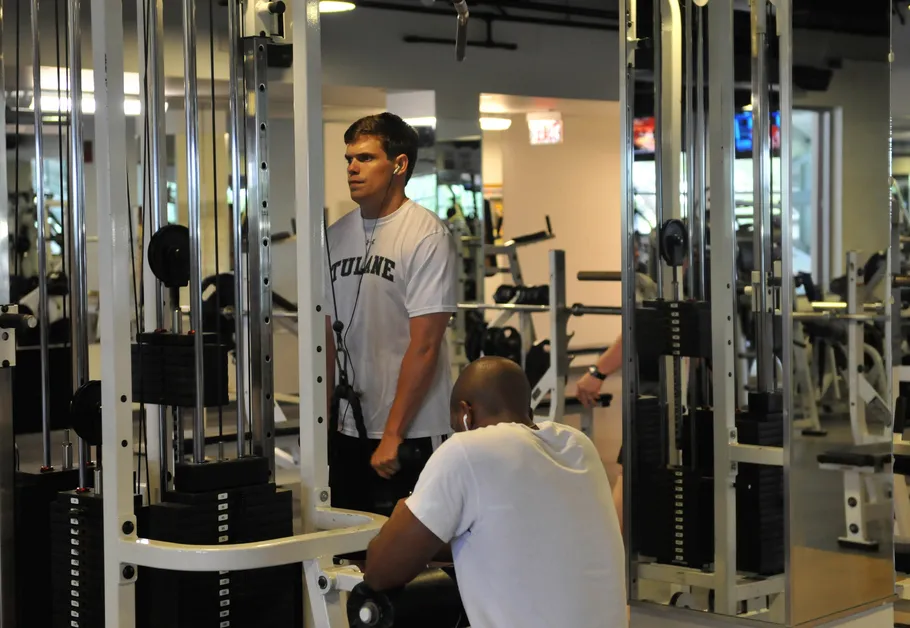
Photo: Tulane Public Relations, Wikimedia Commons — Two gym-goers training among weight machines at the Reily Center, an honest gym scene, not a product shot.
Specs: Contoured pull-on sleeve, 100% latex-free 3.2 mm neoprene (exclusive of binding and cover fabric); fits left or right leg; sold SINGLY — one sleeve, not a pair; maker sizes — S 13–14 inches, M 14–15 inches, L 15–16.5 inches, XL 16.5–18 inches of calf.
The McDavid 441 is the neoprene pick: a warm, contoured pull-on that insulates the calf the way knit sleeves do not. The 3.2 mm neoprene holds warmth around the muscle, which some lifters like for stiff mornings and cold gyms, and the contoured shape keeps it low-profile under clothing. For one-leg wear — a single calf that needs the warmth — it is also the simplest order in this guide.
The key word is single. This pick is sold as one sleeve, so covering both legs means buying two — and the price comparison against pairs in this guide has to count that. Neoprene warmth is also a trade-off: welcome in winter, warm in long summer sessions.
Pros:
- Warm 3.2 mm latex-free neoprene, contoured and low-profile.
- Simple pull-on fit for either leg.
- One-sleeve order suits single-calf wear.
Cons:
- Sold singly — two purchases cover both legs.
- Neoprene warmth can feel hot in long sessions.
- Size charts conflict between sources (see the flag below).
Who it’s for: buyers who want neoprene warmth in a simple pull-on, and who check whether they need one sleeve or two.
⚠️ Two chart conflicts and a same-brand lookalike: the maker’s instruction sheet sizes this sleeve S 13–14, M 14–15, L 15–16.5 and XL 16.5–18 inches, while a retailer chart sizes it S 12–14, L 15–17 and XL 17–18 inches — different boundaries, so trust the listing you order from and check the fit on arrival. Separately, McDavid also sells “Compression Calf Sleeves” as a knit pair — a different product from this 441 neoprene single, so confirm the model number 441 before ordering.
👉 Check McDavid 441 Calf Sleeve on Amazon
5️⃣ BLITZU Calf Compression Sleeves — Best Everyday

Photo: Neil Theasby, Wikimedia Commons — A fell runner on a grassy trail, an honest training scene, not a product shot.
Specs: Footless knit sleeve, 85% nylon and 15% spandex; graduated compression; no mmHg figure published on the listings checked; two size bands — S/M and L/XL — by calf circumference; sold as a pair.
The BLITZU is the everyday pick: a straightforward footless knit that does the basic job — even calf compression, breathable fabric, pair in the box — without a measurement puzzle. Two size bands instead of five means most buyers land in a band quickly, and the footless cut keeps shoes and socks exactly as they are.
The simplicity is also the limit. Two broad bands fit coarsely: a calf near a band edge can feel looser or tighter than expected, and with no mmHg figure published, firmness cannot be compared against the stated-level picks on paper. Between sizes, the listing’s own advice is to size up for a looser fit or down for tighter compression — the choice is left to feel, not fixed by a rule.
Pros:
- Simple two-band sizing — most buyers land in a band fast.
- Breathable 85% nylon and 15% spandex footless knit.
- Sold as a pair at an everyday level of fuss.
Cons:
- Only two size bands — a coarse fit near the edges.
- No mmHg figure published on the listings checked.
- Near-identical BLITZU listings — confirm the exact listing (see the flag below).
Who it’s for: buyers who want a simple, breathable everyday calf sleeve and accept a coarser fit than the measured knits.
⚠️ Confirm the exact listing: BLITZU sells several near-identical calf-sleeve listings with the same broad S/M and L/XL bands, and some describe the compression as medical-grade without giving an mmHg number. Confirm the footless calf sleeve, the pair contents, and the size band on the listing you order from rather than trusting the headline alone.
👉 Check BLITZU Calf Compression Sleeves on Amazon
6️⃣ Copper Compression Calf Sleeves — Best Copper-Infused
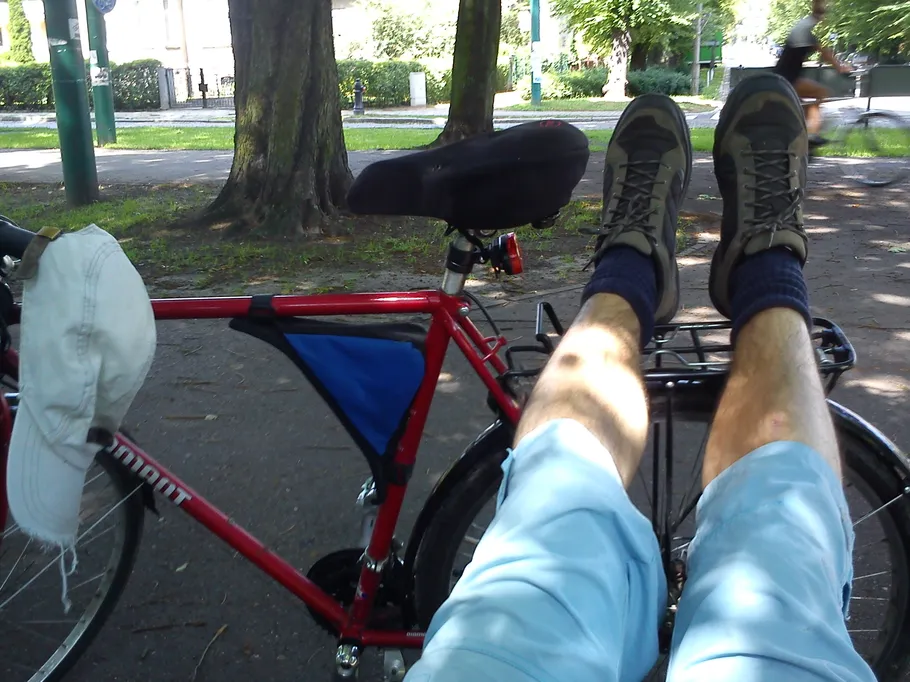
Photo: MOs810, Wikimedia Commons — A cyclist resting with his legs up on his bike, an honest cycling scene, not a product shot.
Specs: Copper-infused nylon knit, footless calf sleeve; sized by calf circumference — but the chart, the size range and the pack contents vary by copper-brand listing, so check the listing you order from (see the flag below).
The Copper Compression pick is the copper-infused option: a footless knit whose yarn carries copper, sold for odour control and moisture management alongside compression. The idea is straightforward — the same even calf squeeze as the other knits, with a yarn story for wearers who train daily and want the sleeve to stay fresher between washes.
The honest limit is that copper adds no support beyond the compression itself. A copper sleeve squeezes because it is a compression sleeve, not because it contains copper — and the copper brands in this corner of the market share near-identical names, so the buyer has to be careful about which brand and chart they are actually ordering from.
Pros:
- Copper-infused yarn for odour control between washes.
- Footless knit — shoes and socks stay exactly as they are.
- Widely available across copper-brand listings.
Cons:
- Copper adds no support beyond the compression itself.
- Charts, sizes and pack contents vary by copper-brand listing.
- mmHg claims vary by listing — some state 20–30, others state none.
Who it’s for: buyers who want a copper-infused everyday calf sleeve and who verify the exact brand, chart and pack contents before ordering.
⚠️ The copper-name tangle: Copper Compression, CopperJoint, Copper Fit and Doctor’s Select all sell copper calf sleeves with similar names — one copper listing runs S–XL, another claims 20–30 mmHg while others state no level, and pack contents (single vs pair) differ by listing. Confirm the exact brand, the calf-circumference chart, and whether the listing sells one sleeve or a pair before ordering, and do not confuse these calf sleeves with the same brands’ full-leg sleeves, which are sized by the thigh.
👉 Check Copper Compression Calf Sleeves on Amazon
📊 Comparison Table
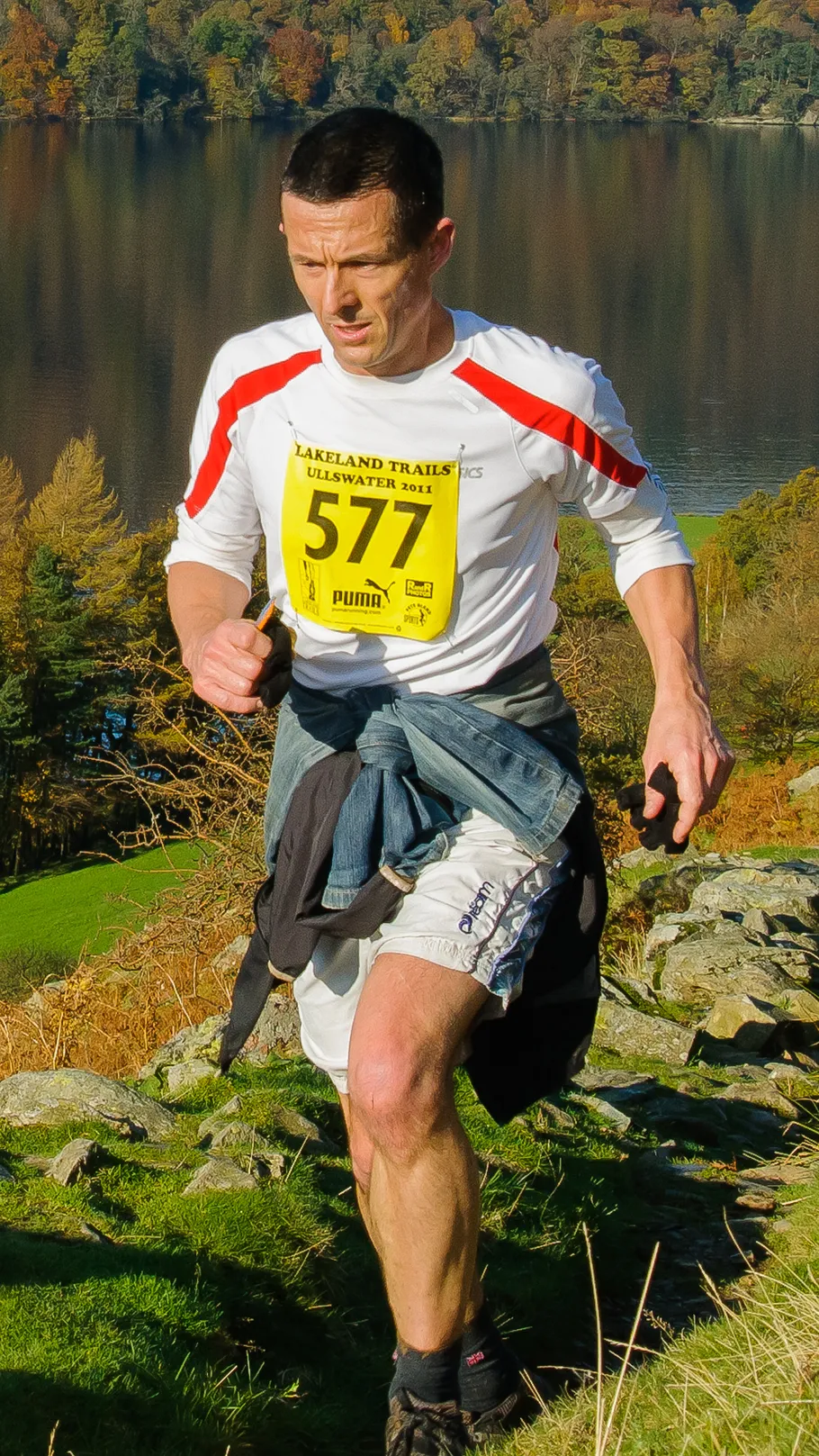
Photo: Robin McConnell, Wikimedia Commons — A trail runner at the Ullswater Trail Race, an honest race scene, not a product shot.
| Pick | Type | Fit | Standout | Watch out |
| CEP Compression Calf Sleeves | Graduated knit, 20–30 mmHg | Calf cm, III–V on retail listings | Stated mmHg, graduated | Size range varies by listing |
| Zensah Compression Leg Sleeves | Seamless knit, mmHg not disclosed | Calf in, XS/S–L/XL to 18.5 in | Seamless, soft | 18.5 in cap; length tied to size |
| Bauerfeind Sports Compression Sleeves Lower Leg | Knit, 20–30 mmHg | Calf + ankle + length | Three-measure fit, length options | Most measuring; variant naming |
| McDavid 441 Calf Sleeve | Neoprene, 3.2 mm | Calf in, S–XL | Warm pull-on | Sold singly; chart conflict |
| BLITZU Calf Compression Sleeves | Knit, mmHg not stated | Two bands, S/M–L/XL | Simple sizing | Coarse fit; no mmHg |
| Copper Compression Calf Sleeves | Copper-infused knit | Calf cm; chart varies by brand | Odour-control yarn | Near-identical copper brands |
Table honesty note: the Fit column mixes different measures on purpose, because that is how the makers publish them — CEP states calf circumference in centimetres, Zensah and McDavid state it in inches, Bauerfeind needs calf, ankle and length together, BLITZU uses two broad bands, and the copper brands each publish their own chart. Do not compare the numbers directly across rows, and do not crown any pick the widest or the most adjustable in this guide: a 50 cm calf range and an 18.5-inch cap are different scales, and the three-measure and broad-band fits do not sit on the same scale. There is also no compression column in this table, because two picks do not disclose an mmHg level — do not rank the six by firmness when two of them publish no number. Measure calf, ankle and length, then check the listing you order from.
🧭 How to Choose the Right Calf Sleeve
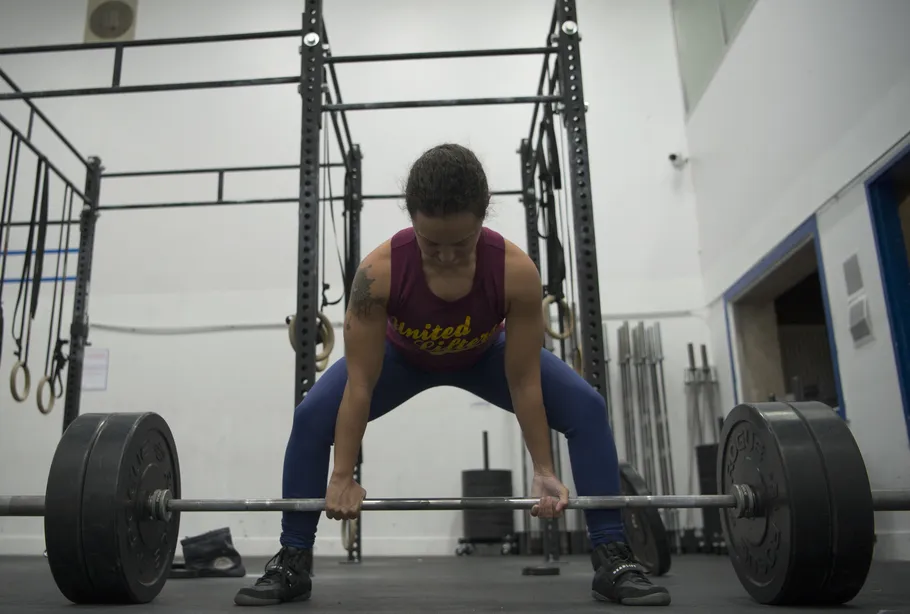
Photo: Airman 1st Class Jovante Johnson, Wikimedia Commons — A lifter deadlifting a loaded bar in a gym, an honest training scene, not a product shot.
Start with the type. A graduated knit (CEP, Bauerfeind) states its 20–30 mmHg level and squeezes hardest at the ankle. A seamless knit (Zensah) trades the stated number for softness. A neoprene pull-on (McDavid 441) trades breathability for warmth. An everyday knit (BLITZU) trades precision for simplicity. A copper-infused knit (Copper Compression) adds an odour-control yarn story to the same basic squeeze. None of these is a sock, a brace or a guard — if it covers the foot, holds a joint rigid, or protects against impact, it is not a calf sleeve, whatever the listing title says.
Then measure properly. Calf sleeves are sized by the calf at its widest point — except Bauerfeind, which also needs the ankle at its narrowest and the calf length, and except the copper brands, whose charts differ from each other. Measure the calf at its widest, the ankle at its narrowest, and the length from just below the knee to just above the ankle, then match all three against the listing’s own chart. For CEP and Bauerfeind, the between-size rule is to size down on circumference; for BLITZU, the listing leaves it to feel — up for looser, down for tighter; for Zensah, the maker says down while some buyer reviews say up. When the rules disagree, the listing you order from plus the fit check on arrival decide.
Think about single versus pair, and about length. Most picks here are sold as pairs, but the McDavid 441 is sold singly and the copper listings vary — count the sleeves in the box, not the headline. Length matters too: Zensah ties length to size, so a tall lifter with a narrow calf can find the sleeve short, while Bauerfeind’s Short, Long and Extra Long lengths let length and circumference fit separately. A sleeve that rolls, slips or cuts in at the top is usually the wrong size or the wrong length, not broken — re-measure before re-ordering.
Finally, kit out the rest of the session honestly. A calf sleeve squeezes one muscle group; it does not support the joints above and below it, where an ankle brace and a knee brace do different jobs, and it does not protect the shin the way a shin guard does. And the leg work that keeps calves useful — raises, skips, pulls and carries — still needs the basics, which is why our adjustable dumbbells guide sits alongside this one in a home gym.
❓ Frequently Asked Questions
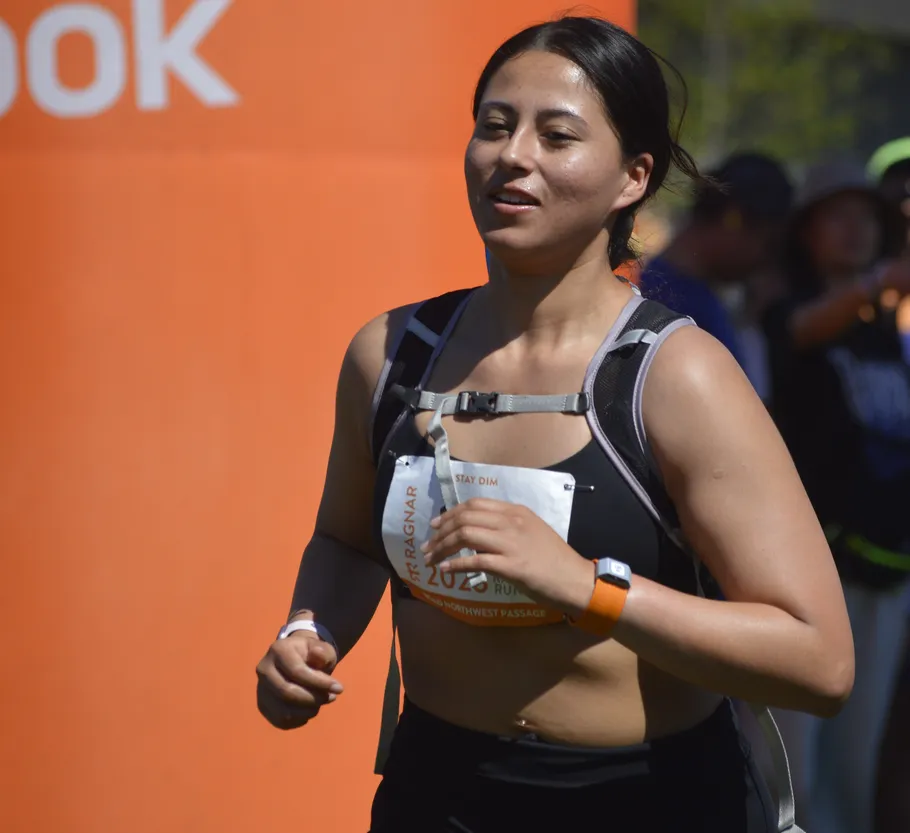
Photo: Douglas Stutz, Wikimedia Commons — A runner mid-race at a relay event, an honest race scene, not a product shot.
Will a calf sleeve fix my calf pain?
No. A sleeve compresses the calf while you move; it does not treat or cure pain, injury, or any calf condition, and no pick in this guide claims otherwise. Persistent pain, swelling, numbness, colour change, or a recent injury belongs with a clinician first — a sleeve is not a diagnosis, and training through sharp pain to test one is a bad idea.
What is the difference between a calf sleeve, a compression sock, a brace and a shin guard?
A calf sleeve is a footless tube that squeezes the calf only. A compression sock covers the foot as well as the leg. A brace supports a joint with stays, pads or straps. A shin guard is hard protection against impact. They cover different things — buying a sock when only the calf needs squeezing, or a guard when no impact is involved, is the most common mistake in this category.
How do I measure for a calf sleeve?
Measure your calf at its widest point, your ankle at its narrowest, and your calf length from just below the knee to just above the ankle, then check all three against the listing’s own chart. Charts differ by maker — CEP uses centimetres, Zensah and McDavid use inches, Bauerfeind needs all three measures, and BLITZU uses two broad bands — so the listing you order from is the authority, not any single measure.
Can I train and wear a calf sleeve all day?
It depends on the sleeve and the level. Light, breathable knits suit long wear, while firm 20–30 mmHg sleeves feel strong at first and suit sessions and recovery blocks better than all-day wear for a first-time user. If you have a circulation condition, ask a clinician before choosing a firm level; and whatever the level, take the sleeve off if anything goes numb, tingles, or leaves marks that do not fade quickly.
Do I need one sleeve or a pair?
Most picks here are sold as pairs, so one purchase covers both legs — but the McDavid 441 is sold singly, and the copper listings vary between single and pair, so that pick needs the pack contents checked. If only one calf needs support, a single is the cheaper order; if both do, count the sleeves in the box before comparing prices.
What should I do if my sleeve keeps slipping or rolling?
Re-measure first — a sleeve that slips is usually too loose or the wrong length, not broken — and confirm the size against the listing’s chart, since a band edge or a tied length can misfit. Check the top band is sitting flat and the fabric is not worn out at the elastic; and pair support work with gentle mobility, since our foam rollers guide covers the recovery side of a home-gym routine.
Thanks for reading — we hope this guide helps you pick a calf sleeve that fits properly and does the job you actually need. If a size chart disagrees with what you measured, trust the tape, not the listing headline.
Disclosure: As an Amazon Associate, we earn from qualifying purchases made through links in this article, at no extra cost to you. Product details and availability can change, so please check the listing before ordering.
Pingback: Best Compression Socks for Home Gyms (2026)