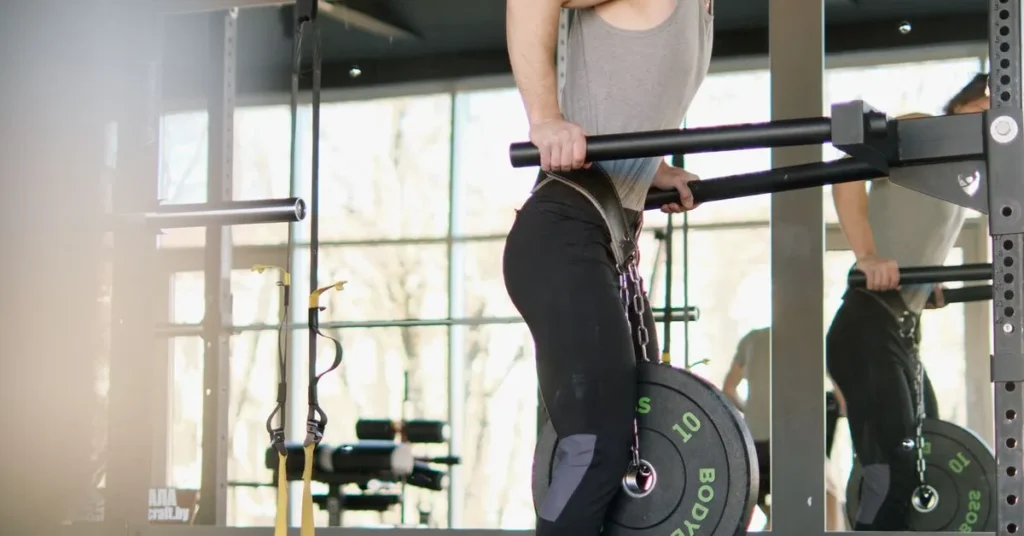
A dip belt is a padded belt worn around the waist and hips, with a chain or strap that hangs weight plates between the legs — so dips, pull-ups and chin-ups can be loaded without holding a dumbbell between the feet.
It is NOT an ab strap, which is a padded sling that hangs the ARMS from a pull-up bar for leg raises. A dip belt hangs WEIGHT from the waist for dips; an ab strap hangs the ARMS for a leg raise.
It is NOT a lifting strap, which is a loop that wraps the wrist and the bar to help the grip on pulls. A dip belt hangs plates from the waist; a lifting strap holds the bar for a deadlift.
It is NOT a weight vest, which spreads plates across the chest and back, and it is NOT a dip station, which is the bars themselves, or a pull-up bar, which is the bar overhead.
This guide follows our previous guide, Best Ab Straps for Home Gyms — an ab strap holds the arms for the leg raise, while a dip belt holds the plates for the dip. Many home-gym lifters look at both before deciding which strap fits their training.
The six picks below run from a 24-inch Spud Inc chain to a 40-inch RDX chain, with stated capacities from 270 lb to 600 lb across five picks. Each one states its own chain, capacity and material honestly, including the lookalikes you should not buy past.
Every photo in this guide is an honest gym scene, not a product shot. None of the lifters shown is wearing the named pick — the captions say what each photo actually shows.
One safety note before the picks: this guide is general information only. A belt does not treat or cure back pain, shoulder pain, elbow pain or any core condition, and it is not a substitute for medical advice.
If you have persistent pain, numbness, weakness, or a recent injury, talk to a clinician first — and never train through sharp pain to test a belt.
A belt that pinches, numbs, or leaves marks that do not fade quickly fits wrong or hangs wrong — adjust it and reassess. And a chain that slips off the carabiner during a set is clipped wrong, whatever the chart says.
⚡ Quick Picks
Six dip belts at a glance — a classic Rogue, a padded Rip Toned, a heavy-duty Spud Inc, a value RDX T7, a 2-in-1 Kensui and a sized Eleiko.
If your training needs grip help rather than a hanging belt, a glove does a different job — grip and padding for the hands, not a chain for the waist — and our MMA gloves guide covers that half of the kit.

Photo: André Henrique, Pexels — A bearded man with tattoos doing dips on parallel bars in a gym, an honest gym scene, not a product shot.
- Rogue Dip Belt — Best Classic: the classic pick, 3-inch heavy-duty nylon with a 30-inch steel chain and two locking carabiners, made in the USA.
- Rip Toned Dip Belt — Best Padded: the padded pick, a 6-inch neoprene back panel with a steel chain, rated up to 270 lbs or more.
- Spud Inc Dip Belt — Best Heavy-Duty: the heavy-duty pick, heavy-duty webbing with a tested 500 lb capacity, made in America.
- RDX T7 Dipping Belt — Best Value: the value pick, a 6-inch double-padded back support with a 36-inch chain, rated up to 600 lbs.
- Kensui Duo-Belt — Best 2-in-1: the 2-in-1 pick, a dip belt and lifting belt in one, with a 10 mm climbing rope tested to 500 lb.
- Eleiko Dip Belt — Best Sized: the sized pick, three sizes S/M/L with a 150 cm adjustable strap, rated 150 kg per loop.
1️⃣ Rogue Dip Belt — Best Classic

Photo: Ilyas Chabli, Pexels — A man in a black shirt and red shorts holding a weight plate in a dim gym, an honest gym scene, not a product shot.
Specs: 3″ wide heavy-duty nylon (4″ on the back); 30.5″ belt length; 30″ × 1/4″ steel chain; 2× steel D-shaped locking carabiners; product weight 3.2 lb; made in the USA; one size.
The Rogue is the classic pick: a 3-inch heavy-duty nylon belt with a 30-inch steel chain and two D-shaped locking carabiners, from the maker’s own page.
The honest limit is the capacity. Rogue states a chain rating, not a belt working load — so this guide prints the chain figure as a chain figure, and a roundup’s 270 lb note as a roundup’s note, not a maker rating.
Pros:
- Two steel D-shaped locking carabiners hold the chain to the belt.
- Heavy-duty nylon with a wider 4-inch back panel.
- Made in the USA, with a one-size fit for most waists.
Cons:
- No belt working load is stated — only a chain rating (see the flag below).
- One size only — no sized option for a smaller or larger waist.
- At 3.2 lb it is the heaviest stated belt weight here.
Who it’s for: lifters who want the classic nylon belt in this guide — a 30-inch chain and locking carabiners, made in the USA.
⚠️ Do not read the chain rating as a belt load: Rogue’s own page rates the CHAIN at 29,400 lb — a chain figure, not a belt working load. One roundup says the material is strong enough for 270 lbs, and that is a roundup’s note, not a maker rating.
Separately, the 30.5-inch figure is the BELT length, not the chain — one roundup calls it a 30.5-inch chain, and that is the belt measured, not the chain. And the chain is 30 inches long, so check the plates hang clear of the floor on your station.
👉 Check Rogue Dip Belt on Amazon
2️⃣ Rip Toned Dip Belt — Best Padded
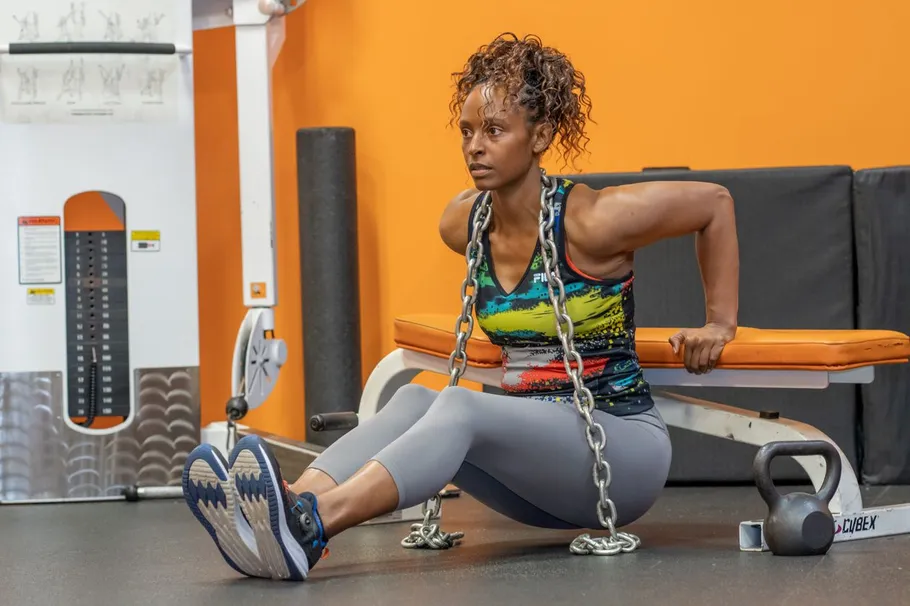
Photo: Styves Exantus, Pexels — A woman doing bench dips with a chain around her, a kettlebell nearby, an honest gym scene, not a product shot.
Specs: 6″ neoprene back panel; ~36″ steel chain; supports up to 270 lbs or more (maker FAQ, riptoned.com); fully adjustable; one size.
The Rip Toned is the padded pick: a 6-inch neoprene back panel with a steel chain, rated up to 270 lbs or more in the maker’s own FAQ.
The honest limit is the chain length. The chain is listed as about 36 inches, so the figure is approximate — a belt with an approximate chain suits lifters who check the listing first, not buyers who need an exact number on the page.
Pros:
- A 6-inch neoprene back panel cushions the waist under load.
- Supports up to 270 lbs or more, per the maker’s own FAQ.
- Fully adjustable fit suits most waists.
Cons:
- Chain length is approximate at about 36 inches — check the listing before ordering.
- One size only — no sized option for a smaller or larger waist.
- Neoprene padding needs drying after sweaty sessions.
Who it’s for: lifters who want a wide neoprene back panel in this guide — 6 inches of padding against the waist.
⚠️ Confirm the chain length on the listing: the chain is listed as about 36 inches, so the figure is approximate. Check the listing’s own figure before ordering, and check the plates hang clear of the floor.
Separately, the 270 lb figure is the maker’s own rating, not a tested result — and the 6-inch panel matches the RDX back support in width, so neither is the widest here. And the pair is one belt, not two — check the listing sells the belt and chain together.
👉 Check Rip Toned Dip Belt on Amazon
3️⃣ Spud Inc Dip Belt — Best Heavy-Duty
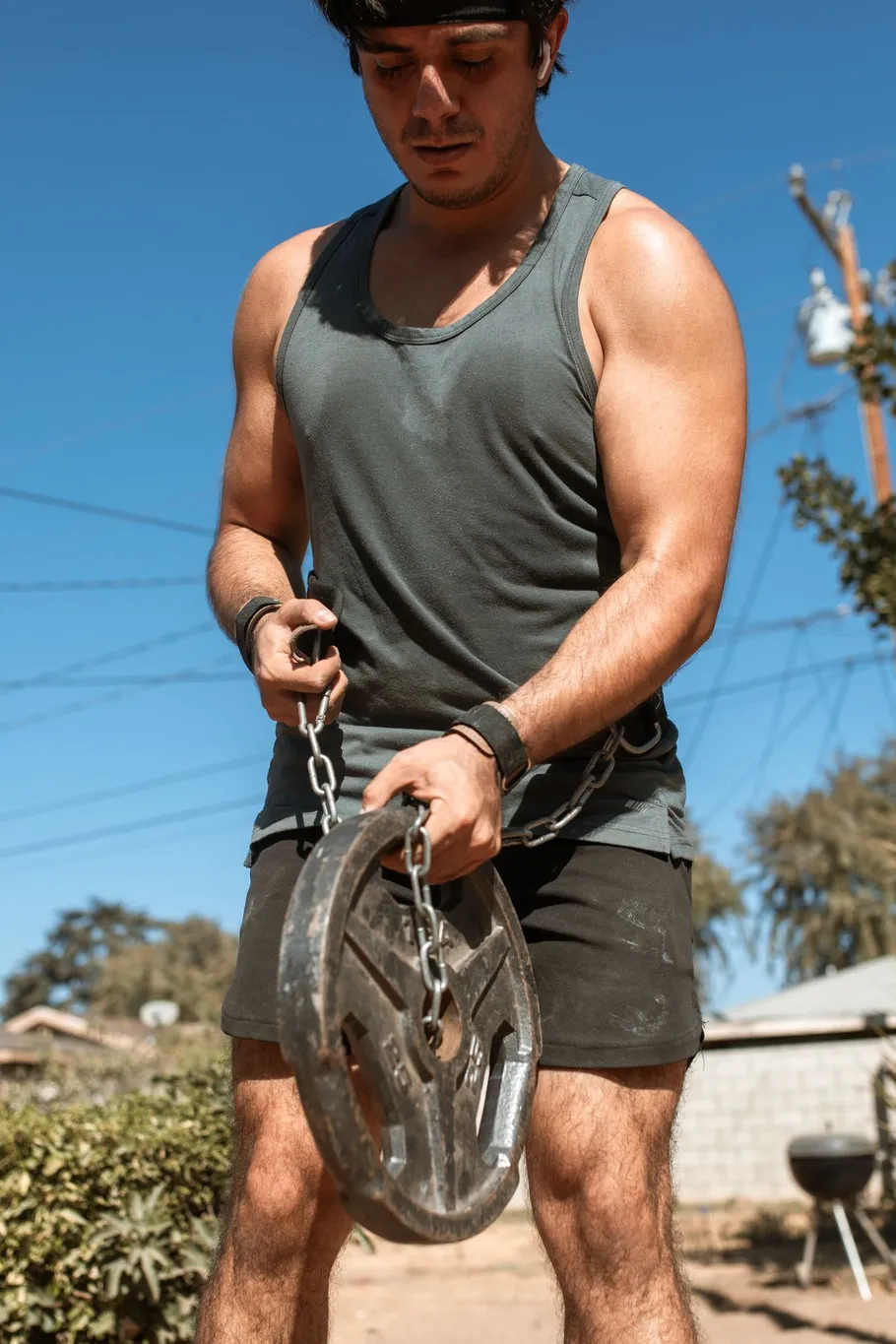
Photo: RDNE Stock project, Pexels — A man in a grey tank top holding a weight plate with a chain outdoors, an honest gym scene, not a product shot.
Specs: Heavy-duty webbing; tested capacity 500 lbs; 2-foot chain with two spring clips; made in America (elitefts.com); also usable for sled pulls per roundups.
The Spud Inc is the heavy-duty pick: heavy-duty webbing with a tested 500 lb capacity, from the maker’s listing on elitefts.com.
The honest limit is the length. The chain and belt lengths conflict across sources, so this guide prints both figures — a belt with unsettled lengths suits lifters who check the listing first, not buyers who need one number on the page.
Pros:
- Tested capacity of 500 lbs, stated by the maker.
- Heavy-duty webbing built for heavy plates.
- Also usable for sled pulls, per roundups.
Cons:
- Chain and belt lengths conflict across sources (see the flag below).
- Two spring clips, not locking carabiners — check the clips before each set.
- Webbing has no padding panel, so it suits lifters who do not need one.
Who it’s for: lifters who want a tested 500-lb webbing belt in this guide — heavy-duty webbing, made in America.
⚠️ Check the lengths on the listing: the chain is 24 inches per the maker and retailers, but 26 inches per Garage Gym Lab — and the belt is 31 inches per Garage Gym Lab, but about 35 inches round-ring to round-ring per Garage Gym Reviews.
Do not compare this belt in inches until the listing settles it.
Separately, one roundup describes a tough leather feel, but the spec is heavy-duty webbing — the leather wording is a roundup’s description, not a spec. And the pair is one belt, not two — check the listing sells the belt and chain together.
👉 Check Spud Inc Dip Belt on Amazon
4️⃣ RDX T7 Dipping Belt — Best Value
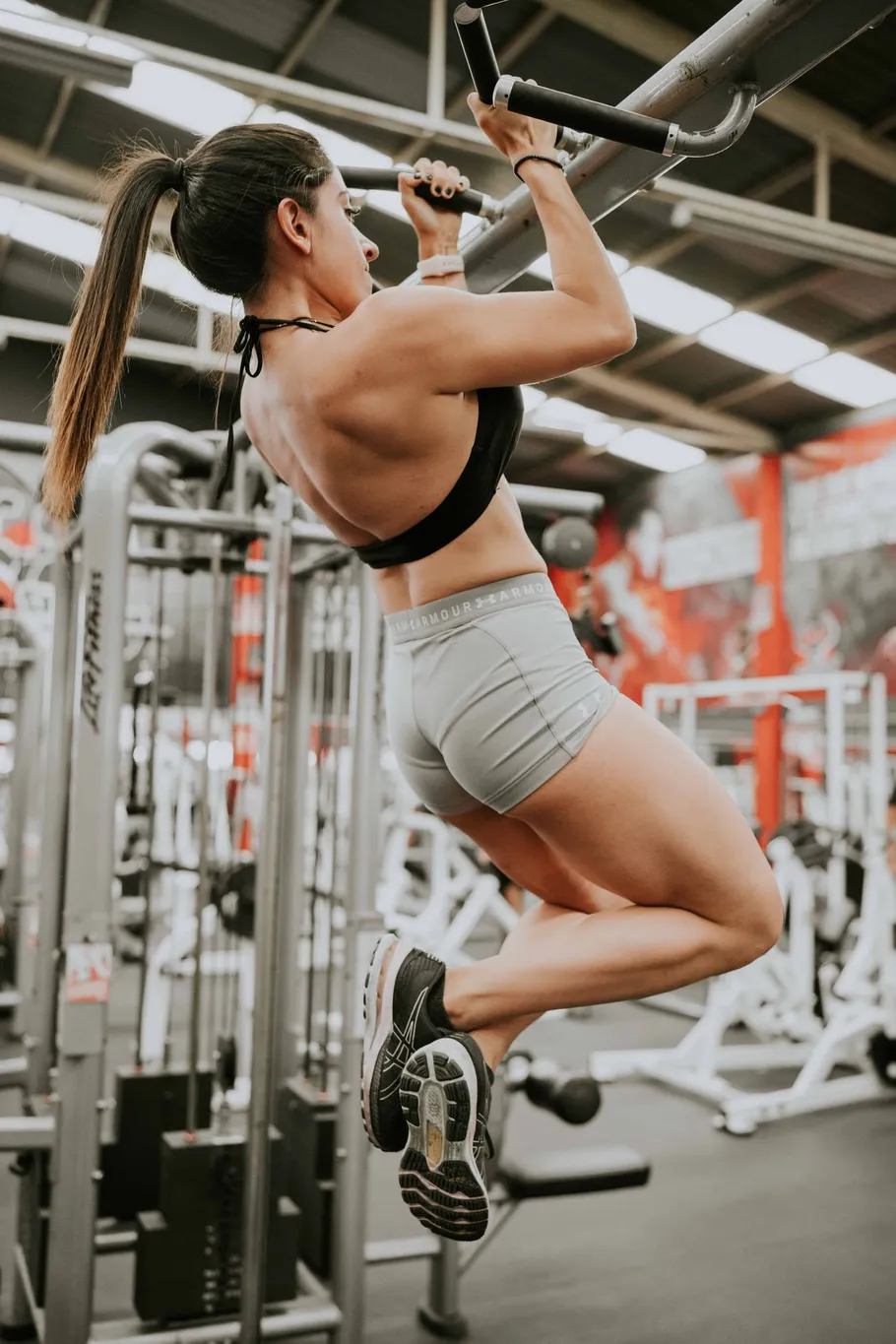
Photo: Amar Preciado, Pexels — A woman doing pull-ups in a gym, an honest gym scene, not a product shot.
Specs: Heavy-duty polypropylene; 36″ 7-gauge HG stainless steel chain extending to 40″ with carabiners; 6″ wide × 32″ long double-padded EVA foam back support; supports up to 600 lbs (RDX blog, blogs.rdxsports.com).
The RDX T7 is the value pick: a 6-inch double-padded EVA foam back support with a 36-inch chain, rated up to 600 lbs in the maker’s own blog.
The honest limit is the model. Another retailer lists an RDX dipping belt at 100 kg max, so the T7 must be checked on the listing — a belt with a lookalike listing suits lifters who check the model first, not buyers who order by brand alone.
Pros:
- Highest stated belt capacity here at 600 lbs.
- Double-padded EVA foam back support, 6 inches wide.
- Chain extends to 40 inches with carabiners for longer hangs.
Cons:
- Check the model is the T7 — another RDX listing shows 100 kg max (see the flag below).
- The 600 lb figure is the maker’s own rating, not a tested result.
- The chain is 36 inches before the carabiners extend it — check the hang suits your station.
Who it’s for: lifters who want the highest stated belt capacity in this guide — 600 lbs with a double-padded back support.
⚠️ Check the model on the listing: whatsthebest/Argos lists an RDX dipping belt at 100 kg max — check the listing you order from is the T7, with the 600 lb rating and the 36-inch chain. Do not order by brand alone.
Separately, the 36-inch chain extends to 40 inches with the carabiners fitted — so the hang length depends on how it is clipped. And the pair is one belt, not two — check the listing sells the belt and chain together.
👉 Check RDX T7 Dipping Belt on Amazon
5️⃣ Kensui Duo-Belt — Best 2-in-1
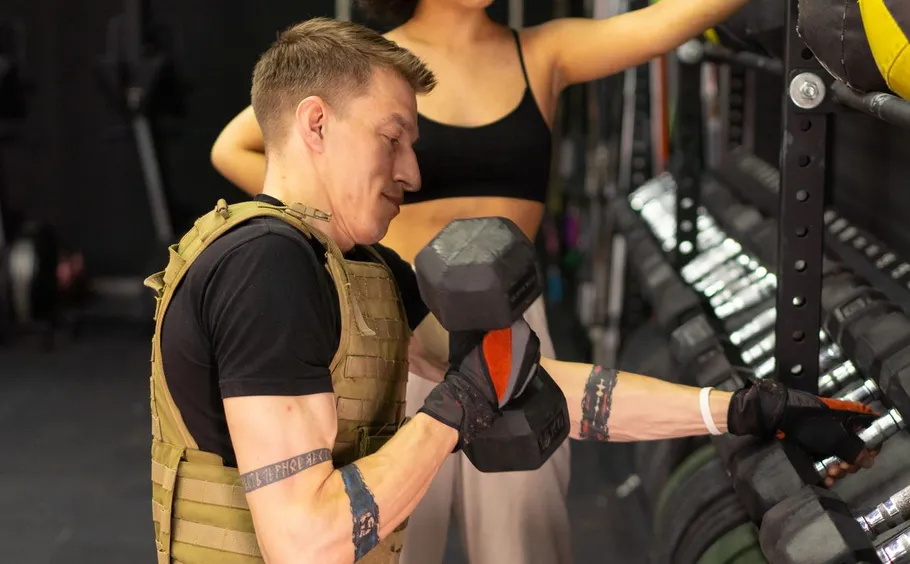
Photo: Mikhail Nilov, Pexels — A man in a weighted vest doing dumbbell curls, an honest gym scene, not a product shot.
Specs: Dip belt and lifting belt in one; 10 mm climbing rope tested to 500 lb (no failure); 2× auto-lock carabiners; waist 26–40″; heavy-duty velcro closure; 360 Brace™ padding; belt weight 0.9 lb (kensui.com).
The Kensui Duo-Belt is the 2-in-1 pick: one belt for weighted dips and for lifting, with a 10 mm climbing rope tested to 500 lb, from the maker’s own site.
The honest limit is the waist range. The belt fits waists from 26 to 40 inches, so it suits lifters inside that range — and a belt with a set range suits buyers who measure first, not buyers who guess.
Pros:
- One belt does two jobs — dips and lifting.
- Climbing rope tested to 500 lb with no failure.
- Lightest stated belt weight here at 0.9 lb.
Cons:
- Waist range is 26–40 inches only — measure before ordering.
- A rope, not a chain — check the rope length suits your station.
- Velcro closure needs checking before each set.
Who it’s for: lifters who want one belt for dips and for lifting in this guide — the only 2-in-1 pick here.
⚠️ Measure your waist first: the belt fits 26 to 40 inches, and a waist outside that range will not fit. Measure over training clothes, then match the listing — do not guess.
Separately, the 500 lb figure is a ROPE test with no failure, not a belt working load — do not rank it against a belt capacity. And the pair is one belt, not two — check the listing sells the belt and rope together.
👉 Check Kensui Duo-Belt on Amazon
6️⃣ Eleiko Dip Belt — Best Sized
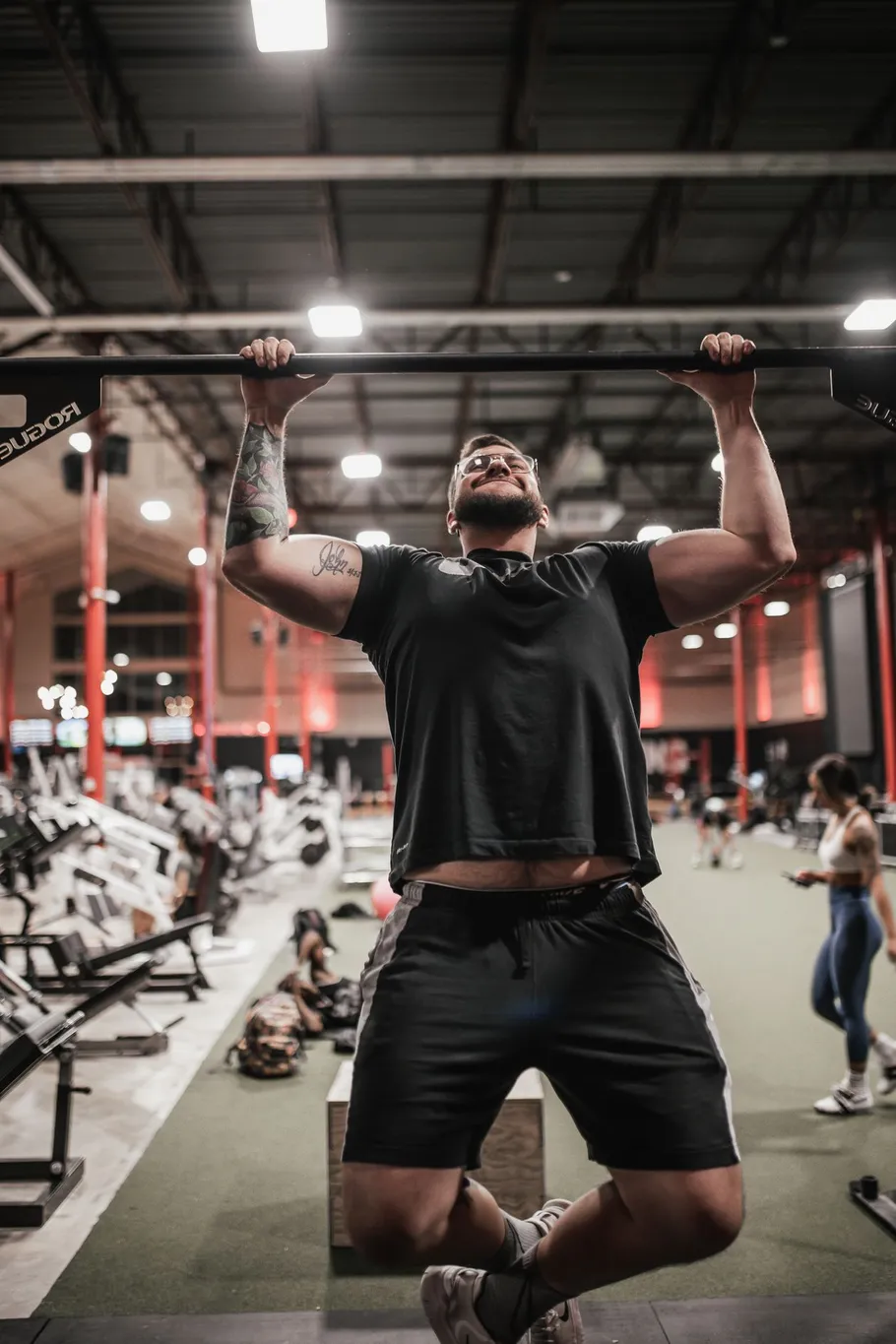
Photo: Ushindi Namegabe, Pexels — A man doing pull-ups in a large gym, an honest gym scene, not a product shot.
Specs: 3 sizes S/M/L; max load 150 kg per loop; 150 cm adjustable strap; 4 strap attachment points; quick-release buckle; 1-year warranty; 8 mm thick; 140 mm wide; 1 kg; 450 kg drop-tested (Eleiko product sheet); also for belt squats and sleds.
The Eleiko is the sized pick: three sizes S/M/L with a 150 cm adjustable strap, rated 150 kg per loop, from the maker’s product sheet.
The honest limit is the size. Three sizes suit more waists than one size, but the size must be picked — and a belt with sizes suits buyers who measure first, not buyers who order one size.
Pros:
- Three sizes S/M/L — the only sized belt here.
- Four strap attachment points spread the load.
- Quick-release buckle for fast removal between sets.
Cons:
- Pick the size first — S/M/L must match the waist.
- The 150 kg figure is per loop, not a whole-belt load.
- At 1 kg it is heavier than the Kensui’s 0.9 lb.
Who it’s for: lifters who want a sized fit in this guide — three sizes, a 150 cm strap and a quick-release buckle.
⚠️ Pick the size on the listing: S, M and L are different belts, so check the size chart on the listing before ordering. Do not order the wrong size and expect the strap to fix it.
Separately, the 450 kg drop test is a drop test, not a working load — do not rank it against a belt capacity. And the pair is one belt, not two — check the listing sells the belt and strap together.
👉 Check Eleiko Dip Belt on Amazon
📊 Comparison Table
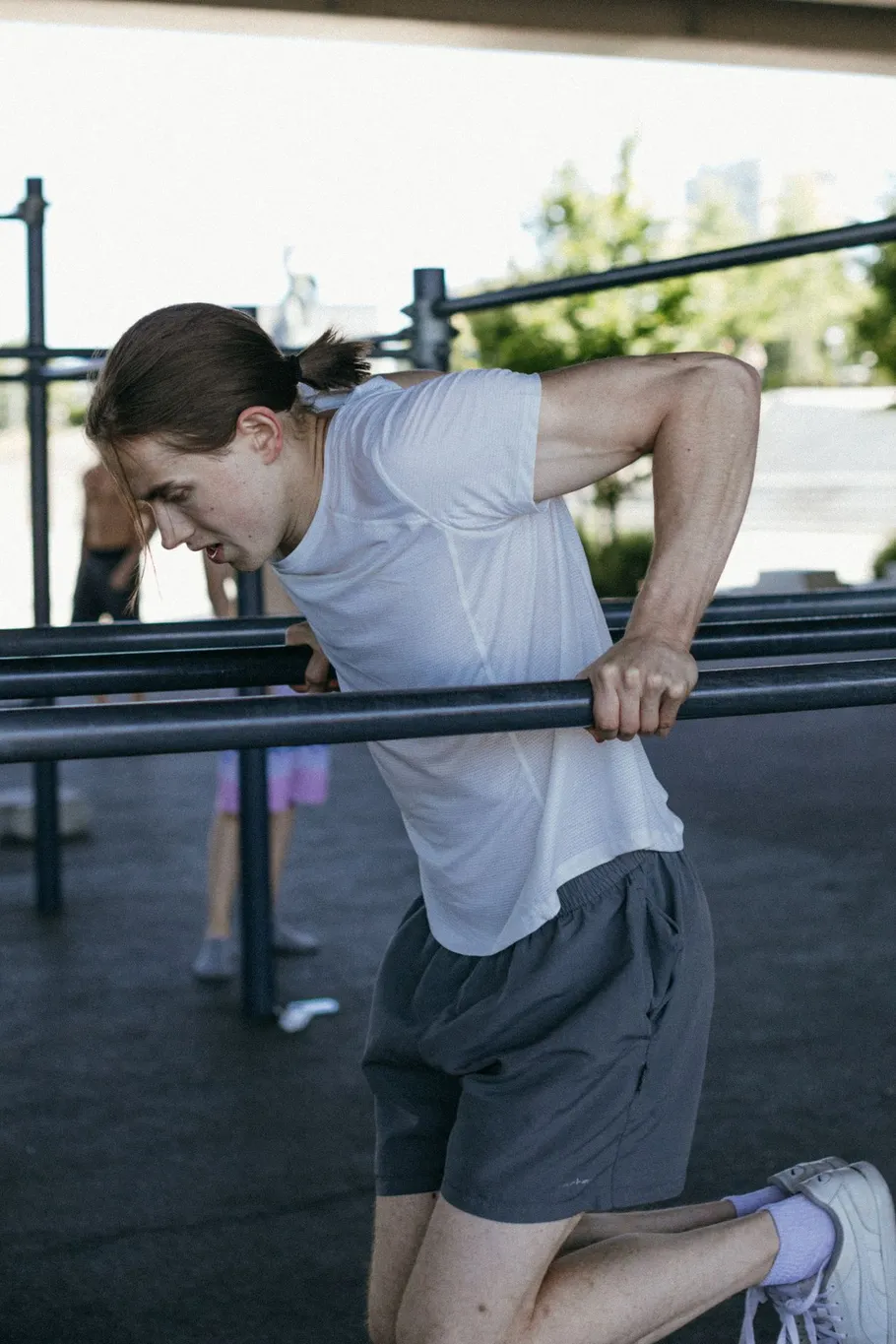
Photo: KoolShooters, Pexels — A man in a white t-shirt doing dips on outdoor parallel bars under a bridge, an honest gym scene, not a product shot.
| Pick | Attachment | Chain-or-strap length | Capacity | Watch out |
| Rogue Dip Belt | Steel chain, 2 locking carabiners | 30″ chain | Chain rated 29,400 lb | 30.5″ is the belt, not the chain |
| Rip Toned Dip Belt | Steel chain | ~36″ chain | Up to 270 lb or more | Chain length approximate |
| Spud Inc Dip Belt | 2-ft chain, 2 spring clips | 24″ chain (26″ per one roundup) | 500 lb tested | Lengths conflict across sources |
| RDX T7 Dipping Belt | 36″ chain, carabiners | 36″, extends to 40″ | 600 lb | Check the model is the T7 |
| Kensui Duo-Belt | 10 mm climbing rope, 2 auto-lock carabiners | Rope, no chain length stated | 500 lb rope test | Waist 26–40″ only |
| Eleiko Dip Belt | 150 cm strap, 4 attachment points | 150 cm strap | 150 kg per loop | Pick the size (S/M/L) |
Table honesty note: the Attachment column mixes steel chains (Rogue, Rip Toned, Spud Inc, RDX), a climbing rope (Kensui) and an adjustable strap (Eleiko) — three different attachments, so do not rank the six by the Attachment column alone.
The Chain-or-strap length column mixes chain lengths in inches (24″ to 40″), a 150 cm strap (Eleiko) and no chain length at all (Kensui) — three different measures, so do not rank the six by the Length column alone.
The Capacity column mixes belt working loads in pounds (270 lb to 600 lb), a rope test (Kensui, 500 lb with no failure), a per-loop figure (Eleiko, 150 kg per loop) and a chain rating (Rogue, 29,400 lb).
The 270–600 lb range covers five picks only, and the Rogue sits outside it as a chain figure.
Do not crown any pick the strongest in this guide without the qualifier: the RDX T7 is the highest STATED belt capacity at 600 lbs, and the Rogue carries no belt working load at all — an unmeasured pick cannot be ranked on strength.
The same-variant conflicts are printed, not settled: the Spud Inc chain is 24 inches per the maker and retailers but 26 inches per Garage Gym Lab, and its belt is 31 inches per Garage Gym Lab but about 35 inches round-ring to round-ring per Garage Gym Reviews.
The Rogue’s 30.5-inch figure is the belt length, not the chain, whatever one roundup calls it.
Dip belts are a training tool, not a competition item — no pick here claims any federation approval, and the table’s “Watch out” column carries listing and fit notes, not an approval.
🧭 How to Choose the Right Dip Belt
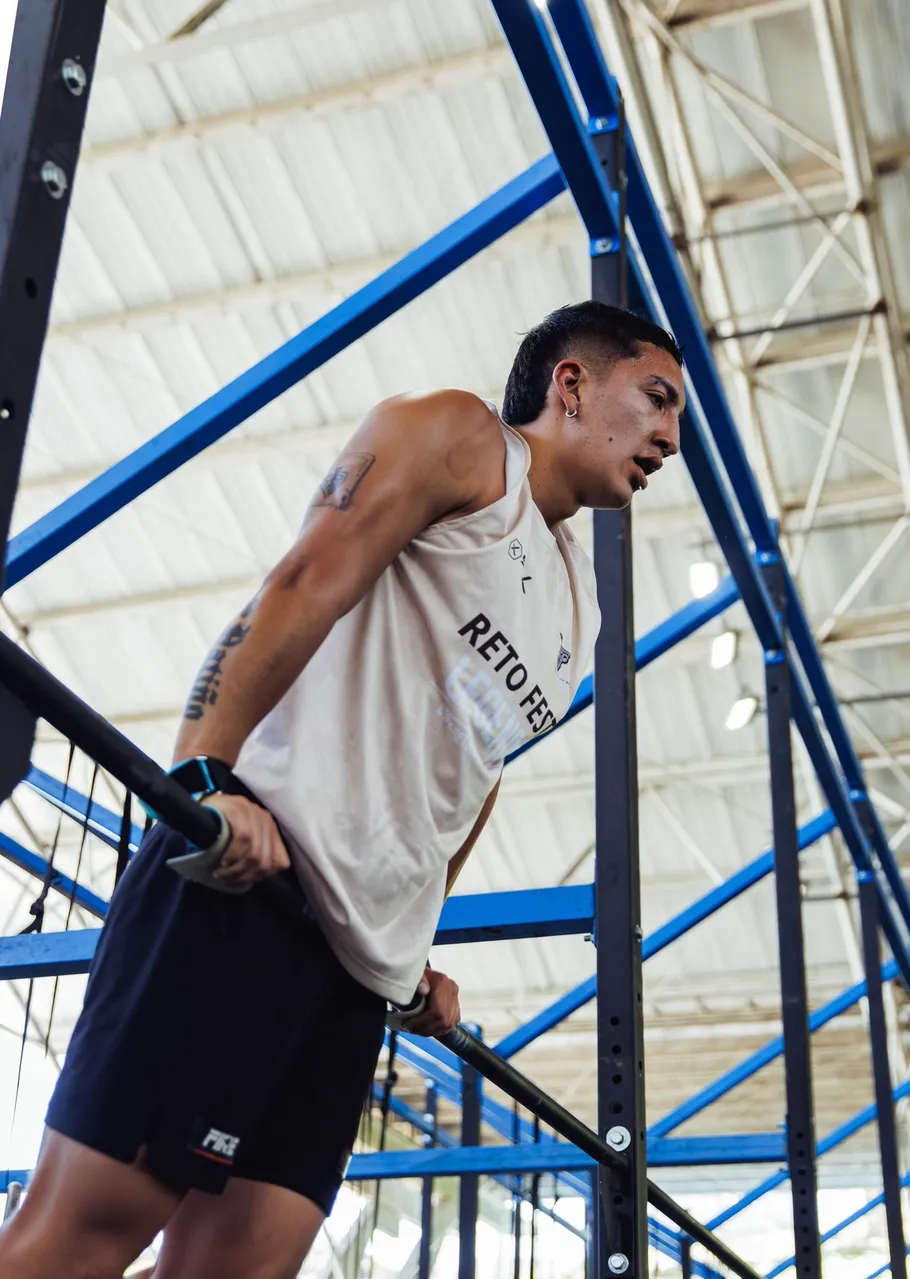
Photo: CRISTIAN CAMILO ESTRADA, Pexels — A man in a white tank top doing dips on parallel bars in an indoor gym, an honest gym scene, not a product shot.
Start with the type. A chain belt hangs plates from a steel chain, a strap belt hangs them from an adjustable strap, and a rope belt hangs them from climbing rope. A 2-in-1 belt does dips and lifting in one.
A chain belt suits buyers who want the standard hang. A strap belt suits buyers who want adjustment without a chain, and a 2-in-1 suits buyers who want one belt for two jobs.
None of these is a weightlifting belt, a lifting strap, an ab strap or a weight vest.
If it braces the waist, wraps the wrist, hangs the arms, or spreads plates across the chest, it is not a dip belt, whatever the listing title says.
Then pick the length and fit. Dip belts are sold by chain length, strap length or waist size, and the picks here run from a 24-inch chain to a 40-inch chain.
The Spud Inc is the shortest stated chain at 24″ and the RDX the longest at 40″ with carabiners. The Kensui has no chain length, and the Eleiko is sold by strap length and size, so they sit outside the chain range.
A longer chain hangs the plates lower and gives more clearance, but it needs more room below the station. A shorter chain hangs the plates higher — and twenty-four inches is the shortest chain here.
Check the bars before you hang. A dip belt is only as safe as the bars it hangs from — check the bars’ own weight rating, and a pull-up bar has its own limit. A chain that slips off the carabiner during a set is clipped wrong, not broken.
And check the station’s fixings, not the listing headline. A station rated for bodyweight dips may still flex under a heavy loaded dip — add weight slowly, start with a light plate, and build up.
Think about material and padding. Nylon is tough and light, webbing is the heavy-duty choice, polypropylene is the value body, and neoprene or EVA foam pads the waist. A locking carabiner holds the chain to the belt, and a storage bag keeps the pair together.
A carabiner is a fitting aid, not a separate belt — and a belt that numbs is hung too tight, whatever the length says. Re-hang before re-ordering. And a belt that pinches is padded wrong, not broken.
A dip belt hangs weight from the waist, it does not brace the waist — our weightlifting belts guide covers the stiff band for the waist itself, so the core is covered in two pieces.
Finally, kit out the rest of the session honestly. A belt loads the dip and the pull-up, and the strength work that makes a belt useful still needs the basics, which is why our adjustable dumbbells guide sits alongside this one in a home gym.
❓ Frequently Asked Questions
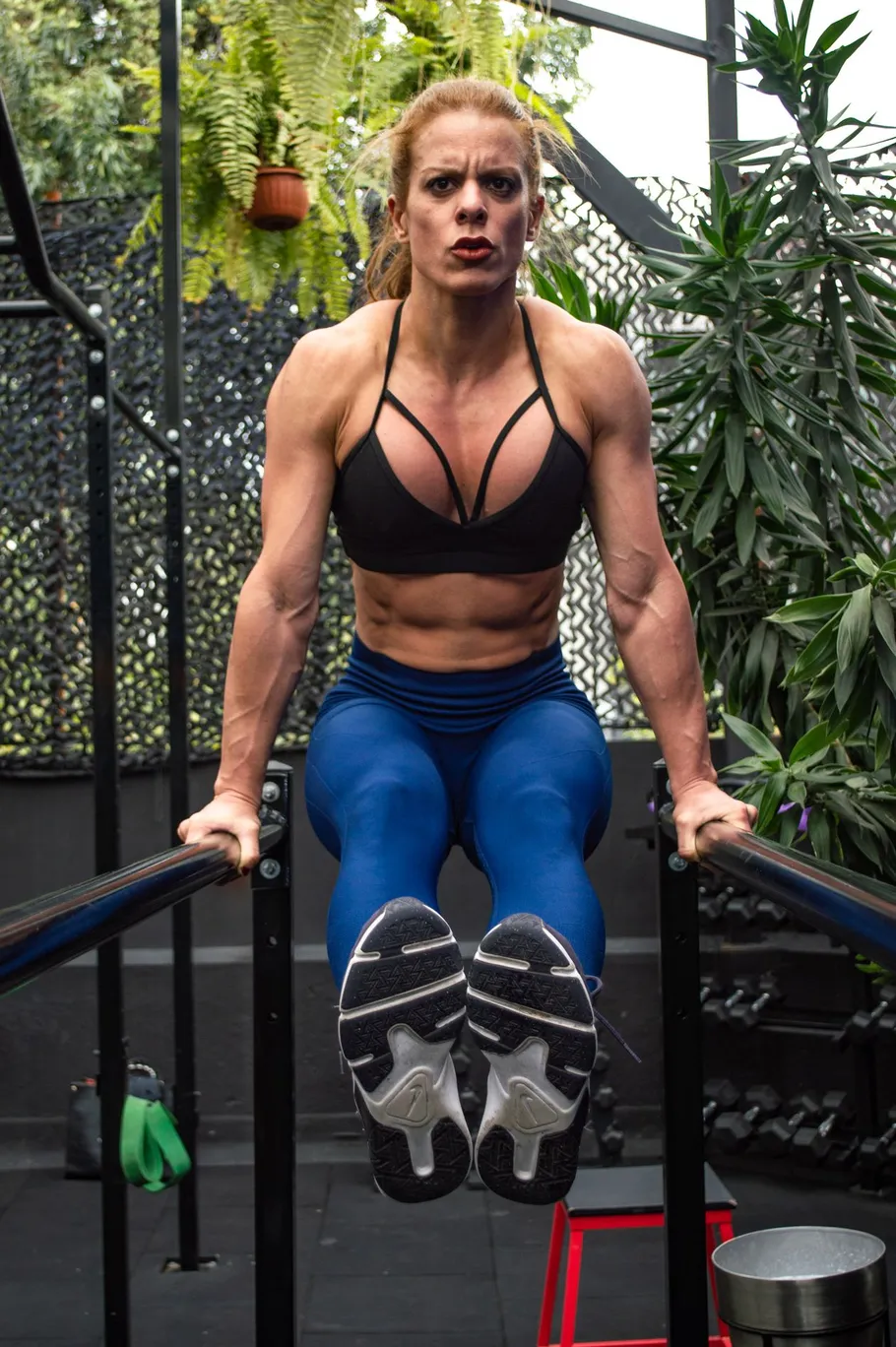
Photo: RI TF, Pexels — A woman in a sports bra and leggings doing dips on parallel bars in an outdoor gym, an honest gym scene, not a product shot.
Will a dip belt fix my back pain or build muscle fast?
No. A dip belt hangs plates from the waist for weighted dips and pull-ups; it does not treat or cure back pain, shoulder pain, elbow pain or any core condition, and no pick in this guide claims otherwise.
A belt lets you add weight to dips and pull-ups, so the muscles can work harder — but that help is for the set, not a promise about pain or fast muscle, and a belt is not a treatment.
Persistent pain, numbness, weakness, or a recent injury belongs with a clinician first — a belt is not a diagnosis, and training through sharp pain to test one is a bad idea.
What is the difference between a dip belt, a weightlifting belt, a lifting strap and an ab strap?
A dip belt is a padded belt that hangs plates from the waist for weighted dips, pull-ups and chin-ups. A weightlifting belt is a stiff band that braces the waist for squats and deadlifts.
A lifting strap is a loop that wraps the wrist and the bar to help the grip on pulls, and an ab strap is a padded sling that hangs the arms from a pull-up bar for leg raises.
They cover different things — buying a belt when only a strap is needed, or a strap when only a hang will do, is the most common mistake in this category.
How much weight can I hang from a dip belt?
Check the belt’s own figure, not the chain’s. The picks here state 270 lb to 600 lb across five picks — the Rip Toned at 270 lb or more, the Spud Inc tested at 500 lb, the Kensui rope tested at 500 lb, and the RDX T7 at 600 lb.
So the listing you order from is the authority on capacity, not any roundup — the Rogue states a chain rating of 29,400 lb, which is a chain figure, not a belt working load. And the Eleiko states 150 kg per loop, not a whole-belt load.
How do I choose the right chain length and fit?
Match the length to the station and the fit to the waist. The picks here run from a 24-inch chain to a 40-inch chain — the Spud Inc is the shortest stated chain at 24″ and the RDX the longest at 40″ with carabiners — and a longer chain hangs the plates lower.
So the listing you order from is the authority on length, not any size chart — dip belts are sold by chain length, strap length or waist size, not by body weight. And the Kensui fits waists from 26 to 40 inches, so measure first.
Chain, strap or rope — which attachment should I choose?
A steel chain is the standard hang — strong, simple, and the plates sit where they are clipped. A strap adjusts without a chain, which suits buyers who want a lighter hang.
So choose a chain if you want the standard belt, a strap if you want adjustment, and a rope if you want the lightest belt here — the Kensui’s 0.9 lb. And a chain that slips is clipped wrong, not broken — re-clip before re-ordering.
Do I need a dip belt for every dip and pull-up session, and how do I look after it?
No. Wear a dip belt for weighted dips, pull-ups and chin-ups, and leave it off for bodyweight sets — your grip and bodyweight strength should still work on their own. A belt is a tool for the loaded set, not a replacement for bodyweight training.
Keep belts dry, wash them as the maker directs, and store them flat or rolled — never folded hard. And pair loaded work with gentle mobility, since our foam rollers guide covers the recovery side of a home-gym routine.
Thanks for reading — we hope this guide helps you pick a dip belt that hangs the plates and does the job you actually need. If a length or a model name disagrees with what you measured, trust the listing, not the headline.
Disclosure: As an Amazon Associate, we earn from qualifying purchases made through links in this article, at no extra cost to you. Product details and availability can change, so please check the listing before ordering.
Pingback: Best Weighted Vests for Home Gyms (2026)
Pingback: Best Jump Ropes for Home Gyms (2026)
Pingback: Best Massage Guns for Home Gyms (2026)