
A massage gun is a handheld tool that taps the muscle many times a second — a motor, a head and a handle, held against the body, not rolled or worn.
It is NOT a foam roller, which is a cylinder you roll your body over on the floor. A gun percusses in one spot; a roller spreads pressure as you move.
It is NOT a massage stick, which is a bar you press and roll by hand, and it is NOT a massage chair, which is a piece of furniture you sit in. A gun is handheld and powered; a stick is manual and a chair is furniture.
It is NOT a heating pad, which warms the skin with steady heat. A gun taps and vibrates; a pad warms and stays still.
It is NOT a dip belt, which hangs plates from the waist for dips, and it is NOT a weightlifting belt, which braces the waist for squats and deadlifts. A gun is a recovery tool you hold, not load you wear.
It is NOT a lifting strap, which wraps the wrist and the bar to help the grip on pulls, and it is NOT a backpack, which carries cargo on the back. A gun fits in a drawer; a backpack needs a hook.
This guide follows our previous guide, Best Jump Ropes for Home Gyms (2026) — a rope loads the legs and the heart in short, sharp bursts, while a gun works the muscles after the skipping stops.
The six picks below run from a 10mm stroke to a 16mm stroke, with stall forces from about 20 lb to 56 lb across the four picks that state one and batteries from 120 minutes to 8 hours claimed. Each one states its own amplitude, heads and honest limits.
Every photo in this guide is an honest gym, clinic or spa scene, not a product shot. None of the people shown is holding the named pick — the captions say what each photo actually shows.
One safety note before the picks: this guide is general information only. A massage gun does not treat or cure muscle pain, back pain, soreness or any condition, and it is not a substitute for medical advice.
If you have persistent pain, numbness, weakness, or a recent injury, talk to a clinician first — and never press a gun hard into a sore spot to test it.
A gun that stalls on the first press is too weak for the job — ease off, change the head, and reassess. And a gun used on bone or the neck is a mistake, whatever the listing says.
⚡ Quick Picks
Six massage guns at a glance — a deep-tissue opove, a long-battery Ekrin, a value RENPHO, a travel Theragun Mini, a seven-head Mebak and a twenty-speed AERLANG.
A massage gun is the recovery half of this series — it sits beside the belt in our dip belts guide, and the two together cover loaded dips and the recovery after them in one corner of a room.
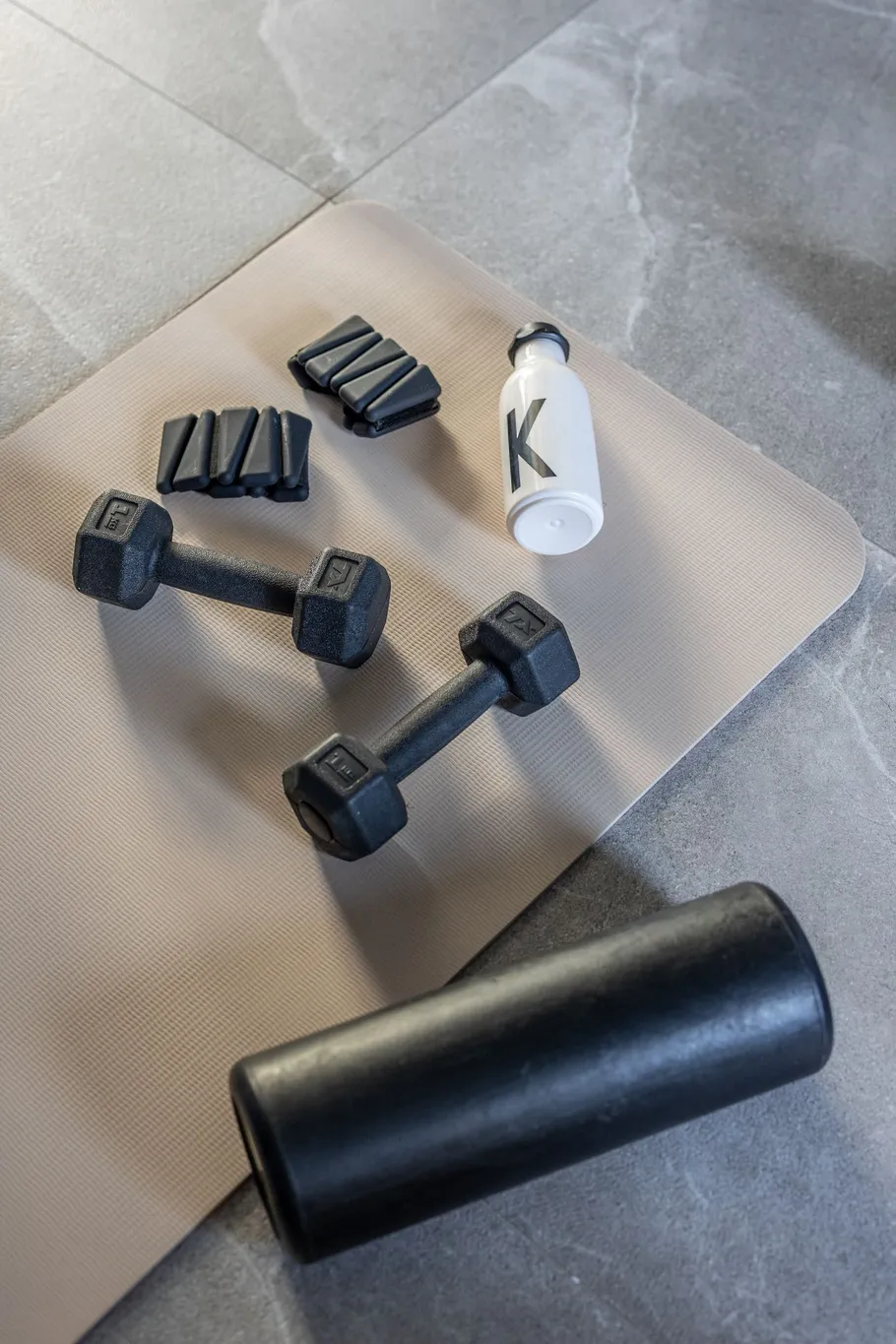
Photo: kasia kurosz, Pexels — A home-gym kit laid out on a mat — dumbbells, wrist weights, a water bottle and a foam roller, an honest still life, not a product shot.
- opove M3 Pro Max — Best Deep Tissue: the deep-tissue pick, a 15mm stroke with a 50 lb stall force per the maker; up to 4 hours of battery, 5 heads.
- Ekrin B37 — Best Battery: the battery pick, 8 hours claimed and 5–6 hours tested, on a 12mm stroke; 56 lb stall force measured.
- RENPHO R3 — Best Value: the value pick, 5 speeds and 5 heads at 1.5 lb; 150 minutes per Garage Gym Reviews.
- Theragun Mini 2nd Gen — Best Travel: the travel pick, a 12mm stroke at 1 lb with 3 speeds; 120 minutes per the maker.
- Mebak 3 — Best Heads: the heads pick, 7 heads on a 12mm stroke; 5 speeds from 950 to 3000 RPM.
- AERLANG EM11 — Best Speed Control: the speed-control pick, 20 speeds on a 16mm stroke; 6 heads including heated ones.
1️⃣ opove M3 Pro Max — Best Deep Tissue
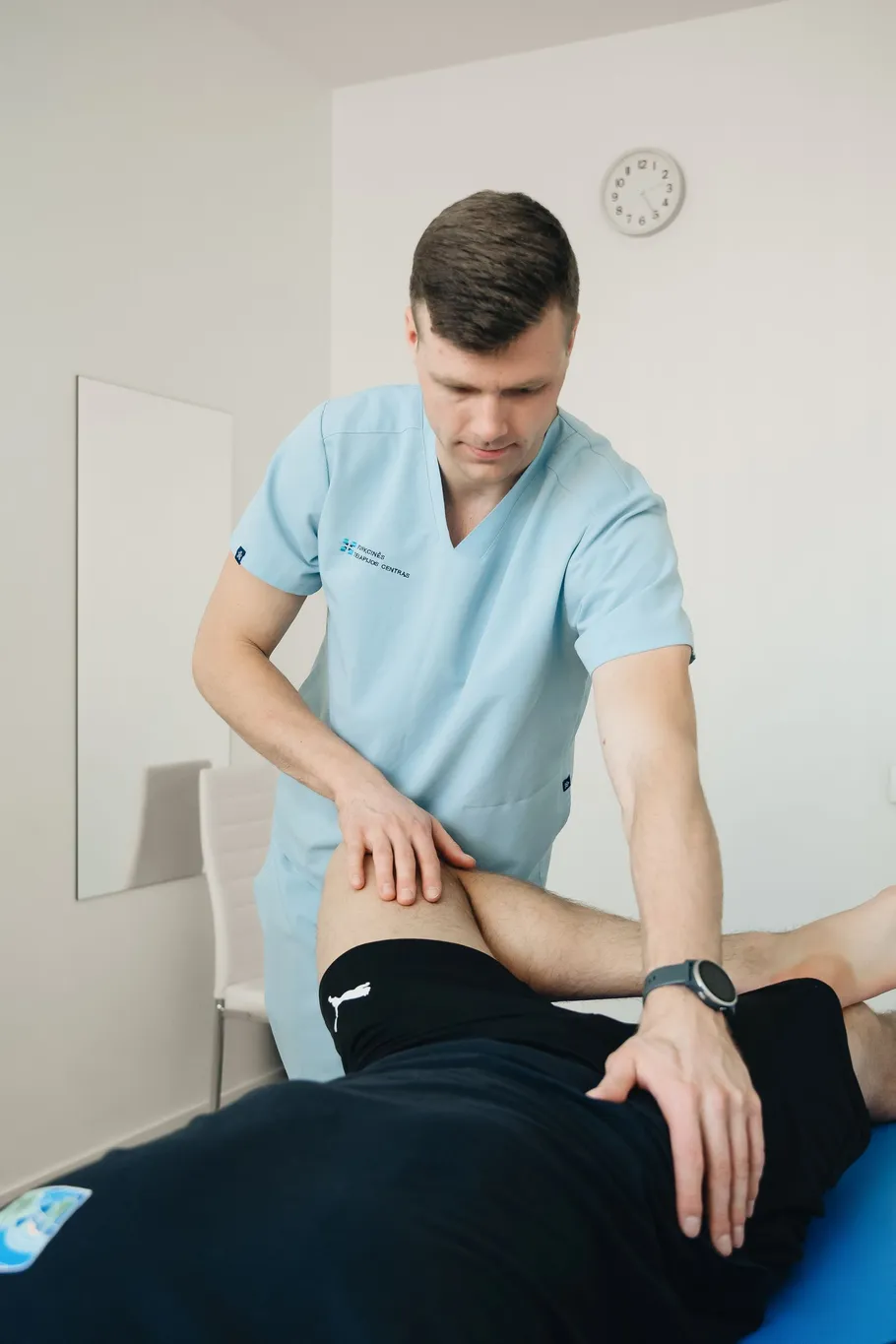
Photo: Funkcinės Terapijos Centras, Pexels — A physiotherapist working on a patient’s leg and hip in a clinic, an honest clinic scene, not a product shot.
Specs: 15mm amplitude; stall force 50 lb per the maker, 55 lb per Recovatech and the Gadgeteer; 4 speeds per the maker, 5 per Recovatech; battery up to 4 hours; 2.3 lb; 5 attachments; noise 45–63 dB; manual and auto modes.
The opove is the deep-tissue pick: a 15mm stroke with a strong stall force, built to reach deep muscle after heavy training.
The honest limit is the stall force and the speed count. The maker states 50 lb and 4 speeds; Recovatech and the Gadgeteer state 55 lb and 5 speeds — this guide prints both, with the maker as the authority.
At 2.3 lb, this is the heaviest stated gun here — heavier than the 1 lb Mini — so it suits the home gym, not the travel bag.
The M3 Pro (2022/2023, 12mm, about 40 lb) and the M3 Pro 2 (12mm, 70 lb advertised) are different listings — buy the M3 Pro Max for the 15mm stroke here.
Pros:
- Deep stroke stated here at 15mm — second only to the AERLANG.
- Manual and auto modes — the gun adjusts itself when the pressure changes.
- 5 attachments cover the back, legs and shoulders.
Cons:
- Stall force differs by source — 50 lb or 55 lb.
- Speed count differs by source — 4 or 5.
- Heaviest stated gun here at 2.3 lb.
Who it’s for: lifters and trainers who want a strong stroke for deep tissue after heavy sessions.
⚠️ The stall force is stated two ways: 50 lb per the maker and 55 lb per Recovatech and the Gadgeteer. The maker is the authority — do not rank this gun against the Ekrin’s 56 lb on the review figure.
Separately, the 15mm stroke is the second-longest stated here — the AERLANG is first at 16mm — and the 4-hour battery is mid-pack, behind the Ekrin’s 8 hours claimed and ahead of the Mini’s 120 minutes.
👉 Check opove M3 Pro Max on Amazon
2️⃣ Ekrin B37 — Best Battery
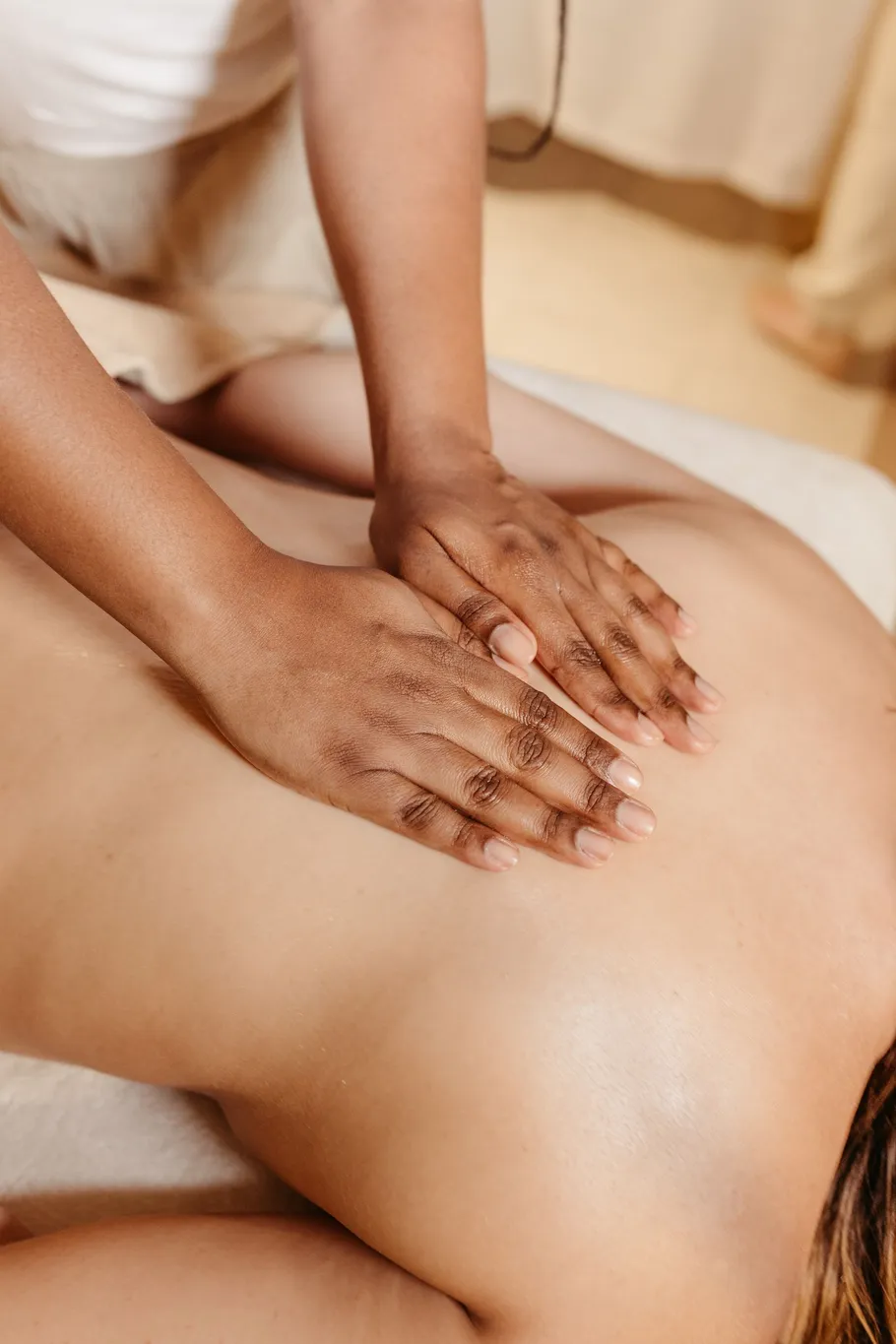
Photo: Jonathan Borba, Pexels — A therapist’s hands working on a client’s back in a spa, an honest spa scene, not a product shot.
Specs: 12mm amplitude; stall force 56 lb, measured by Massage Gun Advice; 5 speeds, 1400–3200 RPM; battery 8 hours claimed, 5–6 hours tested; 2.2 lb measured, about 1.6 lb per one source; lifetime warranty for registered customers; 4 attachments; noise 35–55 dB.
The Ekrin is the battery pick: 8 hours claimed and 5–6 hours tested, the longest run here by a clear margin.
The honest limit is the battery and the weight. The 8 hours is the maker’s claim; Massage Gun Advice measured 5–6 hours — this guide prints both, with the tested figure as the honest one.
The 56 lb stall force was measured by Massage Gun Advice, not claimed by the maker — the highest stated figure here, and the only one measured by an independent tester.
The B37S is a different listing — up to 8 hours, about 1.7 lb, variable speeds — and the current revision is the B37v2, with USB-C PD charging. Buy the B37 for the figures here.
Pros:
- Longest battery here — 8 hours claimed, 5–6 hours tested.
- Highest stated stall force here at 56 lb, measured by Massage Gun Advice.
- Lifetime warranty for registered customers.
Cons:
- Battery differs by source — 8 hours claimed, 5–6 hours tested.
- Weight differs by source — 2.2 lb measured, about 1.6 lb per one source.
- Only 4 attachments — the fewest heads after the Mini’s 3.
Who it’s for: trainers and therapists who want long sessions without charging, and a strong stall force.
⚠️ The 8 hours is a claim, not a test result: Massage Gun Advice measured 5–6 hours. Plan on the tested figure, and treat the claim as the ceiling.
Separately, the 12mm stroke ties with the Mini and the Mebak — the AERLANG is the longest stated at 16mm — and the 1400–3200 RPM range tops out at the same number as the RENPHO’s 3200 PPM, though the units differ.
3️⃣ RENPHO R3 — Best Value
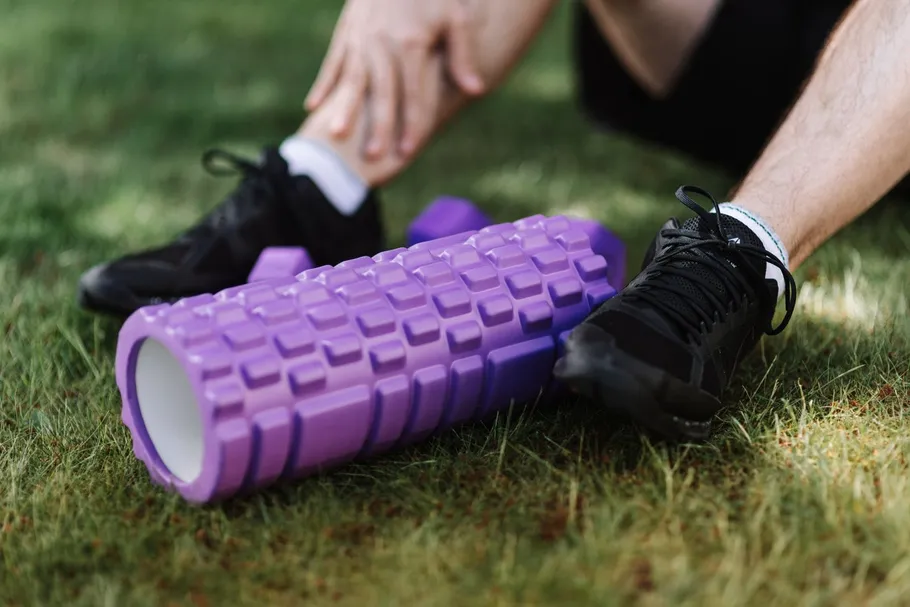
Photo: kaboompics, Pexels — Black sneakers and a purple foam roller on grass, an honest still life, not a product shot.
Specs: 5 speeds, 1800–3200 PPM; 5 attachments (ball, fork, flat, bullet, dampener); 1.5 lb; battery 150 minutes per Garage Gym Reviews, 80 minutes per Expert Reviews; amplitude 10mm per Garage Gym Reviews, 9mm per one review; noise 40 dB maximum per Garage Gym Reviews, 45 dB per Expert Reviews.
The RENPHO is the value pick: 5 speeds and 5 heads at 1.5 lb, for less than the guns around it.
The honest limit is the stroke. Garage Gym Reviews notes the 10mm stroke makes this closer to a vibration massage than a deep percussive one — a fair warning, not a flaw, at this size.
The battery and the amplitude are stated two ways — 150 minutes per Garage Gym Reviews but 80 minutes per Expert Reviews, and 10mm per Garage Gym Reviews but 9mm per one review — with Garage Gym Reviews as the authority.
At 1.5 lb, this is the second-lightest stated gun here — lighter than the 2.2 lb Ekrin and the 2.3 lb opove — so it travels well and tires the arm slowly.
Pros:
- Lightest stated gun here after the Mini, at 1.5 lb.
- 5 speeds and 5 heads cover most spots.
- Value pick — the cheapest route to five speeds.
Cons:
- Battery differs by source — 150 minutes or 80 minutes.
- Amplitude differs by source — 10mm or 9mm.
- Closer to vibration than percussion, per Garage Gym Reviews.
Who it’s for: buyers who want a light, simple gun for everyday use and are happy with a gentler stroke.
⚠️ The 10mm stroke is the shortest stated here: Garage Gym Reviews calls this closer to vibration than percussion. Buy it for gentle, everyday work, not deep tissue.
Separately, the 9mm figure from one review sits below the guide’s 10–16mm range — this guide keeps it out of the range and prints it as a conflict, with Garage Gym Reviews’ 10mm as the authority.
4️⃣ Theragun Mini 2nd Gen — Best Travel
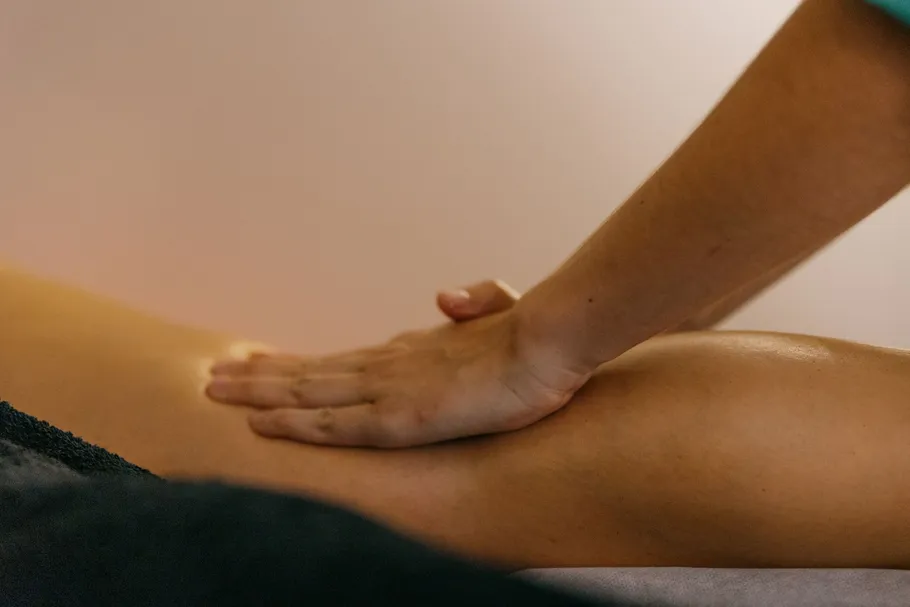
Photo: João Jesus, Pexels — A therapist’s hand pressing on a client’s leg, an honest clinic scene, not a product shot.
Specs: 12mm amplitude; 3 speeds, 1750/2100/2400 PPM; battery 120 minutes per the maker, about 1.5 hours in Massage Gun Advice testing; 1 lb per the maker, 1.1 lb measured with the ball head; stall force about 20 lb; 3 attachments (dampener, standard ball, thumb); USB-C; ASIN B0DD4GKV9Q.
The Mini is the travel pick: a 12mm stroke at 1 lb, 20% smaller and 30% lighter than the 1st generation, with USB-C charging.
The honest limit is the battery and the weight. The maker states 120 minutes and 1 lb; Massage Gun Advice measured about 1.5 hours and 1.1 lb with the ball head — this guide prints both.
The Mini 1st Gen (150 minutes, 1.45 lb) and the Mini 3rd Gen (3 hours) are different listings — buy the 2nd Gen for the figures here.
At about 20 lb, this is the weakest stated stall force here — the Ekrin’s 56 lb is nearly three times stronger — so it suits sore spots, not deep tissue.
Pros:
- Lightest stated gun here at 1 lb.
- Pocket-sized travel pick — 20% smaller and 30% lighter than the 1st Gen.
- USB-C charging — the same cable as a phone.
Cons:
- Shortest battery here — 120 minutes per the maker, about 1.5 hours tested.
- Weakest stated stall force here at about 20 lb.
- Only 3 speeds and 3 heads — the fewest here.
Who it’s for: travellers and gym-bag carriers who want a small, light gun for sore spots between sessions.
⚠️ The 120 minutes is the maker’s figure: Massage Gun Advice measured about 1.5 hours. And the stall force is about 20 lb, the weakest stated here — do not buy this one for deep tissue.
Separately, the 3 speeds are the fewest here — the AERLANG has 20 — and the 3 heads are the fewest too, while the 12mm stroke ties with the Ekrin and the Mebak.
👉 Check Theragun Mini 2nd Gen on Amazon
5️⃣ Mebak 3 — Best Heads
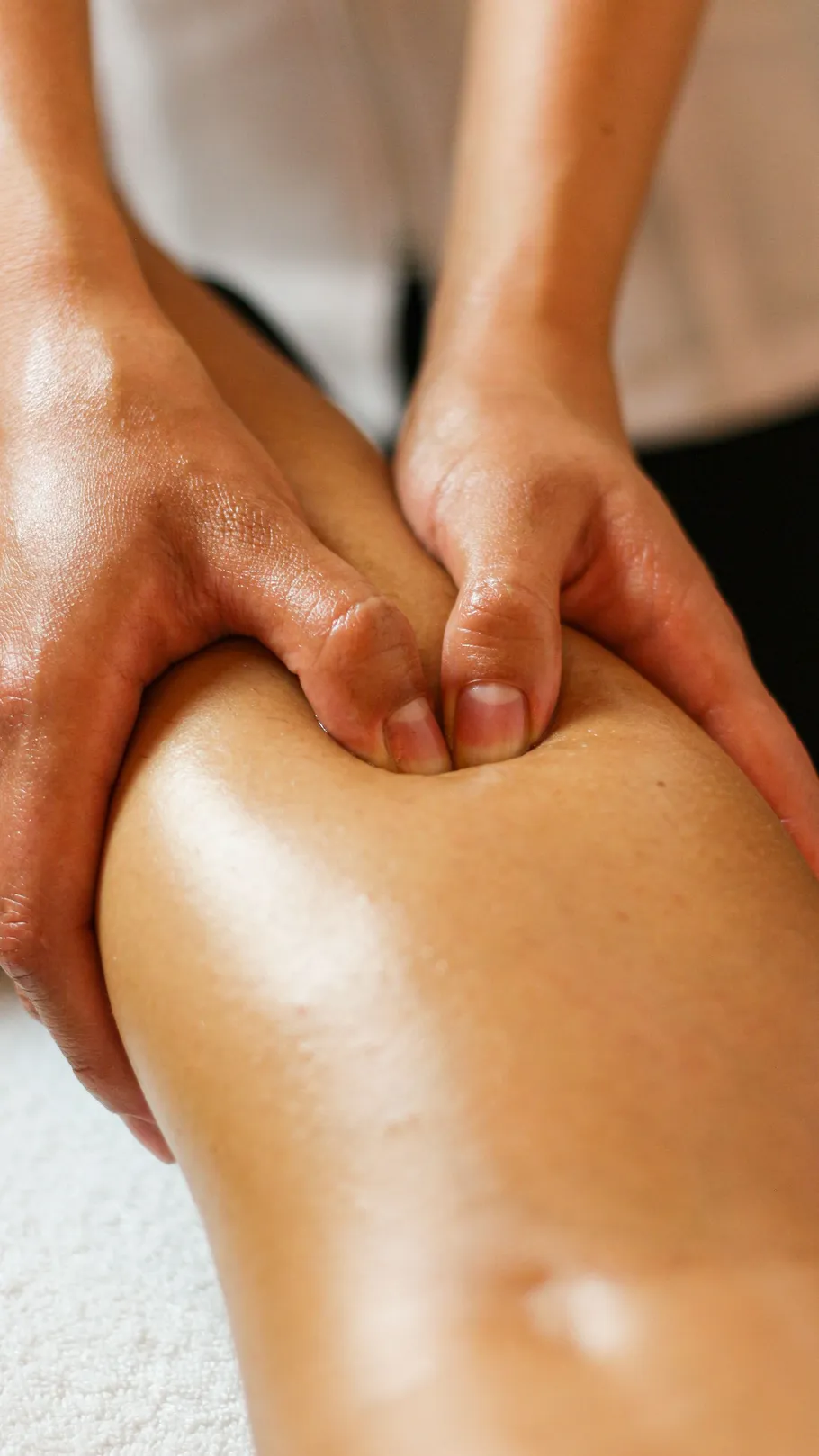
Photo: Paolo ortega, Pexels — A close-up of hands pressing on a leg during a massage, an honest clinic scene, not a product shot.
Specs: 12mm amplitude; stall force 55 lb per the manual, 53 lb per the listing (per-speed 30/40/45/50/55 lb); 5 speeds, 950–3000 RPM; 7 heads; battery 2–3 hours per the manual, 3–6 hours per another source; 1.68 lb per the listing; noise 39–50 dB; replaceable 2600mAh battery; LED pressure sensor; ASIN B083BY3B2T.
The Mebak is the heads pick: 7 heads on a 12mm stroke, the most heads here — more than the AERLANG’s 6 and the opove’s 5.
The honest limit is the weight and the battery. The listing states 1.68 lb and the manual states 1.76 lb device-only and 1.98 lb on its pages, while the battery is 2–3 hours per the manual and 3–6 hours per another source — this guide prints both.
The stall force is 55 lb per the manual and 53 lb per the listing, with per-speed figures of 30/40/45/50/55 lb — so the force rises with the speed, and the top figure is the fifth speed only.
A replaceable 2600mAh battery means the gun keeps working when the cell tires, and the LED pressure sensor shows the force as you press.
Pros:
- Most heads here at 7 — more than any other pick.
- Replaceable battery — the cell can be swapped, not thrown away.
- LED pressure sensor shows the force as you press.
Cons:
- Weight differs by source — 1.68 lb, 1.76 lb or 1.98 lb.
- Battery differs by source — 2–3 hours or 3–6 hours.
- Stall force differs by source — 55 lb or 53 lb.
Who it’s for: buyers who want a head for every spot and a battery they can replace.
⚠️ Three figures are stated two ways: stall force 55 lb or 53 lb, battery 2–3 hours or 3–6 hours, weight 1.68 lb or 1.98 lb. The manual is the authority for the stall force; the listing is the authority for the weight.
Separately, the 950 RPM lowest speed is the slowest stated here — the Ekrin starts at 1400 RPM — and the 7 heads are the most stated here, ahead of the AERLANG’s 6.
6️⃣ AERLANG EM11 — Best Speed Control
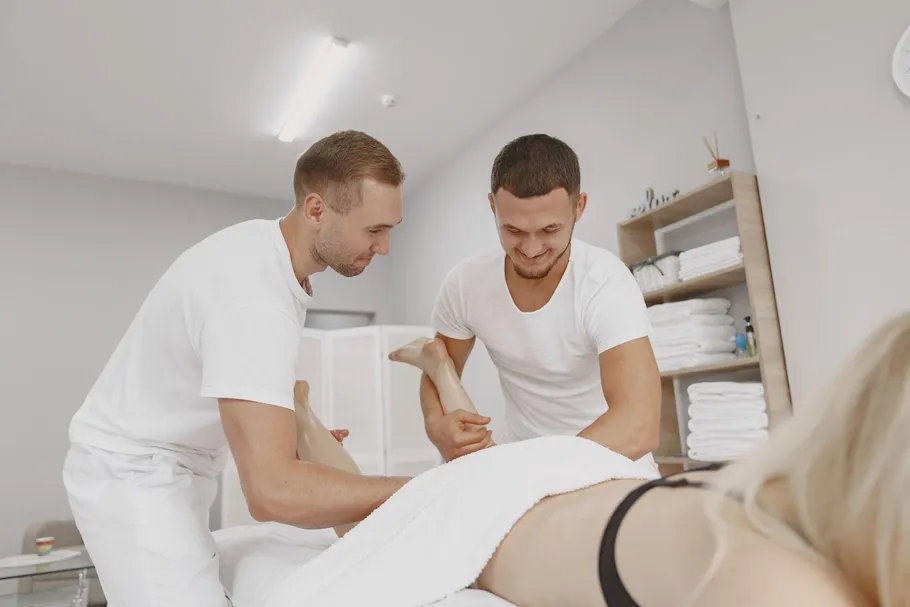
Photo: Gustavo Fring, Pexels — Two masseurs working on a client draped in a white towel in a spa, an honest spa scene, not a product shot.
Specs: 16mm amplitude per the manual; 20 speeds, 1200–3200 RPM; 6 interchangeable heads including heated heads per the listing; battery 4–6 hours (2500mAh); 2.2 lb; noise 35–55 dB; stall force not stated; ASIN B08Y88FPND (manual) / B0C42DYM5R (listing).
The AERLANG is the speed-control pick: 20 speeds on a 16mm stroke, the most speeds and the longest stated stroke here.
The honest limit is the stall force — it is not stated anywhere. Do not compare this gun’s strength with the Ekrin’s 56 lb or the Mebak’s 55 lb, because there is no figure to compare.
The 6 heads include heated heads per the listing, and the 20 speeds run 1200–3200 RPM — the most speeds here, topping out at the same 3200 as the Ekrin.
The EM13 (7 heads including heated, 12mm), the EM17 Mini (6 heads, 10 speeds), the M01 (hot and cold, 10mm, 40 lb) and the EM8 (16mm, 20 speeds, about 35 lb claimed) are different listings — buy the EM11 for the figures here.
Pros:
- Most speeds here at 20 — the finest control.
- Longest stated stroke here at 16mm.
- Heated heads per the listing — warmth with the pressure.
Cons:
- Stall force is not stated — no strength figure to compare.
- 2.2 lb — tied for the second-heaviest stated here.
- Heated heads are per the listing only — not confirmed by a manual.
Who it’s for: buyers who want fine speed control and a long stroke, and do not need a stall-force figure.
⚠️ The stall force is not stated: there is no strength figure for this gun. Do not rank it against the Ekrin’s 56 lb or the Mebak’s 55 lb — the comparison has no number on this side.
Separately, the 16mm stroke is the longest stated here — the opove is second at 15mm — and the 4–6 hour battery sits mid-pack, behind the Ekrin’s 8 hours claimed and ahead of the Mini’s 120 minutes.
👉 Check AERLANG EM11 on Amazon
📊 Comparison Table
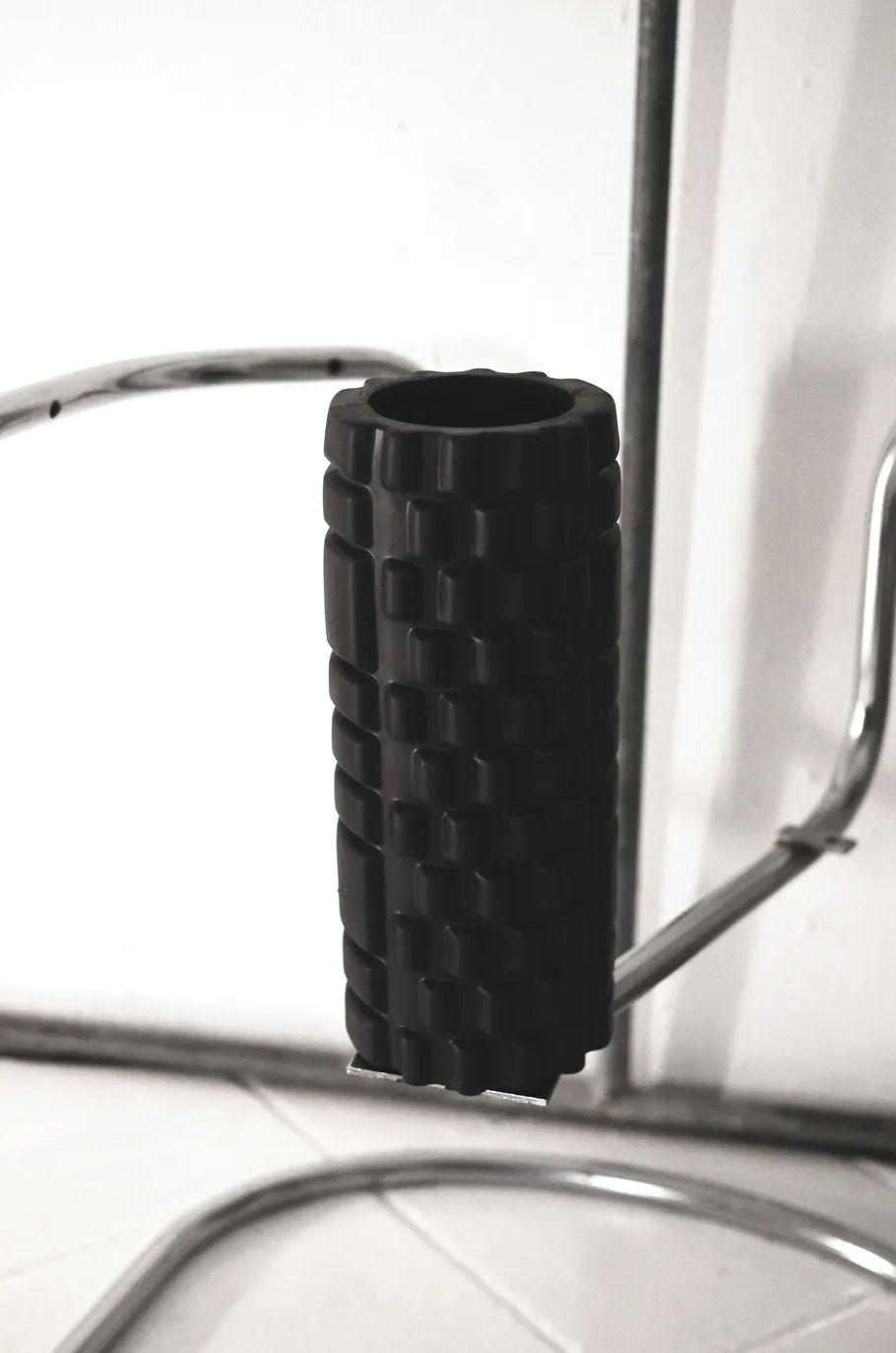
Photo: Skylar Kang, Pexels — A black textured foam roller standing on a metal rack, an honest still life, not a product shot.
| Pick | Amplitude | Stall force | Battery | Watch out |
| opove M3 Pro Max | 15mm | 50 lb (maker) / 55 lb (reviews) | Up to 4 h | Speeds differ by source — 4 or 5 |
| Ekrin B37 | 12mm | 56 lb (measured) | 8 h claimed, 5–6 h tested | Weight differs by source — 2.2 lb or ~1.6 lb |
| RENPHO R3 | 10mm (9mm per one review) | Not stated | 150 min (GGR) / 80 min (Expert Reviews) | Closer to vibration than percussion, per GGR |
| Theragun Mini 2nd Gen | 12mm | ~20 lb | 120 min (maker) / ~1.5 h tested | Shortest battery and weakest stall force here |
| Mebak 3 | 12mm | 55 lb (manual) / 53 lb (listing) | 2–3 h (manual) / 3–6 h (another source) | Weight differs by source — 1.68 lb or 1.98 lb |
| AERLANG EM11 | 16mm | Not stated | 4–6 h | Stall force not stated |
Table honesty note: the Amplitude column runs 10mm to 16mm and covers all six picks, since every pick states a stroke — the AERLANG is the longest stated at 16mm and the RENPHO the shortest stated at 10mm, with one review stating 9mm for the RENPHO.
The Stall force column mixes measured and stated figures. The Ekrin’s 56 lb was measured by Massage Gun Advice, the opove’s 50 lb is the maker’s figure against 55 lb in reviews, and the Mebak’s 55 lb is the manual’s figure against 53 lb in the listing.
Do not rank the six by the Stall force column alone.
Two picks state no stall force at all — the RENPHO and the AERLANG — so the stall-force range covers four picks only, and neither unmeasured pick can be crowned the strongest or the weakest on that column.
The Battery column mixes claimed and tested figures. The Ekrin’s 8 hours is claimed and 5–6 hours is tested, the Mini’s 120 minutes is the maker’s figure against about 1.5 hours tested, and the RENPHO’s 150 minutes is Garage Gym Reviews’ figure against 80 minutes from Expert Reviews.
So the range runs 120 minutes to 8 hours claimed.
The tested figures are the honest ones. Plan on the Ekrin’s 5–6 hours, the Mini’s about 1.5 hours and the RENPHO’s 150 minutes per Garage Gym Reviews, and treat the claimed figures as the ceiling.
Weight figures are not comparable across picks without the source note. The Mini’s 1 lb is the lightest stated and the opove’s 2.3 lb the heaviest stated, while the Ekrin’s 2.2 lb is measured against about 1.6 lb per one source.
The Mebak’s weight is stated three ways — 1.68 lb, 1.76 lb and 1.98 lb.
Speeds run 3 to 20 and heads run 3 to 7 — the AERLANG has the most speeds at 20 and the Mini the fewest at 3, while the Mebak has the most heads at 7 and the Mini the fewest at 3 — and the opove’s speed count differs by source, 4 or 5.
Noise figures mix maxima and ranges — the opove states 45–63 dB, the Ekrin and the AERLANG state 35–55 dB, the RENPHO states 40 dB maximum per Garage Gym Reviews, and the Mebak states 39–50 dB — so do not crown any pick the quietest or the loudest in this guide.
The same-variant conflicts are printed, not settled: the opove stall force and speed count, the Ekrin battery and weight, the RENPHO battery, amplitude and noise, the Mebak stall force, battery, weight and noise, and the Mini battery and weight.
All six picks are percussive — every gun here delivers rapid taps, not steady vibration — except the RENPHO, which Garage Gym Reviews calls closer to vibration than percussion, and the table’s “Watch out” column carries listing and fit notes, not a verdict.
🧭 How to Choose the Right Massage Gun
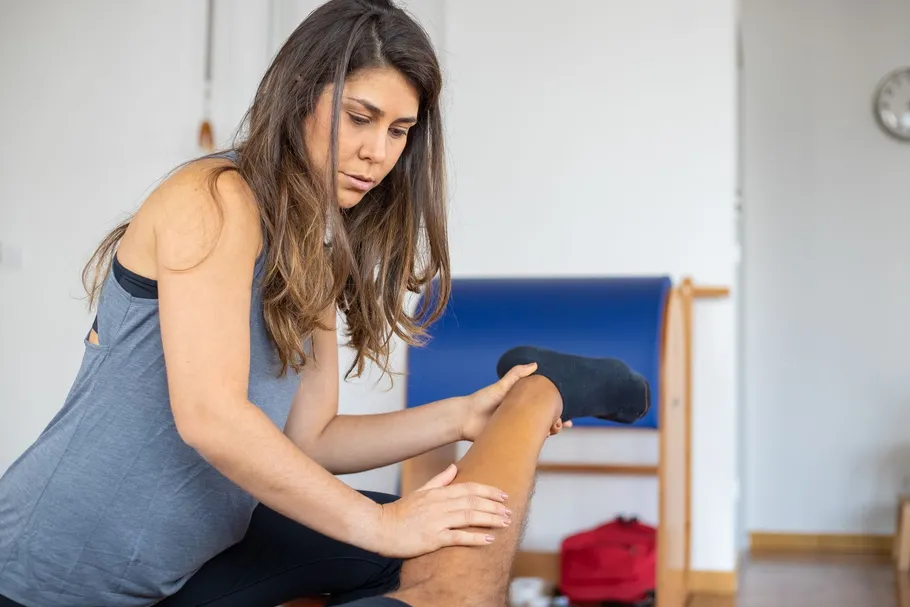
Photo: Kampus Production, Pexels — A trainer helping a client stretch a leg, an honest gym scene, not a product shot.
Start with the type. A percussive gun taps the muscle many times a second, a vibration gun shakes it, and a heated head adds warmth — most guns here are percussive, and only the AERLANG lists heated heads.
A percussive gun suits buyers who want deep work. A gentler stroke suits buyers who want everyday relief, and a heated head suits buyers who like warmth with the pressure.
None of these is a foam roller, a massage stick, a massage chair or a heating pad. If it rolls on the floor, presses by hand, sits in a chair or warms and stays still, it is not a massage gun, whatever the listing title says.
Then pick the size and fit. A gun that fits the hand suits long sessions, and a gun that stalls on the first press is too weak for the job.
The AERLANG is the longest stated stroke here at 16mm and the RENPHO the shortest at 10mm, while the opove is the heaviest stated at 2.3 lb and the Mini the lightest at 1 lb — so match the stroke to the muscle and the weight to the arm.
A gun that is too weak stalls on the muscle and a gun that is too strong bruises it. Buy the stall force for the job — deep tissue needs a strong stall, sore spots need a gentle one.
Think about the amplitude next. A long stroke reaches deep muscle, a short stroke works the surface, and a 16mm stroke is the longest stated here while a 10mm stroke is the shortest.
A long stroke needs a strong stall force to hold up under pressure — the AERLANG’s 16mm has no stall-force figure, so its strength under load is unmeasured, while the Ekrin’s 56 lb is measured.
Check the battery before you buy. A long battery suits therapists and long sessions, a short battery suits quick home use, and a replaceable battery suits buyers who keep tools for years.
Check the heads before you buy. A ball head suits large muscles, a bullet head suits small spots, a flat head suits broad areas, and a fork head suits either side of the spine — and a heated head adds warmth, though only the AERLANG lists one.
And check the ground, not the listing headline. A mat protects the knees when you work on the floor, a smooth floor suits a seated session, and a gun used standing on a hard floor tires the arm fast.
Think about care. Wipe the heads after use, charge the battery before it dies, and store the gun in its case — never leave it on a damp floor. A gun left in a sweaty bag smells, and a dead battery never holds a charge again.
A massage gun is recovery, not a brace — our weightlifting belts guide covers the stiff band for the waist itself, so the core is covered in two pieces.
Finally, kit out the rest of the session honestly. A gun works the muscles after the training, and the strength work that makes recovery useful still needs the basics, which is why our adjustable dumbbells guide sits alongside this one in a home gym.
❓ Frequently Asked Questions
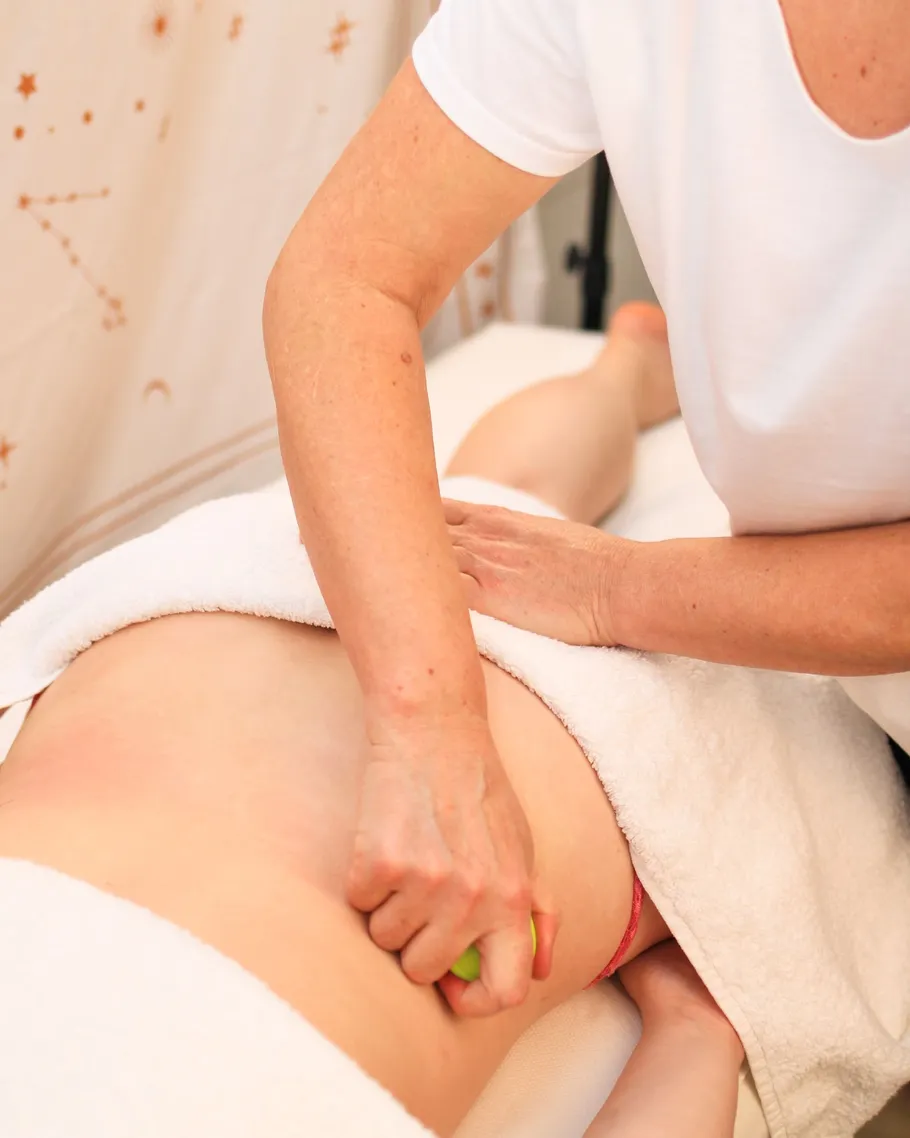
Photo: Larysa Stratiichuk, Pexels — A therapist working on a client’s lower back with a small massage tool, an honest spa scene, not a product shot.
Will a massage gun help me lose weight or fix my muscles?
No. A massage gun is a recovery tool — it taps the muscle and helps it feel looser after training — but it does not treat or cure muscle pain, back pain, soreness or any condition, and no pick in this guide claims otherwise.
A gun lets you work a sore spot in short bursts, so the muscle feels looser — but that help is for the session, not a promise about pain, and a gun is not a treatment.
Persistent pain, numbness, weakness, or a recent injury belongs with a clinician first — a gun is not a diagnosis, and pressing hard into a sore spot to test one is a bad idea.
How hard should I press a massage gun?
Lightly at first. Let the gun’s weight do the work, then press a little harder — if the gun stalls, you are pressing too hard, so ease off and let it tap.
Watch the stall force. The Ekrin’s 56 lb holds up under pressure, the Mini’s about 20 lb stalls early, and the AERLANG’s strength is unmeasured — so match the pressure to the gun.
Can I use a massage gun on my neck or lower back?
Not on the neck, and carefully on the lower back. A gun on bone or the front of the neck is a mistake, and the lower back needs a soft head and light pressure.
If anything hurts sharply, stop and talk to a clinician. A gun is for muscle, not for joints, bone or the spine itself.
How long should I use a massage gun on one muscle?
About one to two minutes per muscle is enough for most people. Short bursts work better than one long press, and the muscle should feel looser, not sorer, after.
If the spot feels worse after a session, shorten the time and use a softer head. More minutes do not mean more recovery.
Are more speeds and more heads always better?
They do different jobs. More speeds, like the AERLANG’s 20, give fine control; more heads, like the Mebak’s 7, cover more spots — but the Mini’s 3 speeds and 3 heads suit travellers fine.
Choose the speeds for control and the heads for coverage. Neither count is better on its own — the job decides, not the number.
What should I do after a massage gun session?
Cool down slowly. Walk for a few minutes, stretch gently, and let the muscles settle before you sit.
Keep the muscles loose between sessions, since our foam rollers guide covers the recovery side of a home-gym routine.
Thanks for reading — we hope this guide helps you pick a massage gun that taps true and does the job you actually need. If an amplitude or a battery figure disagrees with what you measured, trust the listing, not the headline.
Disclosure: As an Amazon Associate, we earn from qualifying purchases made through links in this article, at no extra cost to you. Product details and availability can change, so please check the listing before ordering.
Pingback: Best Ankle Weights for Home Gyms (2026)