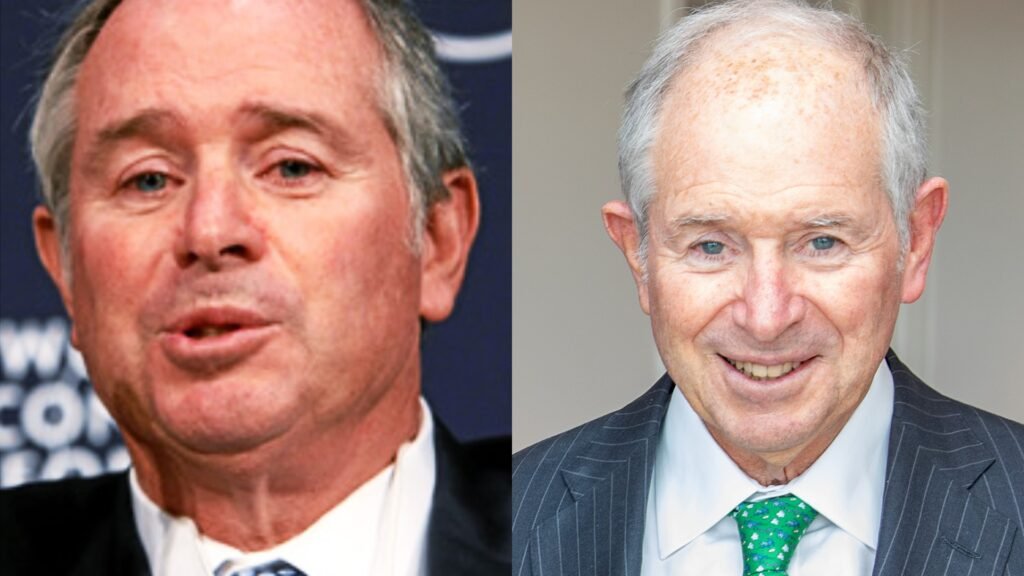
He started mowing lawns at 14 and ended up running the largest pile of money in the world. Stephen Schwarzman — the Blackstone co-founder worth nearly $46 billion, the “King of Wall Street” — turned $400,000 into more than $1 trillion. This is how the son of a Philadelphia dry goods store owner conquered global finance.
Stephen Schwarzman Then
Stephen Allen Schwarzman was born on February 14, 1947, in Philadelphia, Pennsylvania. His father owned a dry goods store; the family was solidly middle class. Young Stephen was restless and entrepreneurial — at 14, he started a lawn-mowing business, hiring his younger twin brothers to do the mowing while he focused on bringing in clients.
He was bright and driven. Schwarzman earned his bachelor’s from Yale, then an MBA from Harvard Business School. He started on Wall Street at Donaldson, Lufkin & Jenrette, then jumped to Lehman Brothers, where he rose fast — managing director at 31, eventually head of global mergers and acquisitions. At Lehman, he learned the dealmaking craft that would define his career, advising on some of the biggest mergers of the era.
But Schwarzman grew restless. He watched Lehman’s management make mistakes — the kind he later wrote about candidly in his memoir — and concluded he could build something better. In 1985, at 38, he walked away from the security of a top Wall Street perch. Teaming with his former boss and mentor Peter G. Peterson, Schwarzman co-founded Blackstone with $400,000 in seed capital. The name itself was a merger: “Schwarz” (black in German and Yiddish) + “Peter” (stone in Greek). They started as a tiny M&A advisory boutique, operating out of a small office, facing rejection after rejection as they tried to raise their first private equity fund. Institutional investors didn’t take the two-man shop seriously — until they did.
The Middle: Building Blackstone
Schwarzman persisted. Blackstone’s first private equity fund closed at $810 million in 1987 — a stunning achievement for an unknown firm. From there, he expanded relentlessly and with remarkable timing. He moved into real estate just as the market bottomed, into credit when banks retreated, into infrastructure as governments privatized. His formula was consistent: buy undervalued assets, install better management, improve operations, and sell at a multiple. The Hilton Hotels buyout — $26 billion at the top of the market in 2007, nursed through the financial crisis, then taken public for a massive profit — became one of the most profitable private equity deals in history and a case study in patience.
In July 2007, Schwarzman took Blackstone public in a $4 billion IPO, a landmark moment that brought the secretive world of private equity into the public markets. The timing, just before the financial crisis, was characteristically bold — and the firm survived the crash that killed Lehman Brothers, emerging stronger. Peterson retired; Schwarzman stayed as chairman and CEO, the undisputed leader. Under him, Blackstone grew into the world’s largest alternative asset manager, with more than $1 trillion under management across private equity, real estate, credit, and infrastructure.
He became as known for his lifestyle as his deals. The $400 million, 332-foot Feadship superyacht now completing sea trials in the North Sea. The palatial duplex at 740 Park Avenue — 1,850 square meters, once John D. Rockefeller Jr.’s, in the building whose board once rejected Joan Crawford and Barbra Streisand. The headline-grabbing 60th birthday party that became Wall Street legend. At 79, he is, by most accounts, the richest man in New York.
But he also built a serious philanthropic legacy. The Schwarzman Scholars program — a $575 million commitment modeled on the Rhodes Scholarship — sends 140+ students a year from around the world to a one-year master’s at Tsinghua University in Beijing, betting that future global leaders need to understand China. He has given hundreds of millions to Yale, Harvard Business School, Oxford, and MIT. His 2019 memoir, “What It Takes: Lessons in the Pursuit of Excellence,” distilled his famous “25 rules” for work and life and became a business bestseller.
Like fellow private equity billionaire David Rubenstein, who built Carlyle into a $500 billion giant from a $5 million start, Schwarzman proved that in finance, relationships and reputation are the ultimate currency. And like Warren Buffett, he showed that a simple, disciplined formula — buy good assets cheap, improve them, be patient — compounds into a fortune over decades.
Stephen Schwarzman Now
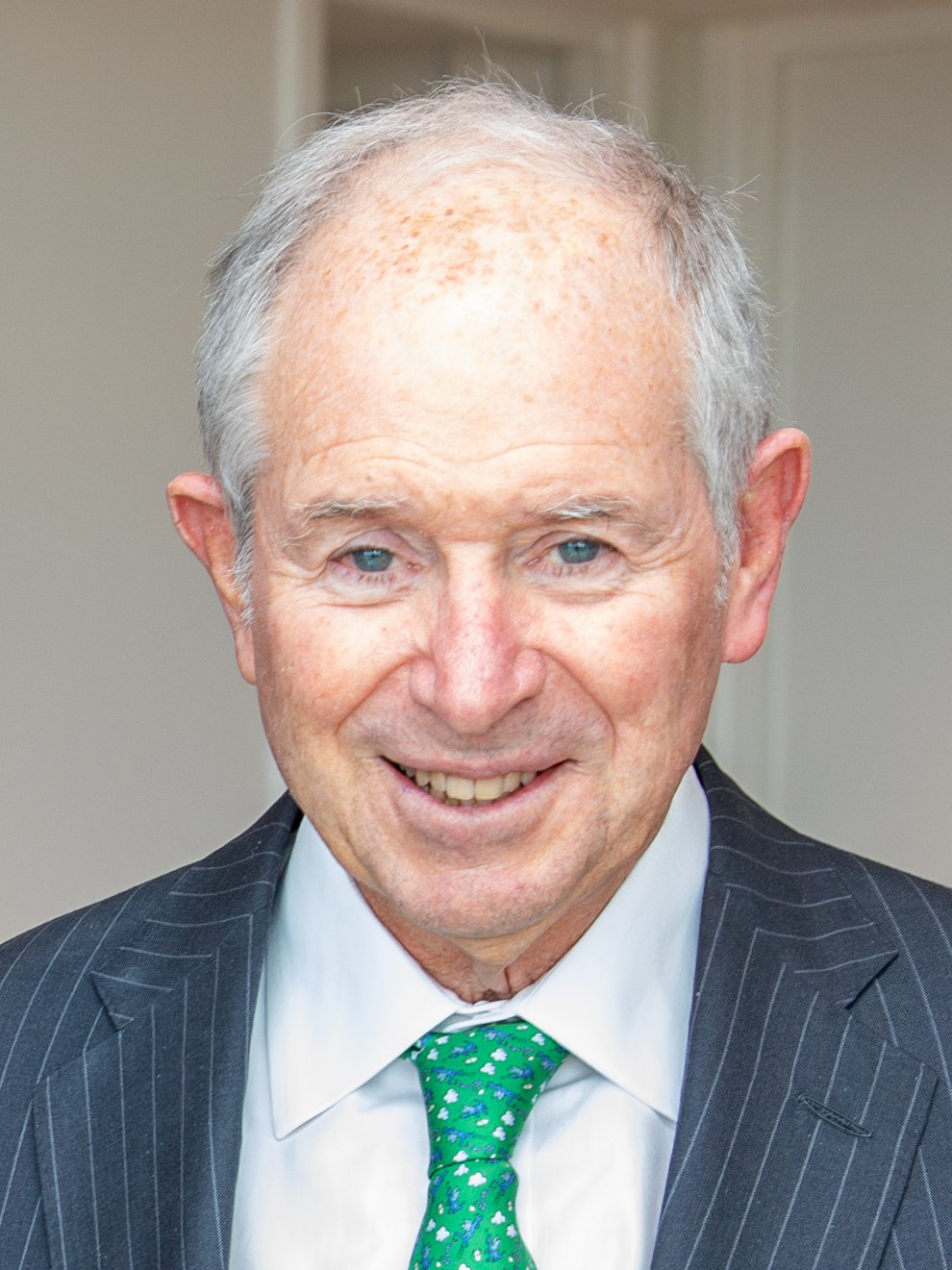
At 79, Schwarzman still runs Blackstone as chairman and CEO — more than four decades after founding it with $400,000 and a borrowed office. His net worth sits around $45.8 billion (Forbes, August 2026), making him one of the richest people in America and a fixture on every billionaire ranking. He remains a power broker in Republican politics — advising presidents, funding campaigns — and an unavoidable presence in New York society, philanthropy, and business.
He has been married twice and has three children. He has said he now defines his legacy less by the deals than by what he’s building for the future: the scholars, the institutions, the ideas. Whether history remembers the superyacht or the scholarship program more, the arc is undeniable.
The $400,000 startup is now a $1 trillion empire. The lawn-mowing kid from Philadelphia who hired his twin brothers at 14 became the king of Wall Street — and at 79, he’s still writing the story.