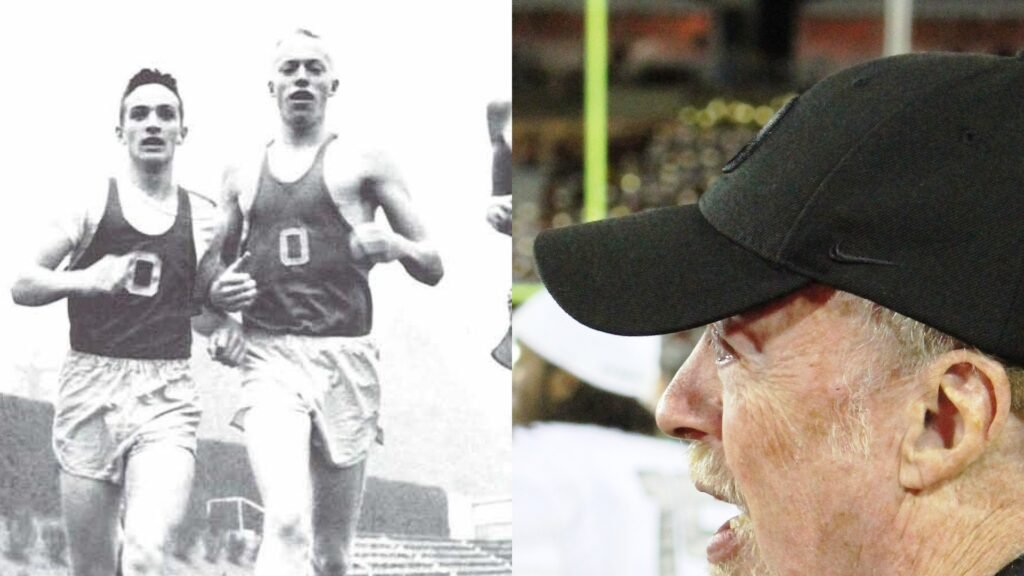
He started with $500, a handshake, and a pair of running shoes sold from the trunk of his car. Sixty years later, the swoosh he once hated is one of the most recognized logos on earth, and Phil Knight — the shy Oregon track runner who built Nike — is worth more than $35 billion. This is the story of how a middle-distance runner outran every giant in the shoe business.
Phil Knight Then
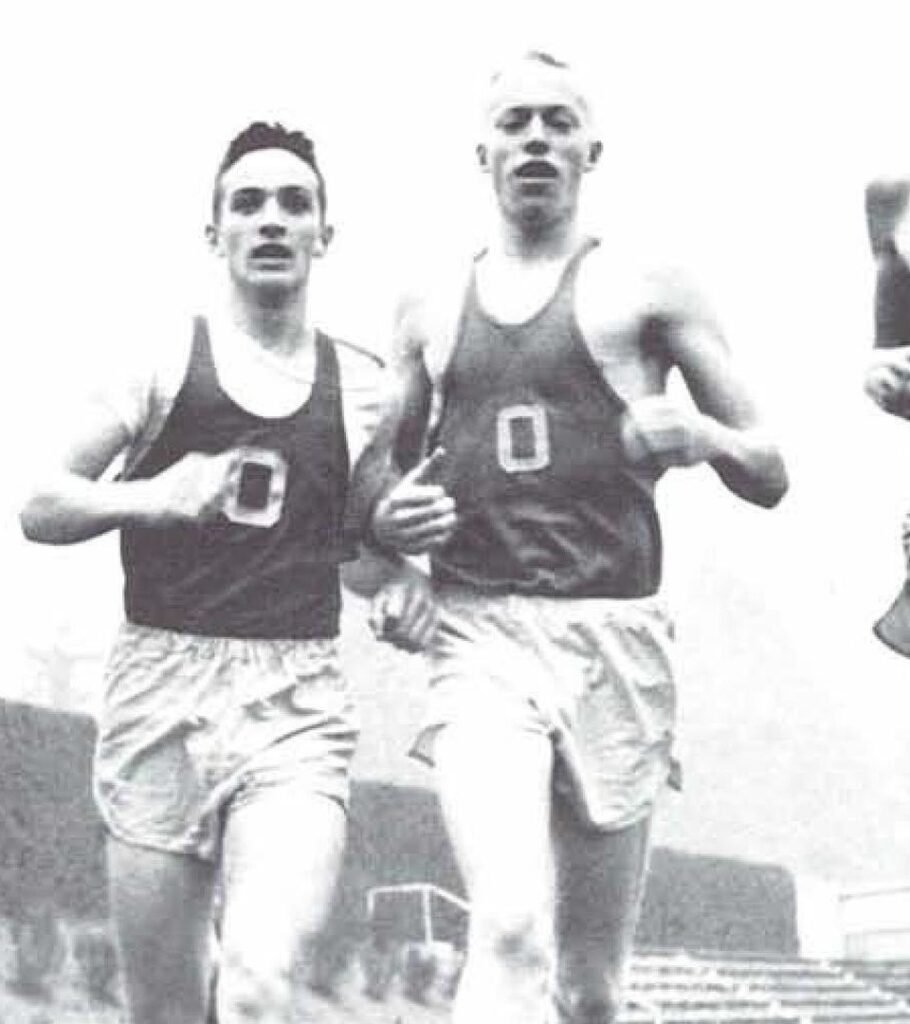
Philip Hampson Knight was born on February 24, 1938, in the Portland, Oregon area. He was not a prodigy and did not look like a future billionaire. He was a solid but unspectacular middle-distance runner at the University of Oregon, competing under the legendary coach Bill Bowerman. What set Knight apart was not his speed but his curiosity about the business of running.
After Oregon, Knight earned an MBA from Stanford in 1962. His Stanford research paper asked an unfashionable question: could Japanese running shoes undercut the dominant German brands the way Japanese cameras had undercut German cameras? Most people forgot the paper. Knight did not. In November 1962, he walked into the Onitsuka shoe company in Kobe, Japan, and talked his way into US distribution rights for Tiger running shoes.
On January 25, 1964, Knight and Bowerman shook hands at the Cosmopolitan Hotel in Portland and founded Blue Ribbon Sports, each putting in $500. Knight sold Tigers from his car trunk at track meets. An early employee, Jeff Johnson, suggested renaming the company Nike after the Greek goddess of victory. A design student named Carolyn Davidson drew the Swoosh logo for $35 — a mark Knight admitted he did not love at first sight.
The partnership nearly collapsed more than once. When Onitsuka tried to cut them out, Blue Ribbon won a 1974 federal trial securing its US rights. When the Bank of California froze the company’s accounts, a Japanese trading firm paid the bank off. Through it all, Bowerman kept inventing — including the famous waffle sole, inspired by his wife’s waffle iron (US patent 3,793,750, granted in 1974).
Nike went public on December 2, 1980, at $22 a share. Knight was worth $178 million overnight. Then came the bet that defined the company: in 1985, Nike signed a rookie named Michael Jordan. The company projected $3 million in first-year Air Jordan sales. It did $126 million. By 1986, Nike hit $1 billion in revenue and became the world’s biggest shoe company — a title in the athletic world that even fellow self-made billionaire Warren Buffett would recognize as the kind of enduring competitive moat investors dream about.
The Middle: Building the Empire
Knight ran Nike as CEO for 40 years, from 1964 to 2004 — one of the longest founder tenures in corporate history, rivaling fellow founder-operators like Michael Dell, who similarly never really let go of the company bearing his name. He remained chairman until 2016, when he became chairman emeritus.
Under Knight, Nike grew from a scrappy importer into a $180+ billion global powerhouse spanning footwear, apparel, and equipment. The company’s marketing rewrote the rules of sports advertising, turning athletes into cultural icons and the Swoosh into a symbol recognized on every continent. Knight himself stayed famously media-shy, rarely giving interviews and letting the brand speak.
His memoir, “Shoe Dog” (2016), finally told the story in his own words — the near-bankruptcies, the lawsuits, the gambles — and became a business classic. By then, the Knight family, through its Swoosh LLC holding company, owned about 22% of Nike, making them the largest individual shareholders. His son Travis Knight built his own career in animation with Laika studios.
Phil Knight Now

At 88, Knight has shifted from building an empire to giving it away. In 2025, he and his wife Penny pledged $2 billion — in cash and Nike stock over ten years — to the OHSU Knight Cancer Institute, the largest gift ever made to a US university. In September 2026, they announced a $1.1 billion gift to Providence to build Oregon’s first dedicated women’s hospital. Earlier gifts include $400 million for Stanford’s Knight-Hennessy Scholars program and $105 million for the Knight Management Center.
Nike itself keeps rolling: fiscal 2025 revenue was $46.3 billion, with the Jordan Brand alone doing about $7 billion. In October 2025, the company renamed its Beaverton headquarters “The Philip H. Knight Campus,” with an honoring event planned for spring 2026 — a rare public celebration for a man who spent six decades avoiding the spotlight.
From a $500 handshake to a $46 billion company, from selling shoes out of a trunk to having a campus named after him, Phil Knight’s arc is the purest version of the American business story. He never set out to be famous. He just wanted to make a better running shoe — and ended up outrunning everyone.