
A compression shirt is a skin-tight top that squeezes the torso, shoulders and arms evenly. It is NOT a loose workout shirt, which hangs free and squeezes nothing. It is NOT a rash guard, which is built for the mat — grip-resistant, with a longer torso that stays tucked during rolls.
It is NOT a compression arm sleeve, which covers one arm and no torso. It is NOT a weightlifting belt, which holds the waist rigid. And it is NOT a posture corrector, which pulls the shoulders back. A compression shirt squeezes the upper body, holds nothing rigid, and covers torso and arms together.
The everyday training tees our tikkaykhan.com workout-shirts guide covers are a different category — loose shirts with no compression squeeze.
This guide follows our previous guide, Best Compression Shorts for Home Gyms — a short squeezes the hips and thighs, while a shirt squeezes the torso and arms. Many home-gym lifters and runners look at both before deciding which half of the body needs the squeeze.
The six picks below run from a classic HeatGear knit to a value UPF 50+ shirt. Each one states its own sizing honestly, including the lookalikes you should not buy past.
Every photo in this guide is an honest gym, race or field-sport scene, not a product shot. No photo shows the named shirt itself, because free-license photos of these exact products were not available — the captions say what each photo actually shows, and nothing is presented as a product photo.
One safety note before the picks: this guide is general information only. A shirt does not treat or cure shoulder, back or arm pain, and it is not a substitute for medical advice.
If you have persistent pain, swelling, numbness, colour change, or a recent injury, talk to a clinician first — and never train through sharp pain to test a shirt.
A shirt that hurts, numbs, or leaves marks that do not fade quickly is the wrong size — take it off and reassess. And a shirt that restricts breathing is too tight, whatever the size chart says.
⚡ Quick Picks
Six compression shirts at a glance — a classic HeatGear knit, an everyday Dri-FIT knit, a long-sleeve PWX top, a premium 400 Fit top, a Bioceramic recovery shirt and a value UPF 50+ shirt. If your sessions also include rolling on the mats, our rash guards guide covers the tight top built for grappling.
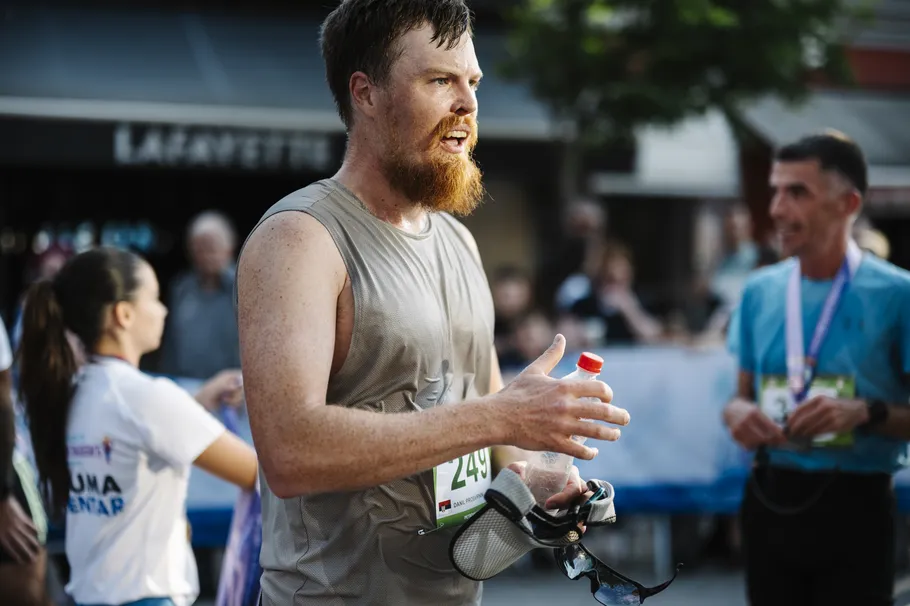
Photo: Shixart1985, Wikimedia Commons — A runner holding a water bottle after finishing a city race, an honest race scene, not a product shot.
- Under Armour HeatGear Armour Compression Short-Sleeve — Best Classic: the straightforward HeatGear knit with mesh panels and an 84% polyester blend.
- Nike Pro Dri-FIT Tight Short-Sleeve Top — Best Everyday: a simple Dri-FIT knit with a mesh back panel and flatlock seams.
- 2XU Compression Long Sleeve Top — Best Long Sleeve: a PWX top with graduated compression and UPF50+ sun protection.
- Skins A400 Men’s Long Sleeve Top — Best Premium: a 400 Fit top with Dynamic Gradient Compression and a height-and-weight size chart.
- Virus Bioceramic Compression Short Sleeve — Best Recovery: a Bioceramic nylon-blend shirt with far-infrared minerals in the yarn.
- TSLA Men’s UPF 50+ Short Sleeve Compression Shirt — Best Value: a quick-dry UPF 50+ shirt in an 87% polyester blend, sized up.
1️⃣ Under Armour HeatGear Armour Compression Short-Sleeve — Best Classic
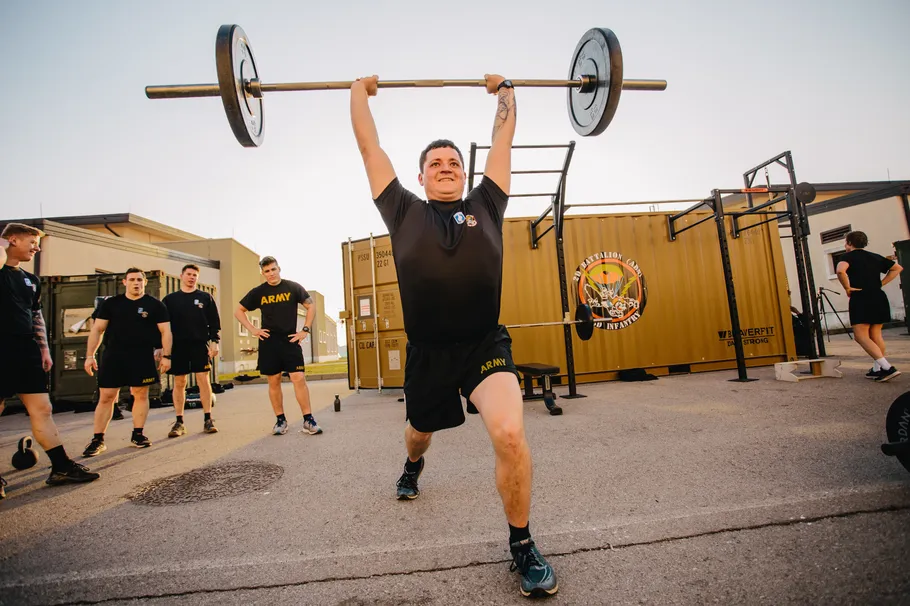
Photo: Spc. Ryan Lucas, Wikimedia Commons — A soldier pressing a barbell overhead during outdoor group training, an honest training scene, not a product shot.
Specs: HeatGear knit, body 84% polyester and 16% elastane, mesh 92% polyester and 8% elastane; super-light 150 g/m² fabric; 4-way stretch; mesh underarm and back panels; anti-odour treatment; hybrid raglan sleeves; UPF 30; style 1361518; sizes XS–3XL.
The HeatGear Armour is the classic of this guide: a super-light knit that wicks sweat and holds a locked-in, second-skin fit. The mesh panels sit where you sweat most — under the arms and across the back — and the raglan sleeves give the shoulders room to move overhead.
The naming is the part to check, because “HeatGear Armour” covers several cuts under near-identical names. The short-sleeve is style 1361518, the sleeveless is 1361522, and the long-sleeve carries its own number. An older style, 1252732, also appears in search.
Pros:
- Stated 84% polyester and 16% elastane blend, with mesh panels.
- Super-light 150 g/m² HeatGear fabric, made for hot gyms.
- Raglan sleeves give the shoulders room overhead.
Cons:
- Style-number tangle — short, long and sleeveless share the name (see the flag below).
- No mmHg level published for this shirt.
- Ultra-tight fit can feel strong for a first-time wearer.
Who it’s for: buyers who want the classic HeatGear compression shirt and who check the style number before ordering.
⚠️ Confirm the short-sleeve style 1361518: the long-sleeve and sleeveless (1361522) versions share the “HeatGear Armour” name, and an older style number, 1252732, also appears in search — two listings with the same name can be different shirts.
Separately, Under Armour’s Tech 2.0 line is a looser training tee, not an Armour compression shirt — confirm the words “Armour” and “Compression” on the listing you order from.
👉 Check Under Armour HeatGear Armour Compression Shirt on Amazon
2️⃣ Nike Pro Dri-FIT Tight Short-Sleeve Top — Best Everyday
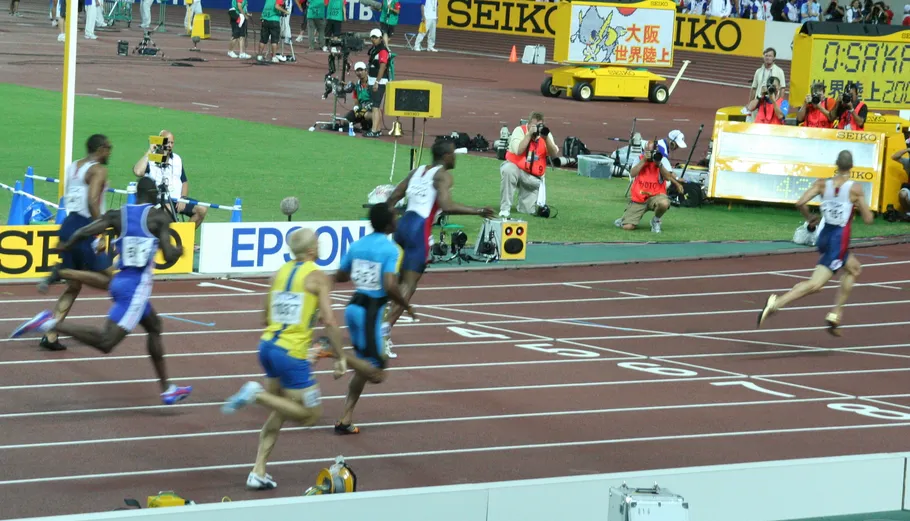
Photo: Eckhard Pecher, Wikimedia Commons — Sprinters crossing the finish line in the men’s 400 metres at the 2007 World Championships in Osaka, an honest race scene, not a product shot.
Specs: Dri-FIT polyester-spandex knit — the exact blend varies by variant, so check the listing; flatlock seams; mesh back panel; raglan sleeves; tight fit; sized by chest — check the listing’s own chart.
The Nike Pro is the everyday pick: a straightforward Dri-FIT knit that moves sweat and holds a snug, tight fit without a measurement puzzle. The mesh back panel vents where you sweat most, and the flatlock seams sit flat against the skin over a long session.
The honest limit is the variant tangle. “Nike Pro” covers tight, slim and fitted cuts, in short, long and sleeveless lengths, plus Pro Cool, Pro Warm and Hypercool lines. The fabric blend also changes by variant — 92% polyester and 8% spandex on one style, 89% and 11% on another.
Pros:
- Stated Dri-FIT sweat-wicking knit in a classic line.
- Mesh back panel vents where you sweat most.
- Flatlock seams — nothing rubbing over a long session.
Cons:
- Blend varies by variant — no single figure to quote (see the flag below).
- No mmHg level published for this shirt.
- Tight fit can feel aggressive across the chest and shoulders.
Who it’s for: buyers who want a simple, everyday Dri-FIT compression shirt and who check the exact style before ordering.
⚠️ Confirm “Dri-FIT Tight Short-Sleeve”, and the blend: Pro versions run tight, slim and fitted, in short, long and sleeveless lengths, and the blend changes between them — one style lists 92% polyester and 8% spandex, another 89% and 11%.
Separately, Pro Warm is a mock-neck cold-weather top and Pro Cool is a different line — confirm the words “Dri-FIT Tight Short-Sleeve” on the listing you order from, not just “Nike Pro”.
👉 Check Nike Pro Dri-FIT Tight Short-Sleeve Top on Amazon
3️⃣ 2XU Compression Long Sleeve Top — Best Long Sleeve
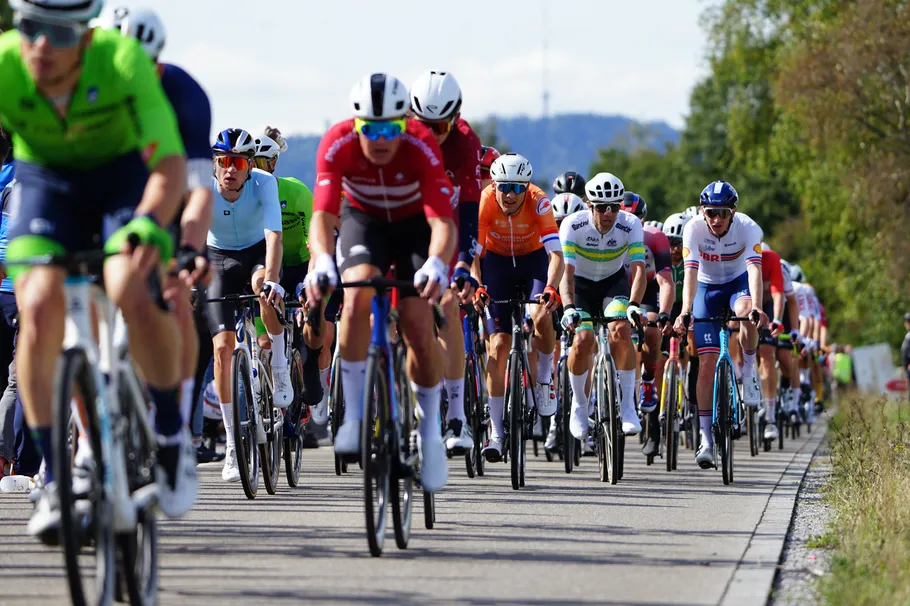
Photo: Albinfo, Wikimedia Commons — Road cyclists racing in a pack at the 2024 UCI Road World Championships in Zurich, an honest race scene, not a product shot.
Specs: PWX fabric; graduated compression, tighter at the wrists and forearms and looser toward the core; UPF50+ sun protection; moisture-wicking; sizes by chest, waist and hip, XS–2XL — chest XS 88–92 cm to 2XL 113–117 cm.
The 2XU is the long-sleeve pick: a PWX top whose graduated squeeze runs strongest at the wrists and forearms and eases toward the core, so the arms get the most support and the torso stays free to breathe. The UPF50+ rating makes it the pick for outdoor sessions too.
The trade-off is the line tangle. 2XU sells a plain PWX Compression top, an MCS top with Muscle Containment Stamping, and a Thermal top for cold weather, all with similar names. And 2XU warns buyers not to size down for more compression — it disrupts the gradient.
Pros:
- Graduated PWX compression, strongest at the arms.
- UPF50+ sun protection for outdoor sessions.
- Three-measure sizing — chest, waist and hip.
Cons:
- Line tangle — PWX, MCS and Thermal tops share names (see the flag below).
- No mmHg level published for this top.
- Long sleeves run warm in a hot gym.
Who it’s for: runners, cyclists and lifters who want a long-sleeve compression top with a stated gradient, and who check the exact model name before ordering.
⚠️ Confirm the plain PWX Compression top, and do not size down: the MCS top adds Muscle Containment Stamping and the Thermal top adds warmth — three different tops under similar names. Confirm the words “Compression Long Sleeve Top” on the listing.
Separately, 2XU’s 23–26 mmHg figure belongs to its MCS tights fabric, not to this top — no mmHg level is published for the shirt itself, so do not rank it by firmness against a number it does not carry.
👉 Check 2XU Compression Long Sleeve Top on Amazon
4️⃣ Skins A400 Men’s Long Sleeve Top — Best Premium
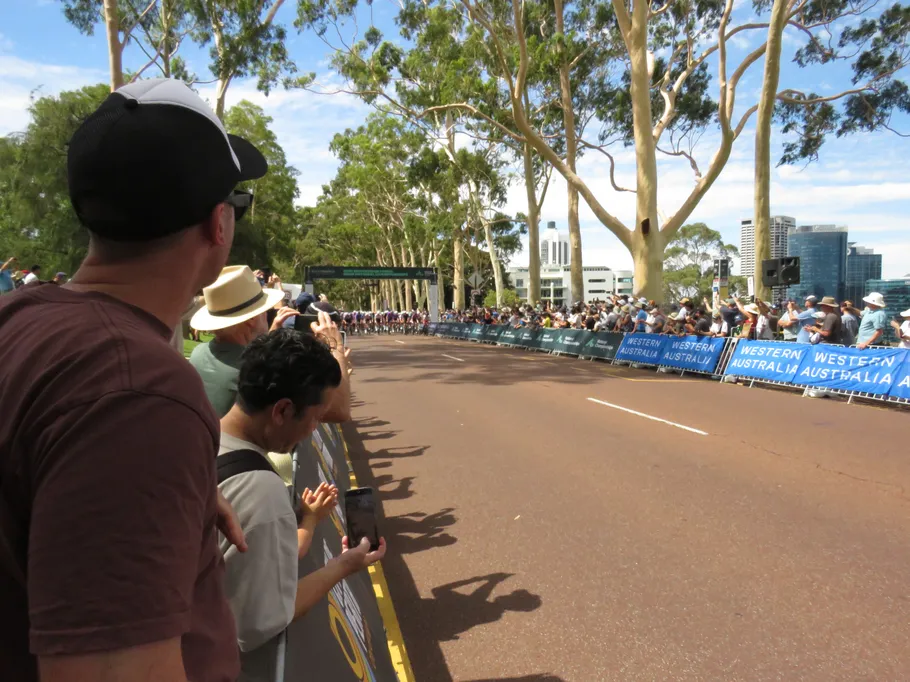
Photo: Calistemon, Wikimedia Commons — Spectators watching riders in the distance at the 2026 Australia National Road Cycling Championships, an honest race scene, not a product shot.
Specs: 400 Fit; Dynamic Gradient Compression; Memory MX warp-knit fabric; A-Seams, 30% stronger than a standard stitch per Skins; moisture management; sizing by height, weight and body shape — ‘A’ shaped and ‘H’ shaped bodies use different charts.
The Skins A400 is the premium pick: a warp-knit top whose Dynamic Gradient Compression is mapped across the torso and arms, with Memory MX fabric that returns to shape after every stretch. The A-Seams sit flat against the skin, so nothing chafes over a long session.
The honest limit is the size chart. Skins does not size this top by chest alone — the 400-series chart needs your height, your weight, and your body shape, with ‘A’ shaped bodies (small waist) and ‘H’ shaped bodies (little waist variation) on different charts. Measure all three before ordering.
Pros:
- Dynamic Gradient Compression mapped across the torso.
- Memory MX fabric returns to shape after stretching.
- A-Seams sit flat — nothing chafing over a long session.
Cons:
- Line tangle — A400, RY400 and A200 share the name (see the flag below).
- No mmHg level published for this top.
- Three-measure sizing takes more work than a chest chart.
Who it’s for: buyers who want the most engineered compression top in this guide and who measure height, weight and body shape before ordering.
⚠️ Confirm “A400”, and the active line: the RY400 is the recovery line — same 400 Fit, built for after sport, not during it — while the A200 and DNAmic lines are different ranges again. Confirm the words “A400” and “Long Sleeve Top” on the listing.
Separately, Skins is Australian, so its sizes run on the 400-series chart, not on standard chest sizes — a Large in another brand is no guide to a Skins size, so use the chart, not the letter.
👉 Check Skins A400 Long Sleeve Top on Amazon
5️⃣ Virus Bioceramic Compression Short Sleeve — Best Recovery
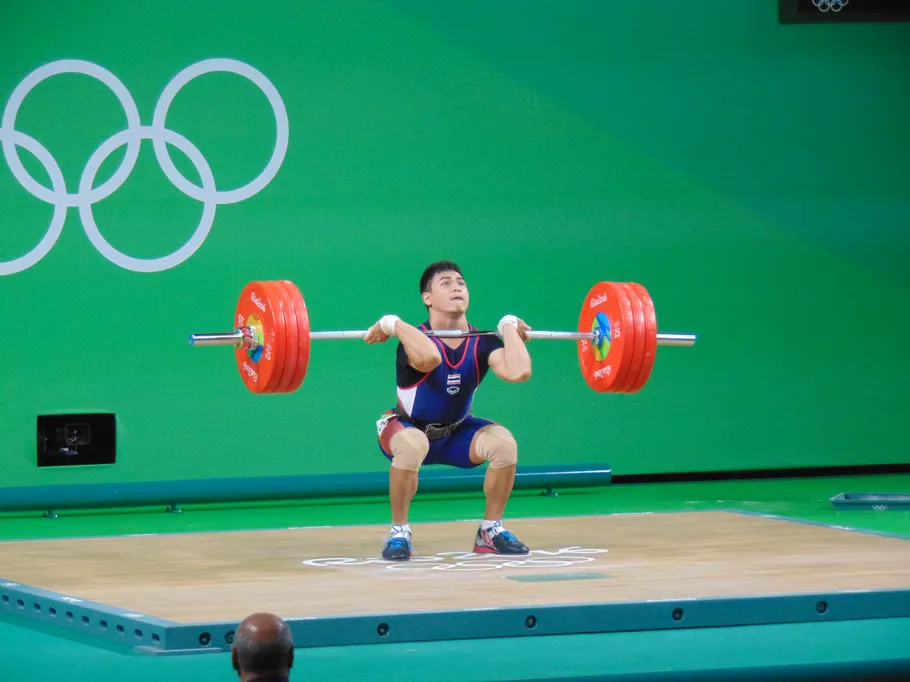
Photo: Sander van Ginkel, Wikimedia Commons — A weightlifter holding a loaded barbell overhead in the clean and jerk at the Rio 2016 Olympics, an honest competition scene, not a product shot.
Specs: Bioceramic nylon-blend fabric; far-infrared minerals (calcium, magnesium and trace minerals) infused into the yarn; graduated compression; 4-way stretch; tight open-loop knit; BioFlex line; check the listing’s own chart for sizes and the exact blend.
The Virus is the recovery pick: a Bioceramic shirt whose yarn carries far-infrared minerals — calcium, magnesium and trace minerals — infused at the molecular level. Virus says the minerals recycle body heat into far-infrared energy to support circulation and recovery after hard sessions.
The honest limit is the claim itself. The far-infrared benefit is Virus’s claim, not a measured result — a 2025 randomized crossover study found no blood-flow improvement from far-infrared arm garments at rest. Buy this shirt for the compression fit, not for the minerals.
Pros:
- Graduated compression in a tight open-loop knit.
- 4-way stretch with a second-skin feel.
- BioFlex line built for maximum mobility.
Cons:
- Fabric lines tangle — BioFlex, BioPoly and BioFleece share the name (see the flag below).
- No mmHg level published for this shirt.
- The far-infrared benefit is the maker’s claim, not a measured result.
Who it’s for: heavy trainers who want a recovery-focused compression shirt and who judge it on fit, not on the mineral claim.
⚠️ Confirm the BioFlex short sleeve: Virus sells its Bioceramic fabric in three lines — BioFlex is the stretchy nylon blend, BioPoly is the polyamide compression fabric, and BioFleece adds fleece cotton for casual wear. Confirm the words “Bioceramic” and “BioFlex” on the listing.
Separately, Virus also sells CoolJade cooling tops and Magmatic Thermal tops under the same brand — neither is a Bioceramic recovery shirt, so check the technology name, not just the brand.
👉 Check Virus Bioceramic Compression Short Sleeve on Amazon
6️⃣ TSLA Men’s UPF 50+ Short Sleeve Compression Shirt — Best Value
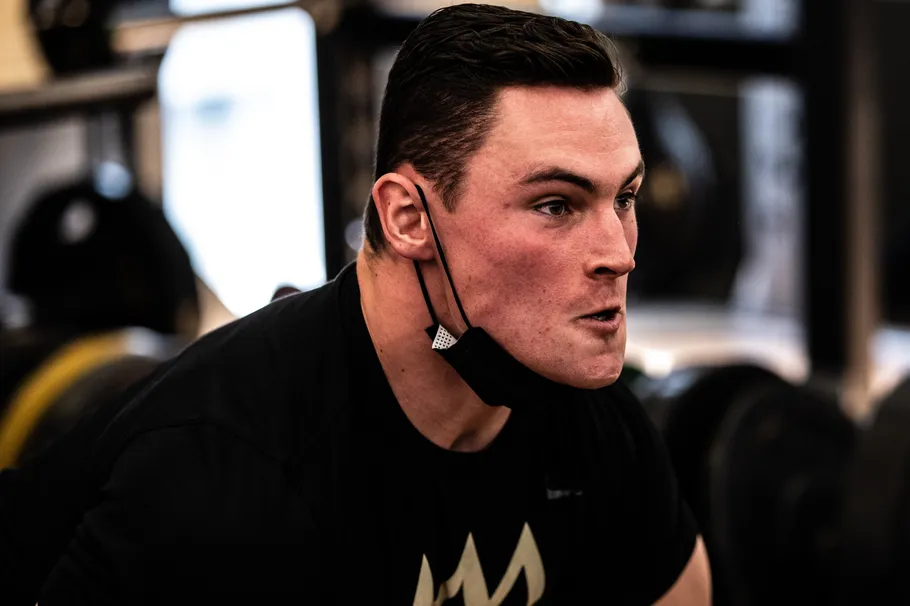
Photo: U.S. Army, Wikimedia Commons — A man catching his breath between sets in a gym, an honest training scene, not a product shot.
Specs: 87% polyester and 13% elastane; UPF 50+ sun protection; quick-dry; flatlock seams; 4-way stretch; tagless design; single and multi-pack options; sizes XS–3XL — runs small, so size up.
The TSLA is the value pick: a quick-dry UPF 50+ shirt in a polyester-elastane blend, sold singly or in multi-packs, with flatlock seams and a tagless neck. The sun protection is the extra — the same shirt works outdoors and in the gym.
The trade-off is fit. Buyer guides report that TSLA runs small, so the advice is to size up — the opposite of the size-down advice some brands give for their shirts. And TSLA sells short-sleeve, long-sleeve, mock-neck, thermal and V-neck versions under near-identical names.
Pros:
- UPF 50+ sun protection at a value level of fuss.
- Quick-dry 87% polyester blend with flatlock seams.
- Single and multi-pack options, XS to 3XL.
Cons:
- Runs small — buyer guides say size up (see the flag below).
- No mmHg level published for this shirt.
- Sleeve and line tangle under near-identical names.
Who it’s for: buyers who want a cheap, sun-safe compression shirt and who order a size up after checking the chart.
⚠️ Confirm the short-sleeve UPF 50+ shirt, and size up: the Thermal mock-neck, the long-sleeve and the V-neck versions share the TSLA name, and buyer guides report the fit runs small — check the sleeve length, the UPF 50+ rating and the chest chart on the listing.
Separately, the brand is “TSLA” (Tesla Gears) — searching “Tesla” returns cars, so search the four letters, not the car maker’s name, when you check the listing.
👉 Check TSLA UPF 50+ Short Sleeve Compression Shirt on Amazon
📊 Comparison Table
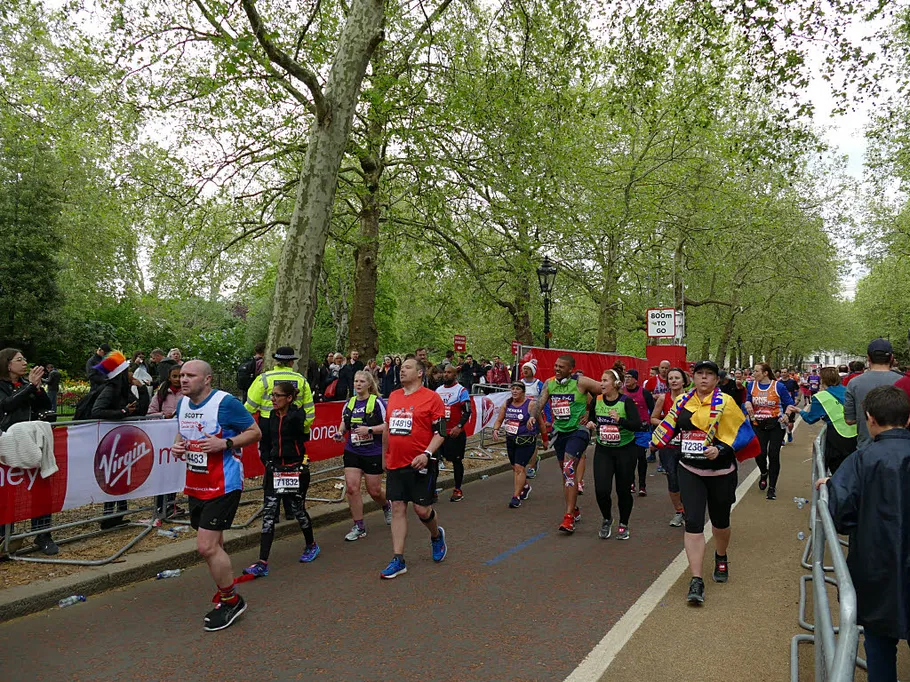
Photo: Stephen Craven, Wikimedia Commons — Runners on a tree-lined road at the London Marathon, with spectators behind barriers, an honest race scene, not a product shot.
| Pick | Type | Fit | Standout | Watch out |
| Under Armour HeatGear Armour Compression Short-Sleeve | HeatGear knit, 84% poly/16% elastane | Chest, XS–3XL | Classic, mesh panels | Style-number tangle |
| Nike Pro Dri-FIT Tight Short-Sleeve Top | Dri-FIT knit, blend varies | Chest — check listing | Everyday, mesh back | Pro line tangle |
| 2XU Compression Long Sleeve Top | PWX, graduated, UPF50+ | Chest/waist/hip, XS–2XL | Long sleeve, gradient | MCS/Thermal tangle |
| Skins A400 Men’s Long Sleeve Top | Memory MX warp knit, gradient | Height + weight + shape | Premium, 400 Fit | A400 vs RY400/A200 |
| Virus Bioceramic Compression Short Sleeve | Bioceramic nylon blend | Chest — check listing | Recovery, FIR minerals | BioFlex/BioPoly tangle |
| TSLA Men’s UPF 50+ Short Sleeve Compression Shirt | 87% poly/13% elastane, UPF 50+ | Chest, XS–3XL, runs small | Value, tagless | Sleeve/line tangle |
Table honesty note: the Fit column mixes different measures on purpose, because that is how the makers publish them — Under Armour and TSLA state chest bands, 2XU states chest, waist and hip together, Skins states height, weight and body shape, and Nike and Virus leave the exact chart to the listing.
Do not compare the numbers directly across rows, and do not crown any pick the widest-fitting or the firmest in this guide: no pick publishes an mmHg level for its shirt, so there is no firmness ranking here.
2XU’s 23–26 mmHg figure belongs to its MCS tights fabric, not to this top — do not use it to rank the shirts. Measure your chest at its widest and check your waist, then check the listing you order from.
🧭 How to Choose the Right Compression Shirt
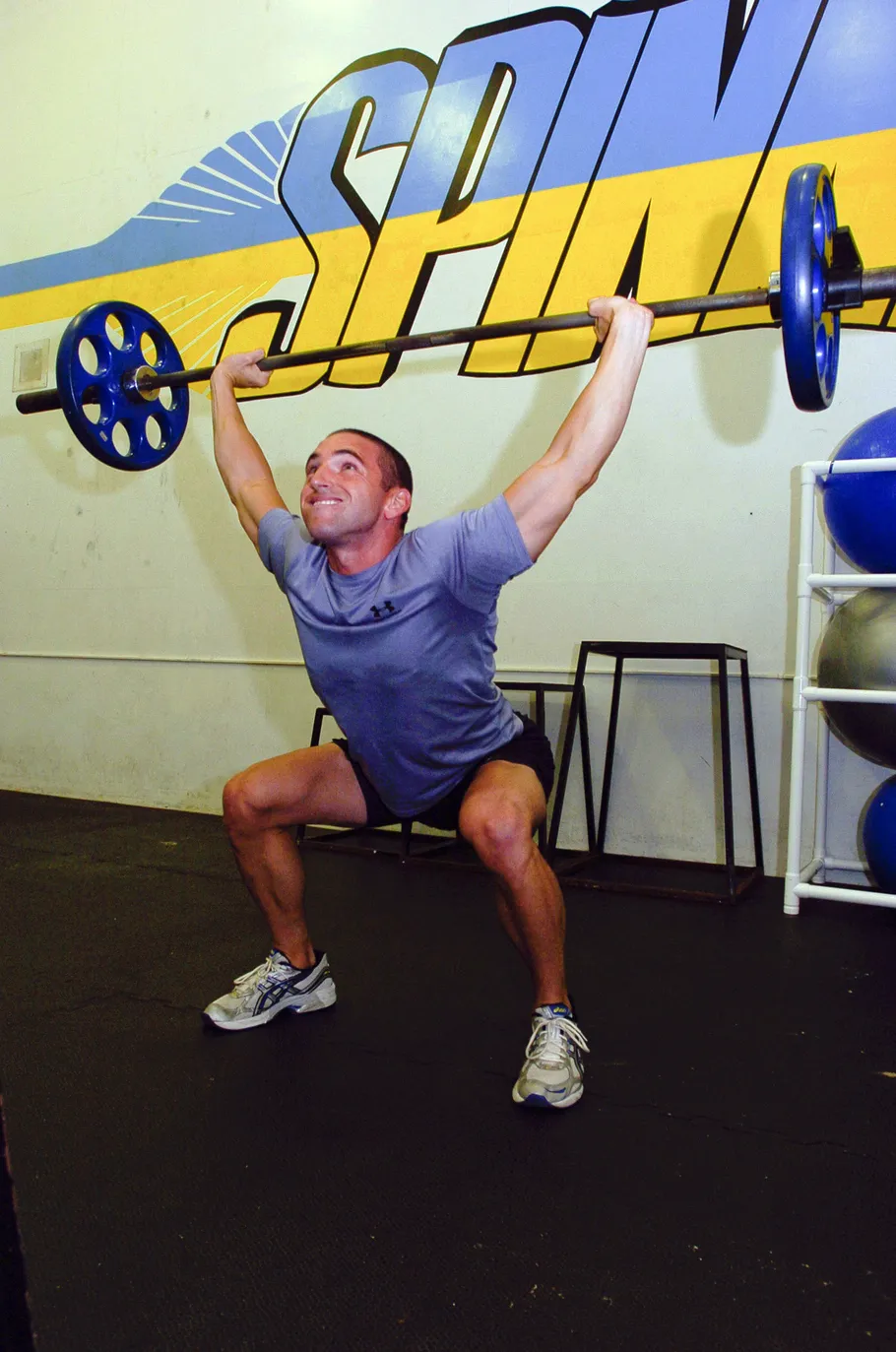
Photo: Sgt. David McLean, Wikimedia Commons — A man holding a barbell overhead in a squat in a gym, an honest training scene, not a product shot.
Start with the type. A classic knit (Under Armour, Nike) squeezes evenly and suits most gym sessions. A long-sleeve top (2XU, Skins) adds arm coverage and sun protection. A recovery shirt (Virus) is built for after hard training.
A value shirt (TSLA) does the basic job at the lowest fuss.
None of these is a loose tee, a rash guard, a sleeve, a belt or a corrector — if it hangs loose, grips the mat, covers one arm, holds the waist rigid, or pulls the shoulders back, it is not a compression shirt, whatever the listing title says.
Then measure properly. Compression shirts are sized by the chest at its widest point — and the picks in this guide split four ways. Under Armour and TSLA need the chest; 2XU needs chest, waist and hip; Skins needs height, weight and body shape; Nike and Virus leave the exact chart to the listing.
Measure your chest at its widest and check your waist, then match both against the listing’s own chart.
For TSLA, the between-size rule is to size up, since buyer guides report it runs small. For 2XU, do NOT size down — 2XU warns that sizing down disrupts the graduated squeeze. When the rules disagree, the listing you order from plus the fit check on arrival decide.
Think about sleeve length, fabric and fit shape. Short sleeves (Under Armour, Nike, Virus, TSLA) suit warm gyms; long sleeves (2XU, Skins) suit outdoor sessions and sun — 2XU carries UPF50+, TSLA carries UPF 50+, and Under Armour carries UPF 30.
Fabric matters for feel: Under Armour’s 84% polyester blend and TSLA’s 87% polyester blend are stated plainly, Nike’s blend varies by variant, 2XU’s PWX and Skins’ Memory MX are the makers’ own fabrics, and Virus’s far-infrared minerals are the maker’s claim, not a measured result.
A shirt that rides up, rolls at the hem or cuts in at the arms is usually the wrong size, not broken — re-measure before re-ordering.
A compression shirt also wears under a gi as a base layer — our BJJ gi guide covers the gi itself, and the shirt underneath is the same tight top, not a second gi.
If your sport needs mat protection rather than compression, a rash guard does a different job — grip-resistant, built for the mat, not for the squeeze.
Finally, kit out the rest of the session honestly. A compression shirt squeezes the torso and arms; it does not cover the lower body, where a compression sock does a different job — our compression socks guide covers that half of the kit.
And the lifting that keeps shoulders and arms useful — presses, rows, pulls and carries — still needs the basics, which is why our adjustable dumbbells guide sits alongside this one in a home gym.
❓ Frequently Asked Questions

Photo: Romanterik, Wikimedia Commons — A trail runner descending a rocky path in the Jeseniky mountains, an honest race scene, not a product shot.
Will compression shirts fix my shoulder or back pain?
No. A compression shirt squeezes the torso and arms while you move; it does not treat or cure pain, injury, or any shoulder or back condition, and no pick in this guide claims otherwise.
Persistent pain, swelling, numbness, colour change, or a recent injury belongs with a clinician first — a shirt is not a diagnosis, and training through sharp pain to test one is a bad idea.
What is the difference between a compression shirt, a loose workout shirt, a rash guard, an arm sleeve and a posture corrector?
A compression shirt is a skin-tight top that squeezes the torso, shoulders and arms evenly. A loose workout shirt hangs free and squeezes nothing. A rash guard is built for the mat — grip-resistant, with a longer torso.
An arm sleeve covers one arm and no torso. A posture corrector pulls the shoulders back with straps. They cover different things — buying a rash guard when only the torso needs squeezing, or a corrector when nothing needs pulling back, is the most common mistake in this category.
How do I measure for a compression shirt?
Measure your chest at its widest point and check your waist, then match both against the listing’s own chart. Charts differ by maker — Under Armour and TSLA size by chest, 2XU uses chest, waist and hip, and Skins uses height, weight and body shape.
So the listing you order from is the authority, not any single measure. Sleeve length is a separate choice: short sleeves for warm gyms, long sleeves for outdoor sessions and sun.
Do compression shirts have an mmHg level?
None of the six picks in this guide publishes one for its shirt, so you cannot rank the six by firmness on paper — judge them by fit and feel, and do not trust a listing that invents a level for a pick that publishes none.
2XU’s 23–26 mmHg figure belongs to its MCS tights fabric, not to the Compression Long Sleeve Top, and the other five makers publish no level at all — so no firmness ranking exists in this guide.
Can I wear a compression shirt all day, or under other clothes?
Yes — that is how base layers are meant to be worn, under a gi, a jersey or a hoodie, and light knits suit long wear. Firm, targeted shirts suit sessions and recovery blocks better than all-day wear for a first-time user.
And whatever the level, take the shirt off if anything goes numb, tingles, or leaves marks that do not fade quickly.
What should I do if my shirt rides up or cuts in at the arms?
Re-measure first — a shirt that rides up is usually too small or the wrong torso length, not broken — and confirm the size against the listing’s chart, since a chest-only size can misfit broad shoulders.
Check the hem is sitting flat and the fabric is not worn out at the elastic; and pair support work with gentle mobility, since our foam rollers guide covers the recovery side of a home-gym routine.
Thanks for reading — we hope this guide helps you pick a compression shirt that fits properly and does the job you actually need. If a size chart disagrees with what you measured, trust the tape, not the listing headline.
Disclosure: As an Amazon Associate, we earn from qualifying purchases made through links in this article, at no extra cost to you. Product details and availability can change, so please check the listing before ordering.
Pingback: Best Compression Arm Sleeves for Home Gyms (2026)