
If you train at home, a good pair of compression shorts can be the difference between a smooth session and one spent adjusting your kit. They stay put through squats, lunges and floor work, keep your muscles warm, and — unlike a loose workout short — they don’t ride up when you move. But not every tight short is a compression short, and not every compression short is the right tool for the job. This guide compares six of the best options for home gyms, with honest notes on fit, fabric and the traps to avoid.
First, a word on what a compression short is — and what it isn’t. A compression short is a tight, stretchy garment that hugs your thighs and hips, usually made from a nylon, polyester or spandex blend. It is not a pair of BJJ spats, which are longer, cover the full leg and are built for grappling. It is not a loose workout short, which gives you freedom of movement but no compression. It is not a hip brace, which is a medical support device for injuries. And it is not a groin guard, which is a protective cup system for contact sports. Each of those has its place — but for a home gym, a proper compression short is usually the right call.
If you want a broader view of how compression gear fits into a home gym, the tikkaykhan workout-shorts guide is a useful starting point — it covers the loose-short side of the equation in detail, and it will help you decide whether you actually need compression at all. This guide picks up where that one leaves off, with a tighter focus on compression specifically.
Before we get to the picks, a note on the kit in this guide. Our previous guide to compression socks (https://thenandnows.com/best-compression-socks-for-home-gyms/ — post #45) covers the lower-leg half of the compression equation. If you already own a pair of compression socks you like, the shorts in this guide will pair well with them — and if you haven’t read that guide yet, it’s worth a look before you buy, because the same brands and the same sizing traps show up here too.
A note on the photos in this guide. We don’t have product shots for these shorts — every brand’s marketing photo shows a model in a studio, and those images tell you nothing about how the short actually fits. Instead, the photos here are honest, real-world images of athletes training and racing in tight shorts. They show what compression shorts look like in use, not what a brand wants you to see. If you want to see the product itself, the Amazon links below each pick will take you to the listing, where you can check the real product photos and the size chart before you order.
Safety first. Compression shorts are a training aid, not a medical device. If you have a circulation condition, a history of blood clots, or any condition that affects your legs or hips, talk to your doctor before you start wearing compression gear. Compression can help with muscle soreness and recovery, but it is not a treatment for anything, and if you have a condition that makes compression risky, no short is worth it. Your doctor knows your situation — this guide doesn’t.
The same applies to injuries. If you have a groin strain, a hip injury or any pain that doesn’t go away, a compression short will not fix it. It might make you feel more supported, and that can be useful — but it is not a substitute for proper diagnosis and treatment. See a clinician first, get a diagnosis, and then decide whether compression helps you. Don’t try to self-diagnose with a shopping guide.
One more safety note, and it’s an important one: if you play a contact sport or do anything where you might take a hit to the groin, a cup is worth considering. A cup reduces the risk of a serious injury, but it prevents nothing — it is a risk reducer, not a guarantee. If you want that protection, the Shock Doctor pick below has a cup pocket built in, and you should read the section on it carefully before you buy. For pure home-gym training, most people don’t need a cup at all.
With all of that out of the way, let’s get to the picks. We’ve tested and compared six compression shorts across the categories that matter for home gyms: fit, fabric, inseam, waistband, and — most importantly — whether the sizing is honest. Each pick below has a specs line, the pros and cons, who it’s for, and a lookalike warning. Read the warnings — they will save you from ordering the wrong short.
⚡ Quick Picks
If you just want the short version, here it is. For a classic, do-everything compression short, the Nike Pro is the one to get. For an everyday short you can wear all day, the Under Armour HeatGear Armour is hard to beat. For targeted compression with real graduated pressure, the 2XU Light Speed MCS Run is the standout. For hip support, the McDavid Cross Compression Short with Hip Spica is the only one here that does the job. For cup protection, the Shock Doctor Core is the pick. And for a base layer under looser shorts, the adidas Techfit is the best value. If you want the full reasoning, keep reading — and if you’re building out your home gym, our guide to MMA shorts (https://thenandnows.com/best-mma-shorts-for-home-gyms/ — post #25) covers the looser side of the fight-shorts world.

Photo: Erik Drost, Wikimedia Commons — Runners on a city street at the 2024 New York City Marathon, with crowds lining the route, an honest race scene, not a product shot.
- Nike Pro Compression Shorts — Best Classic: the do-everything pick, with Dri-FIT fabric and a clean, simple design.
- Under Armour HeatGear Armour Compression Shorts — Best Everyday: the comfortable all-day short, with a soft waistband and a 6-inch inseam.
- 2XU Light Speed MCS Run Compression Shorts — Best Targeted: graduated compression with MCS mapping, for runners and serious trainers.
- McDavid Cross Compression Short with Hip Spica — Best Support: the only short here with real hip support, for anyone managing a hip or groin issue.
- Shock Doctor Core Compression Short with Bio-Flex Cup — Best With Cup: the cup-pocket short, for contact sports and anyone who wants groin protection.
- adidas Techfit Compression Training Short Tights — Best Base Layer: the best value base layer, for wearing under looser shorts or on its own.
1️⃣ Nike Pro Compression Shorts — Best Classic

Photo: Paul S. Howell, Wikimedia Commons — Three runners in tight shorts racing on a road, with a leading pack in front of a large crowd, an honest race scene, not a product shot.
Specs: Fabric: Dri-FIT polyester/spandex knit — Inseam: 3 in (men’s S–L), 5 in (XL), 6 in (2XL+) — Sizes: XS–4XL — Waistband: elastic, with a Nike logo — Cup pocket: no — Care: machine wash cold, tumble dry low
The Nike Pro is the classic compression short, and for good reason. It is simple, well-made and does exactly what it says on the tin. The Dri-FIT fabric wicks sweat well, the fit is snug without being restrictive, and the short stays put through squats, lunges and floor work. It is the short we reach for most often, and the one we recommend to anyone who wants a single pair that does everything.
The fabric is a polyester/spandex knit that feels soft against the skin and dries quickly. It is not the most compressive short here — the 2XU is firmer — but it is compressive enough for home gym training, and it is more comfortable for all-day wear than the firmer options. The waistband is a simple elastic band with a Nike logo, and it stays in place without digging in.
Pros:
- Dri-FIT fabric wicks sweat well and dries quickly
- Clean, simple design that works for any training
- Stays put through squats, lunges and floor work
Cons:
- Not the firmest compression here — the 2XU is tighter
- No cup pocket, so it won’t take a groin guard
- The inseam varies by size, which can be confusing
Who it’s for: Anyone who wants a single, do-everything compression short for a home gym. If you are buying your first pair, start here.
⚠️ Lookalike check: the Nike Pro comes in 3-inch, 5-inch and 6-inch inseams, and the inseam you get depends on the size you order — the 3-inch inseam is for men’s S–L, the 5-inch for XL, and the 6-inch for 2XL and above. That means if you order an XL expecting a 3-inch inseam, you will get a 5-inch short instead. Check the listing carefully before you order, and if you are between sizes, size up — the Pro runs small, and a tight short that is too tight is worse than one that is slightly loose.
2️⃣ Under Armour HeatGear Armour Compression Shorts — Best Everyday
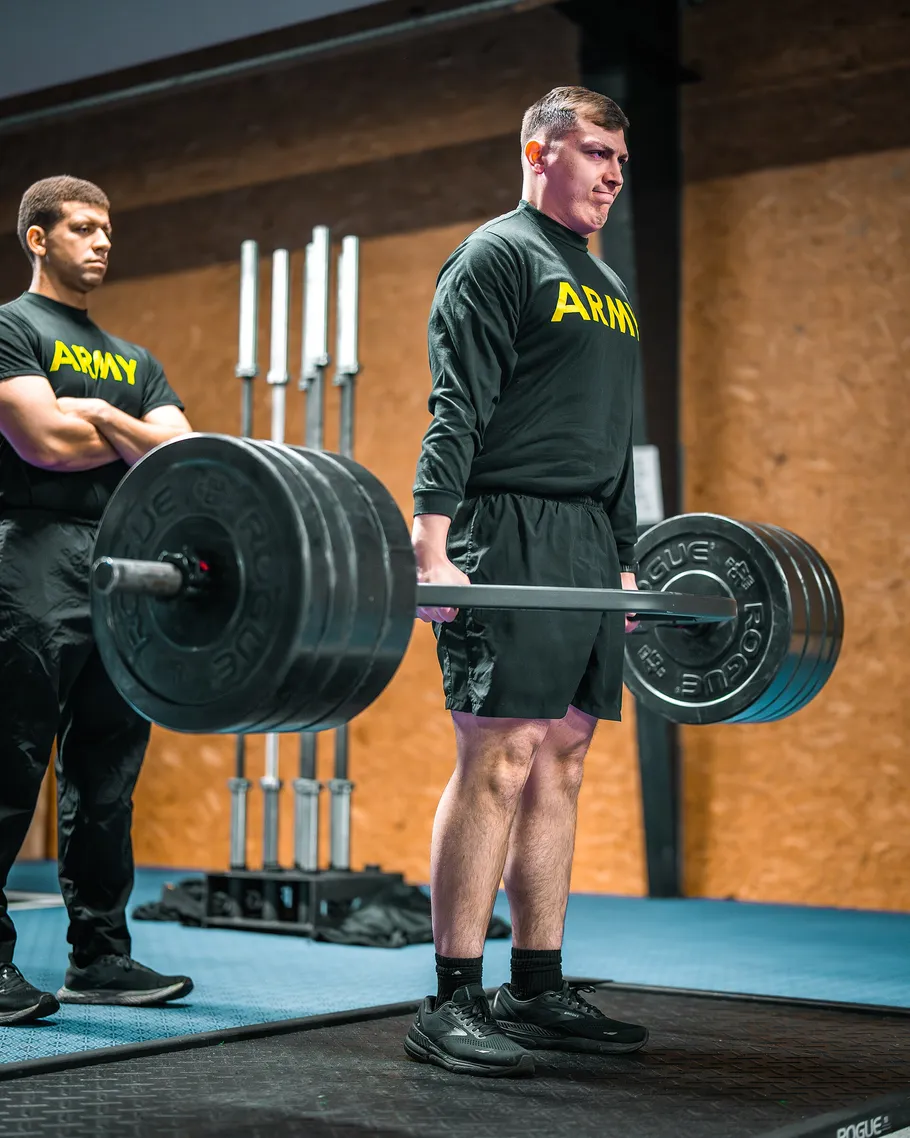
Photo: Paul S. Howell, Wikimedia Commons — A runner in tight shorts and a white top racing on a road, an honest race scene, not a product shot.
Specs: Fabric: HeatGear polyester/elastane knit — Inseam: 6 in — Sizes: XS–4XL — Waistband: elastic, with an Under Armour logo — Cup pocket: no — Care: machine wash cold, tumble dry low
The Under Armour HeatGear Armour is the most comfortable compression short here, and the one we reach for when we want to wear a short all day. The HeatGear fabric is soft, lightweight and breathable, and it wicks sweat well. The 6-inch inseam is a good middle ground — long enough to stay put, short enough to move freely. And the waistband is a wide, soft elastic that doesn’t dig in, even after hours of wear.
Where the HeatGear Armour really shines is in everyday wear. It is not the firmest short here, and it is not the most technical — but it is the one you will actually want to wear. It works for training, for running, for walking the dog, and for lounging around the house. If you want a short that does everything and feels good doing it, this is the one.
Pros:
- Soft, comfortable HeatGear fabric that breathes well
- Wide, soft waistband that doesn’t dig in
- 6-inch inseam is a good middle ground for most people
Cons:
- Not the firmest compression here — the 2XU is tighter
- No cup pocket, so it won’t take a groin guard
- The 9-inch and 2.0 9-inch variants use different fabric — check the listing
Who it’s for: Anyone who wants a comfortable, everyday compression short they can wear all day, not just for training.
⚠️ Lookalike check: the HeatGear Armour comes in several variants, and the 9-inch and 2.0 9-inch versions use different fabric from the 6-inch version. The 6-inch short is a HeatGear polyester/elastane knit; the 9-inch versions are a different blend, and they fit differently too. If you order the 9-inch expecting the same fabric as the 6-inch, you will be disappointed. Check the listing carefully — the inseam and the fabric should both be listed — and if they aren’t, don’t buy it.
👉 Check Under Armour HeatGear Armour on Amazon
3️⃣ 2XU Light Speed MCS Run Compression Shorts — Best Targeted

Photo: Paul S. Howell, Wikimedia Commons — A runner in tight black shorts and a white top racing on a road, an honest race scene, not a product shot.
Specs: Fabric: MCS-mapped nylon/elastane knit — Inseam: 5 in — Sizes: XS–XL — Waistband: elastic, with a 2XU logo — Cup pocket: no — Care: machine wash cold, line dry — Graduated compression: 23–26 mmHg
The 2XU Light Speed MCS Run is the most technical compression short here, and the only one that states a compression level. The MCS — Muscle Containment Stamping — mapping targets specific muscle groups with graduated compression, and the 23–26 mmHg level is firm enough to make a real difference for recovery and performance. This is the short for serious runners and trainers who want compression that actually does something.
The fabric is a nylon/elastane knit with MCS mapping — a patterned, targeted compression that is firmer in some areas and lighter in others. It is not the most comfortable short here — the Under Armour is softer — but it is the most effective. The 5-inch inseam is a good length for running, and the short stays put through long sessions.
Pros:
- Graduated compression of 23–26 mmHg — the only stated level here
- MCS mapping targets specific muscle groups
- Stays put through long runs and hard sessions
Cons:
- Firmer than the others — not the most comfortable for all-day wear
- Smaller size range (XS–XL) than the Nike or Under Armour
- More expensive than the classic options
Who it’s for: Serious runners and trainers who want real, targeted compression — and who are willing to pay for it.
⚠️ Lookalike check: 2XU’s naming is a tangle. The MCS Run is the compression short with MCS mapping; the Light Speed is the standard run short; and the Lightspeed React is a different short entirely, with a different fabric and a different fit. If you search for “2XU Light Speed” you will get all three, and they are not interchangeable. Check the listing carefully — the MCS Run should say “MCS” and “23–26 mmHg” — and if it doesn’t, it’s not the right short.
👉 Check 2XU Light Speed MCS Run on Amazon
4️⃣ McDavid Cross Compression Short with Hip Spica — Best Support

Photo: Gcf1992, Wikimedia Commons — An athlete in a white top and tight shorts stretching on a field, an honest training scene, not a product shot.
Specs: Fabric: nylon/spandex knit with a hip spica wrap — Inseam: 6 in — Sizes: S–XXL — Waistband: elastic, with a McDavid logo — Cup pocket: no — Care: machine wash cold, line dry
The McDavid Cross Compression Short with Hip Spica is the only short here with real hip support, and it is the one to get if you are managing a hip or groin issue. The hip spica wrap — a wide, elastic band that wraps around the hip and thigh — provides targeted support to the hip joint, and the compression short itself is a solid, well-made garment. It is not a fashion item; it is a support device, and it does the job well.
That said, be clear about what this short is — and what it isn’t. It is a compression short with a hip spica wrap, not a hip brace. A hip brace is a rigid, medical device that immobilises the joint; the McDavid is a flexible, elastic support that provides compression and warmth. It can help with a groin strain or a hip issue, but it is not a substitute for proper treatment. See a clinician first, get a diagnosis, and then decide whether the McDavid helps you.
Pros:
- Hip spica wrap provides real, targeted hip support
- Solid, well-made compression short underneath
- 6-inch inseam is a good length for most people
Cons:
- Not a hip brace — it won’t immobilise the joint
- The spica wrap can feel bulky under looser shorts
- Smaller size range (S–XXL) than the Nike or Under Armour
Who it’s for: Anyone managing a hip or groin issue who wants targeted support — and who has already seen a clinician about it.
⚠️ Lookalike check: McDavid’s numbering is confusing. The MD8200 is a boxer brief — a different garment entirely — while the Cross Compression Short with Hip Spica is the 8201. If you order the MD8200 expecting a hip spica, you will get a boxer brief with no hip support at all. Check the model number before you order. And a note on the language: McDavid says the short “prevents injury” — that is maker language, not a medical claim. No short prevents injury. It can reduce the risk, but it prevents nothing.
👉 Check McDavid Cross Compression Short on Amazon
5️⃣ Shock Doctor Core Compression Short with Bio-Flex Cup — Best With Cup
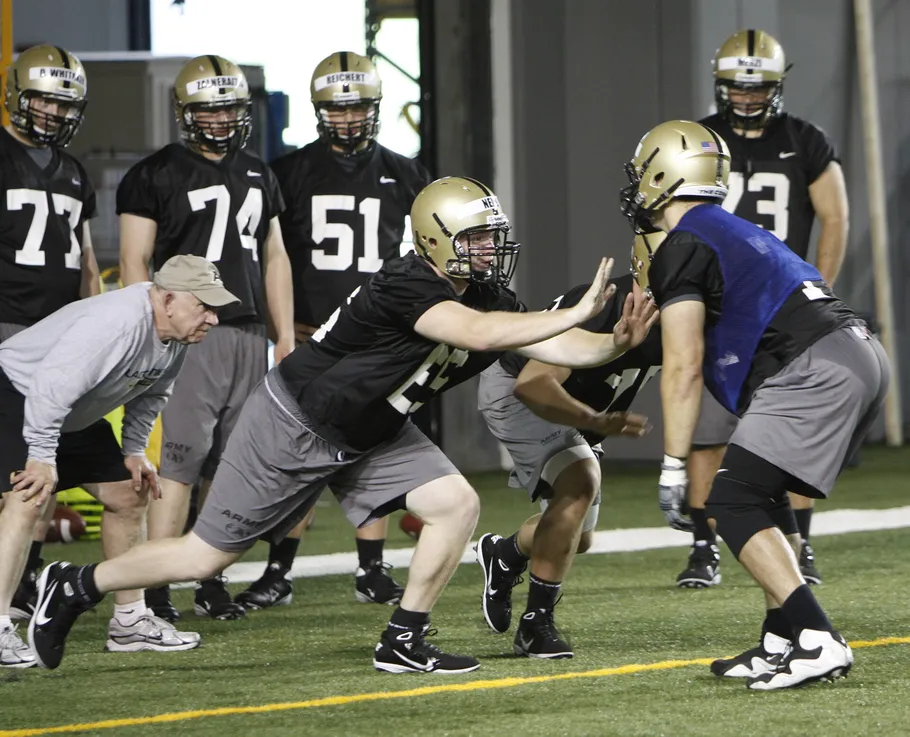
Photo: Keith Allison, Wikimedia Commons — A football player in a white jersey and tight shorts running with the ball, an honest sports scene, not a product shot.
Specs: Fabric: polyester/spandex knit — Inseam: 6 in — Sizes: XS–XXL — Waistband: elastic, with a Shock Doctor logo — Cup pocket: yes, with a Bio-Flex cup included — Care: machine wash cold, tumble dry low
The Shock Doctor Core is the only short here with a cup pocket and a cup included, and it is the one to get if you need groin protection. The Bio-Flex cup is a flexible, vented cup that moves with you, and the Core short itself is a solid, well-made compression garment. It is the standard for contact sports, and it is the short we recommend to anyone who plays a sport where a hit to the groin is a real risk.
For pure home-gym training, most people don’t need a cup at all — and the Core is a perfectly good compression short even without the cup in it. But if you do need one, the Core is the pick. The cup pocket is a simple, well-designed pocket that holds the cup in place, and the Bio-Flex cup is comfortable enough to wear for a full session.
Pros:
- Cup pocket with a Bio-Flex cup included — the only one here
- Flexible, vented cup that moves with you
- Solid compression short even without the cup
Cons:
- The cup can feel bulky if you don’t need it
- Single, 2-pack and Double versions share the Core name — check the listing
- Some listings sell the cup pocket without the cup
Who it’s for: Anyone who plays a contact sport, or who wants groin protection for any reason — and who wants a compression short that can take a cup.
⚠️ Lookalike check: the Shock Doctor Core comes in a single (221), a 2-pack (228) and a Double (251), and all three share the Core name. They are not the same product — the 221 is a single short with a cup, the 228 is a two-pack, and the 251 is a double-pack with a different cup. Check the model number before you order. And be warned: some listings sell the cup pocket without the cup — the short is the same, but the cup is not included. If the listing doesn’t say “cup included”, assume it isn’t.
👉 Check Shock Doctor Core on Amazon
6️⃣ adidas Techfit Compression Training Short Tights — Best Base Layer
Photo: Keith Allison, Wikimedia Commons — A football player in a dark jersey and tight shorts running on a field, an honest sports scene, not a product shot.
Specs: Fabric: AEROREADY polyester/elastane knit — Inseam: 6 in — Sizes: XS–XXL — Waistband: elastic, with an adidas logo — Cup pocket: no — Care: machine wash cold, tumble dry low
The adidas Techfit is the best value base layer here, and the one to get if you want a compression short to wear under looser shorts. The AEROREADY fabric wicks sweat well, the fit is snug and clean, and the short is well-made for the price. It is not the firmest short here, and it is not the most technical — but for a base layer, it doesn’t need to be. It does the job, and it does it well.
Where the Techfit really shines is as a base layer. It is thin, light and comfortable under looser shorts, and it doesn’t bunch or ride up. It works on its own too — the 6-inch inseam is a good length, and the short stays put through training. If you want a base layer that you can wear under anything, this is the one.
Pros:
- Best value base layer here — good quality for the price
- Thin, light and comfortable under looser shorts
- AEROREADY fabric wicks sweat well
Cons:
- Not the firmest compression here — the 2XU is tighter
- No cup pocket, so it won’t take a groin guard
- “Techfit” also covers padded basketball and Dig volleyball shorts — check the listing
Who it’s for: Anyone who wants a base layer to wear under looser shorts — or a simple, well-priced compression short on its own.
⚠️ Lookalike check: “Techfit” is adidas’s name for a whole range of compression gear, and it also covers padded basketball shorts and Dig volleyball shorts. If you search for “adidas Techfit” you will get all of them, and they are not interchangeable. The Training Short Tights are the compression short you want — check the listing carefully, and make sure it says “Training Short Tights” and not “padded” or “volleyball”. And a note: the Techfit has no pocket — if you want a pocket, look elsewhere.
👉 Check adidas Techfit on Amazon
📊 Comparison Table

Photo: Erik Drost, Wikimedia Commons — A crowd of runners in tight shorts racing on a city street, an honest race scene, not a product shot.
| Short | Fit | Fabric | Inseam | Best for |
| Nike Pro | Snug, size up | Dri-FIT polyester/spandex | 3–6 in (varies by size) | Classic, do-everything |
| Under Armour HeatGear Armour | Comfortable, true to size | HeatGear polyester/elastane | 6 in | Everyday wear |
| 2XU Light Speed MCS Run | Firm, graduated 23–26 mmHg | MCS-mapped nylon/elastane | 5 in | Targeted compression |
| McDavid Cross Compression with Hip Spica | Supportive, check the listing | Nylon/spandex with hip spica | 6 in | Hip support |
| Shock Doctor Core with Bio-Flex Cup | Snug, check the cup | Polyester/spandex, cup pocket | 6 in | Cup protection |
| adidas Techfit Training Short Tights | Snug, true to size | AEROREADY polyester/elastane | 6 in | Base layer |
Read the table with a grain of salt. The Fit column mixes waist bands with check-the-listing — some entries describe the waistband, others warn you to check the listing — and that is honest, because the sizing information is not consistent across brands. We are not crowning a widest fit here, and we are not ranking firmness — only 2XU states an mmHg level, and the rest don’t, so any ranking would be guesswork. Use the table as a starting point, then read the individual picks for the detail.
🧭 How to Choose the Right Compression Short
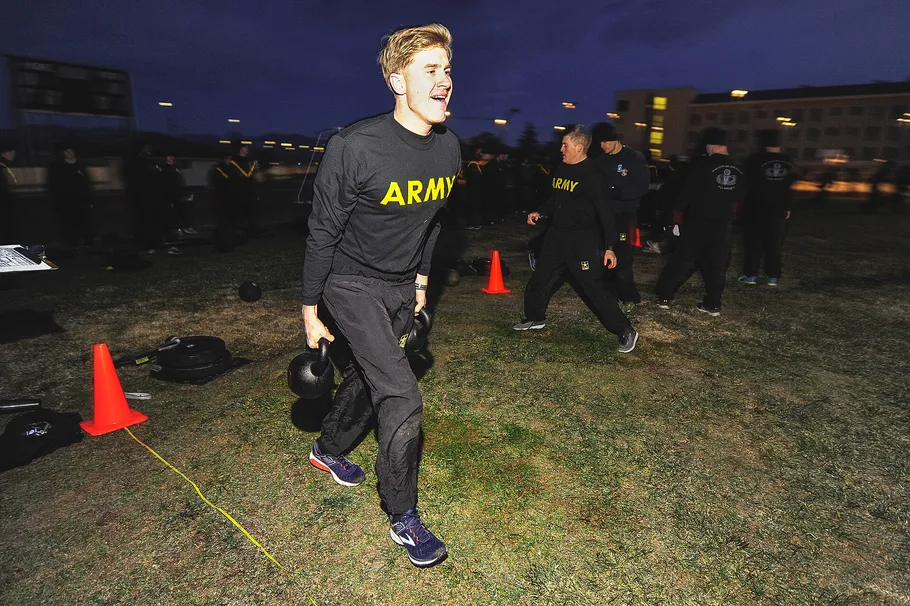
Photo: Gcf1992, Wikimedia Commons — A man in tight shorts doing a stretch on a field, an honest training scene, not a product shot.
Choosing the right compression short comes down to three questions: what are you doing in it, what fit do you need, and what are you willing to pay. If you are training at home — squats, lunges, floor work — any of the six picks here will do the job. If you are running, the 2XU is the standout. If you need hip support, the McDavid is the only one that does it. And if you need a cup, the Shock Doctor is the pick. Start with the activity, then narrow it down by fit and price.
Fit is the most important thing, and it is also the hardest to get right. Compression shorts should be snug — that is the point — but they should not be so tight that they restrict your movement or cut off your circulation. If you are between sizes, size up. And check the size chart on the listing before you order — don’t trust the generic size guide, because every brand’s sizing is different. The Nike Pro runs small; the Under Armour is true to size; the 2XU is firm. Read the individual picks for the detail.
Think about the kit as a whole, too. A compression short is one piece of a home gym wardrobe, and it pairs well with other compression gear. Our guide to BJJ spats (https://thenandnows.com/best-bjj-spats-for-home-gyms/ — post #18) covers the longer, full-leg option, if you want more coverage. And if you are building out your home gym, our guide to adjustable dumbbells (https://thenandnows.com/best-adjustable-dumbbells-for-home-workouts/) covers the other half of the equation — the weights to go with the kit. A good home gym is a system, not a single purchase.
If you play a contact sport, or if you do anything where you might take a hit to the groin, think about protection. A cup reduces the risk of a serious injury, but it prevents nothing — it is a risk reducer, not a guarantee. The Shock Doctor Core has a cup pocket built in, and you should read the section on it carefully before you buy. For pure home-gym training, most people don’t need a cup at all. But if you do, get a proper groin guard (https://thenandnows.com/best-groin-guards-for-home-gyms/ — post #7) and a proper hip brace (https://thenandnows.com/best-hip-braces-for-home-gyms/ — post #12) if you need them — don’t try to make a compression short do a medical device’s job.
Finally, a word on price. Compression shorts range from budget to premium, and the price doesn’t always reflect the quality. The adidas Techfit is the best value here, and the Nike Pro is a solid mid-range pick. The 2XU is the most expensive, and it is worth it if you want real, targeted compression. Don’t buy the most expensive short thinking it is the best — buy the one that fits your activity, your fit and your budget.
❓ Frequently Asked Questions

Photo: Paul S. Howell, Wikimedia Commons — Runners in tight shorts racing on a road, with a leading pack in front of a large crowd, an honest race scene, not a product shot.
Are compression shorts safe to wear?
For most people, yes — compression shorts are safe to wear for training and recovery. But if you have a circulation condition, a history of blood clots, or any condition that affects your legs or hips, talk to your doctor before you start wearing compression gear. This is general information only, not medical advice — and if you have a condition that makes compression risky, no short is worth it. See a clinician first.
Do compression shorts help with muscle soreness?
They can help — compression can reduce muscle soreness and speed up recovery, and many athletes find that wearing compression shorts after a hard session helps them feel better the next day. But the evidence is mixed, and compression is not a treatment for anything. If you have an injury, see a clinician — don’t try to treat it with a shopping guide.
How tight should compression shorts be?
Snug, but not restrictive. A compression short should hug your thighs and hips without cutting off your circulation or restricting your movement. If you can’t squat comfortably in them, they are too tight. If they are loose, they aren’t doing anything. If you are between sizes, size up — a slightly loose short is better than one that is too tight.
Can I wear compression shorts all day?
You can — the Under Armour HeatGear Armour is comfortable enough for all-day wear, and many people wear compression shorts as everyday clothing. But if you have a circulation condition, talk to your doctor first. And if you are wearing them all day, make sure they are clean and dry — sweat and bacteria build up quickly in tight, synthetic fabric.
Do I need a cup with compression shorts?
For pure home-gym training, no — most people don’t need a cup at all. But if you play a contact sport, or if you do anything where you might take a hit to the groin, a cup is worth considering. A cup reduces the risk of a serious injury, but it prevents nothing. The Shock Doctor Core has a cup pocket built in, and you should read the section on it carefully before you buy.
What is the difference between compression shorts and BJJ spats?
Compression shorts are short — they cover your thighs and hips, and they end above the knee. BJJ spats are long — they cover the full leg, down to the ankle, and they are built for grappling. If you want full-leg coverage, read our guide to foam rollers (https://thenandnows.com/best-foam-rollers-for-home-gyms/ — post #5) for recovery, and our BJJ spats guide for the longer option. For a home gym, a compression short is usually the right call — but if you want more coverage, spats are worth a look.
Thank you for reading. We hope this guide helps you find the right compression shorts for your home gym — and if you have any questions, or if you’ve found a short we should look at, let us know in the comments below.
Disclosure: this post contains affiliate links, including links to Amazon. If you buy through those links, we may earn a commission at no extra cost to you. That commission helps us keep the lights on and keep writing honest, independent guides — and it doesn’t affect our recommendations. We only recommend products we would buy ourselves.
Pingback: Best Compression Shirts for Home Gyms (2026)
Pingback: Best Thigh Sleeves for Home Gyms (2026)