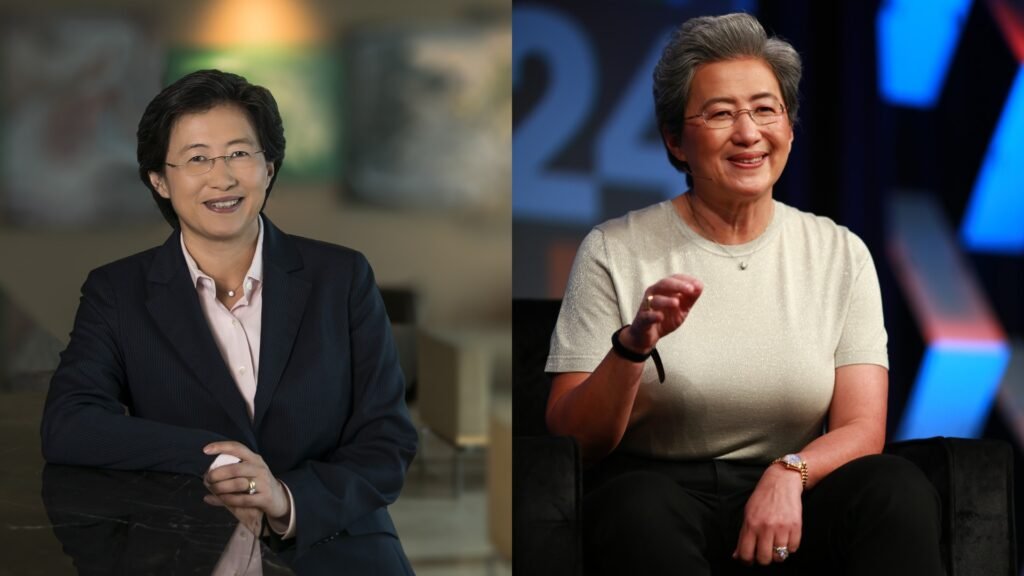
In October 2014, Advanced Micro Devices was a company the obituaries had already been drafted for. Its market value had shriveled to roughly $2 billion, its chips were an afterthought next to Intel’s, and analysts openly questioned whether it would survive the decade. The board’s answer was a 44-year-old engineer named Lisa Su — a semiconductor lifer with three MIT degrees and a reputation for running toward the hardest problems. Twelve years later, AMD is worth roughly $1 trillion, its chips power the data centers behind the AI boom, and Su herself has collected a billionaire’s fortune and a National Medal of Science. This is the story of the most improbable turnaround in modern tech.
Lisa Tzwu-Fang Su was born on November 7, 1969, in Tainan, Taiwan. When she was three, her family immigrated to the United States, settling in Queens, New York, where her father, a statistician, and her mother, an accountant, pushed math and science with an intensity she has described as characteristically Taiwanese. A curious kid who took apart her brother’s remote-control cars, she won a place at the Bronx High School of Science, the storied public school that has produced eight Nobel laureates.
At 16 she entered MIT, and she essentially never left the lab: bachelor’s, master’s, and doctorate in electrical engineering, the PhD completed in 1994 with research on silicon-on-insulator technology — a way of making chips faster and more efficient that foreshadowed her life’s work. Legend has it she chose electrical engineering because it seemed the hardest major available; the anecdote fits everything that came after.
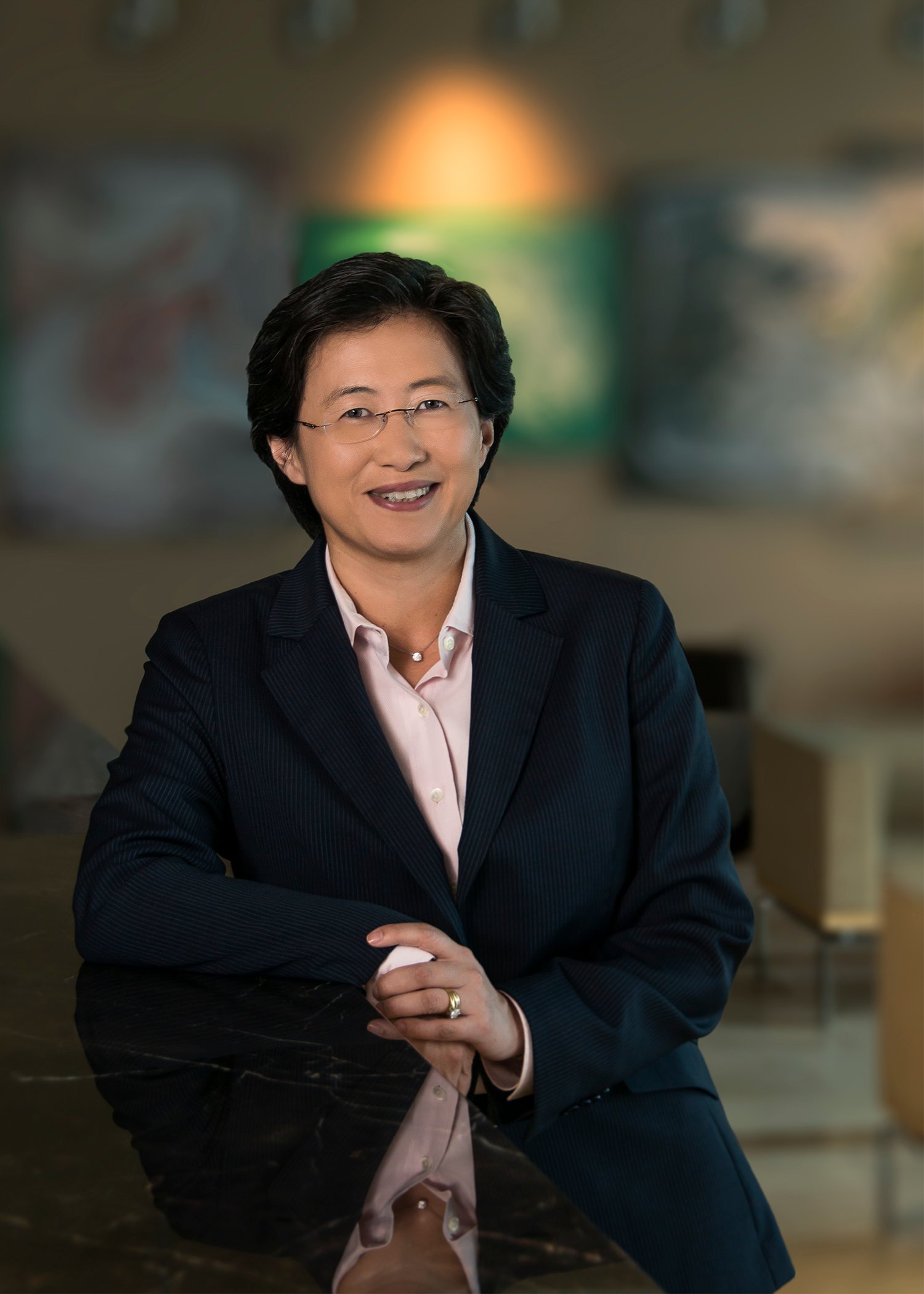
Her first stop was Texas Instruments, then IBM, where she spent about 13 years in semiconductor research and development, rising to vice president of the semiconductor R&D center and helping drive the industry’s shift to copper interconnects — the wiring that made modern chips possible. In 2007 she jumped to Freescale Semiconductor as chief technology officer, running networking and multimedia chip businesses.
Then came the move everyone called crazy. In 2012, Su joined AMD as a senior vice president. Two years later, the board handed her the top job: president and CEO, effective October 8, 2014. AMD was, by most measures, dying — drowning in debt, bleeding share to Intel, its stock trading like a lottery ticket. Friends in the industry told her not to take it. She took it anyway, betting that disciplined engineering could still win: fewer, better bets, executed relentlessly.
The bet paid off beyond anyone’s imagining. Su killed AMD’s scattershot product lines and poured the company’s remaining resources into a single moonshot: the Zen processor architecture. When the first Ryzen chips launched in 2017, reviewers were stunned — AMD had broken Intel’s near-monopoly on high-performance PC processors, a dominance that had once looked as permanent as Microsoft’s in the Steve Ballmer era. The EPYC server chips that followed stormed the data center, winning back customers AMD hadn’t held in a decade.
Investors noticed. AMD’s stock has risen roughly 9,000 percent since Su took over — the kind of once-in-a-generation compounding that made Warren Buffett a legend, achieved here not by picking stocks but by building chips. In September 2026 the company’s market value crossed $1 trillion — a staggering climb from the sub-$3 billion valuation of 2014, and a milestone that put AMD past Intel in the industry’s pecking order for good.
The AI era made her indispensable. As data centers scrambled for alternatives to Nvidia’s dominant AI chips, AMD’s Instinct accelerators became the industry’s great second hope — an irony not lost on anyone, since Nvidia’s chief executive, Jensen Huang, is Su’s distant cousin. Genealogists describe them as first cousins once removed; Su has called it a complicated extended-family tie, and the two did not grow up together. In February 2024, Forbes declared her a billionaire, estimating her fortune at about $1.1 billion, built almost entirely from AMD shares and stock options — making her one of the rare CEOs to earn ten figures by fixing a company rather than founding one. The AI chip race has even drawn in fellow billionaire Masayoshi Son, who sold his entire Nvidia stake to go all-in on OpenAI.
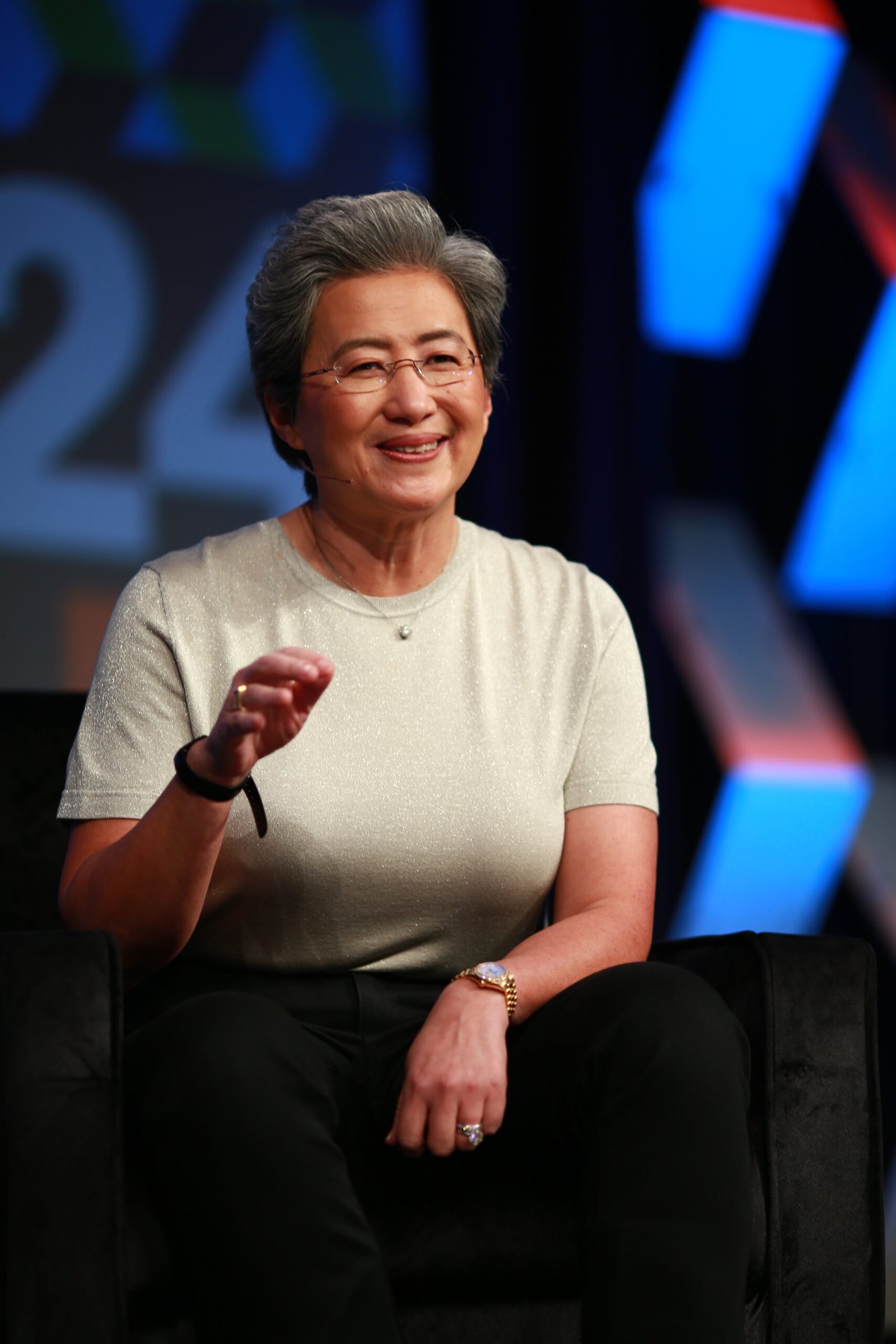
The honors of 2026 sealed her place in the industry’s pantheon. In May, she returned to MIT to deliver the university’s commencement address, urging the Class of 2026 to “run toward the hardest problems” — advice that doubles as her autobiography. In October, she received the National Medal of Science at the White House, alongside fellow honorees Elon Musk, Sergey Brin, Jensen Huang, Michael Dell, and Satya Nadella — a group photo of the people who built the digital age.
Away from the fabs and keynotes, Su is married to Daniel Lin and based in Austin, Texas, not far from AMD’s headquarters. She still describes herself, first and last, as an engineer. Twelve years ago she inherited a company nobody wanted; today she runs one everybody needs. Then and now, the through line is the same: find the hardest problem in the room, and run straight at it.