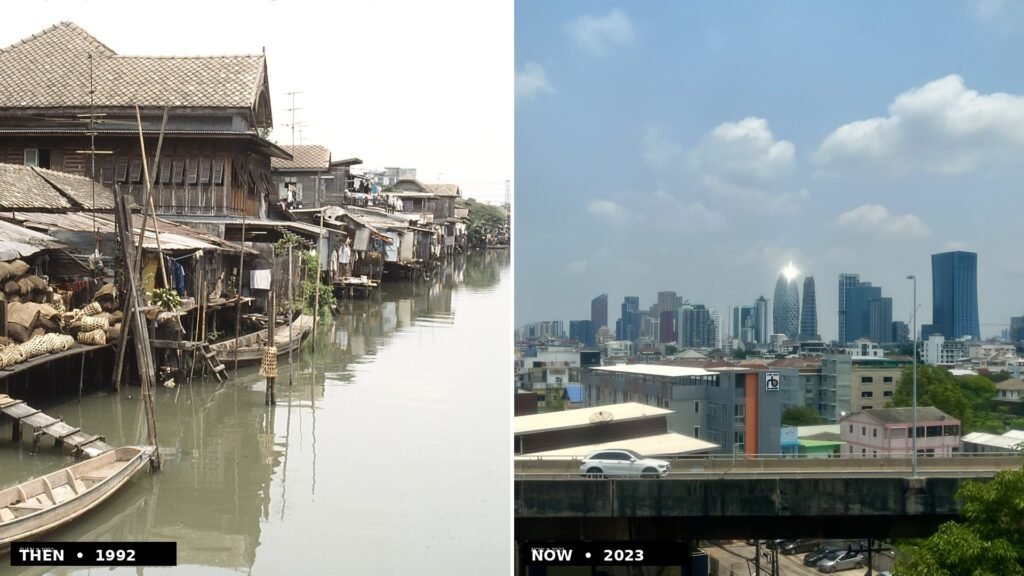
Bangkok was once called the Venice of the East. 🛶 Canals were its streets. Boats were its taxis.
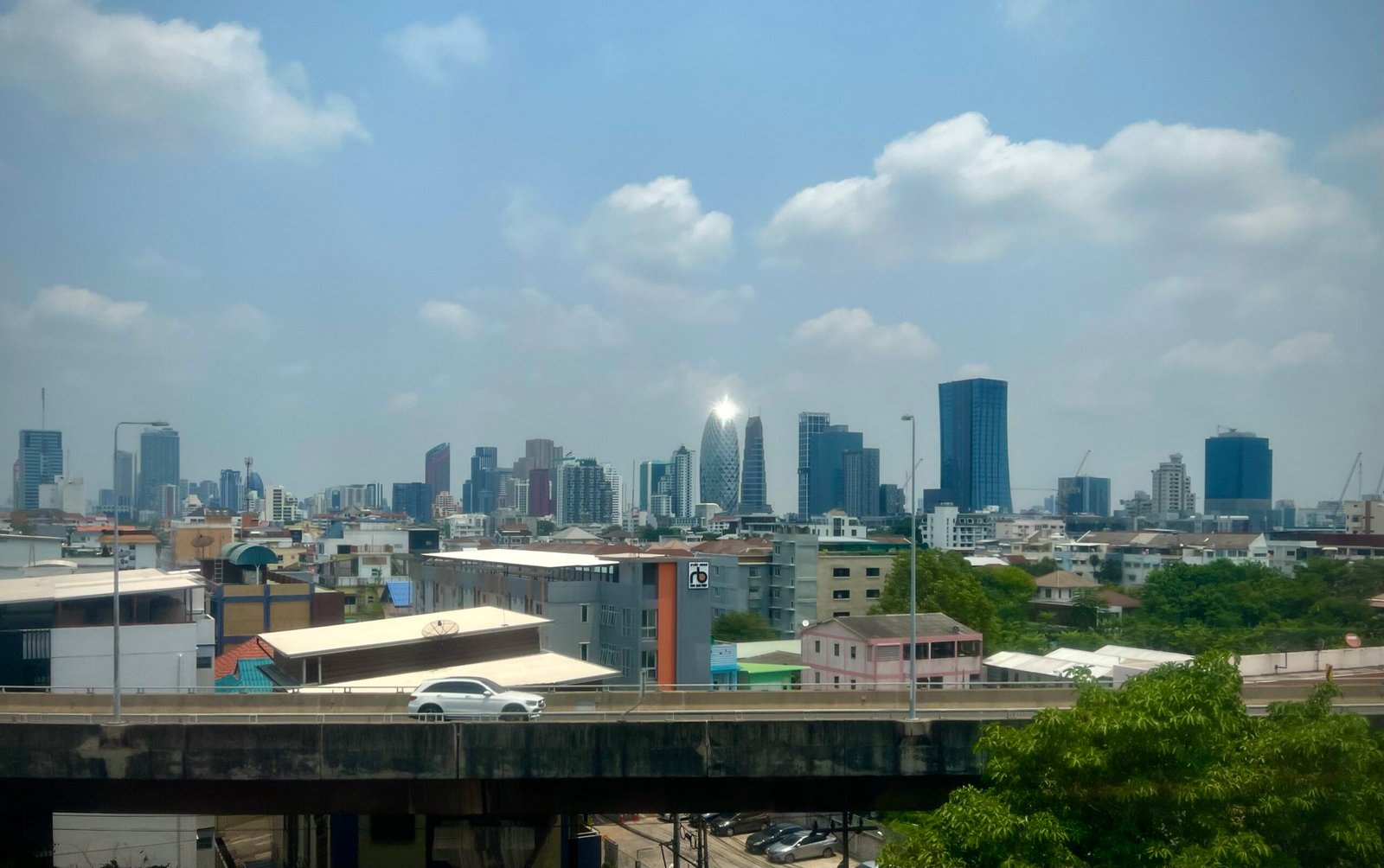
Today it is a city of skyscrapers, sky trains, and mega-malls. Yet the temples still glow gold beside the glass towers.
This is Bangkok before and after — from the 1980s to now.
Bangkok Then 🏯
Bangkok began as a small trading post in the 15th century. It sat on the Chao Phraya River, under the Ayutthaya Kingdom.
After Ayutthaya fell in 1767, King Taksin made Bangkok his capital. Then in 1782, King Rama I moved the capital across the river and founded the Rattanakosin Kingdom.
The City Pillar was raised on April 21, 1782. That date marks Bangkok’s official founding as Thailand’s capital.
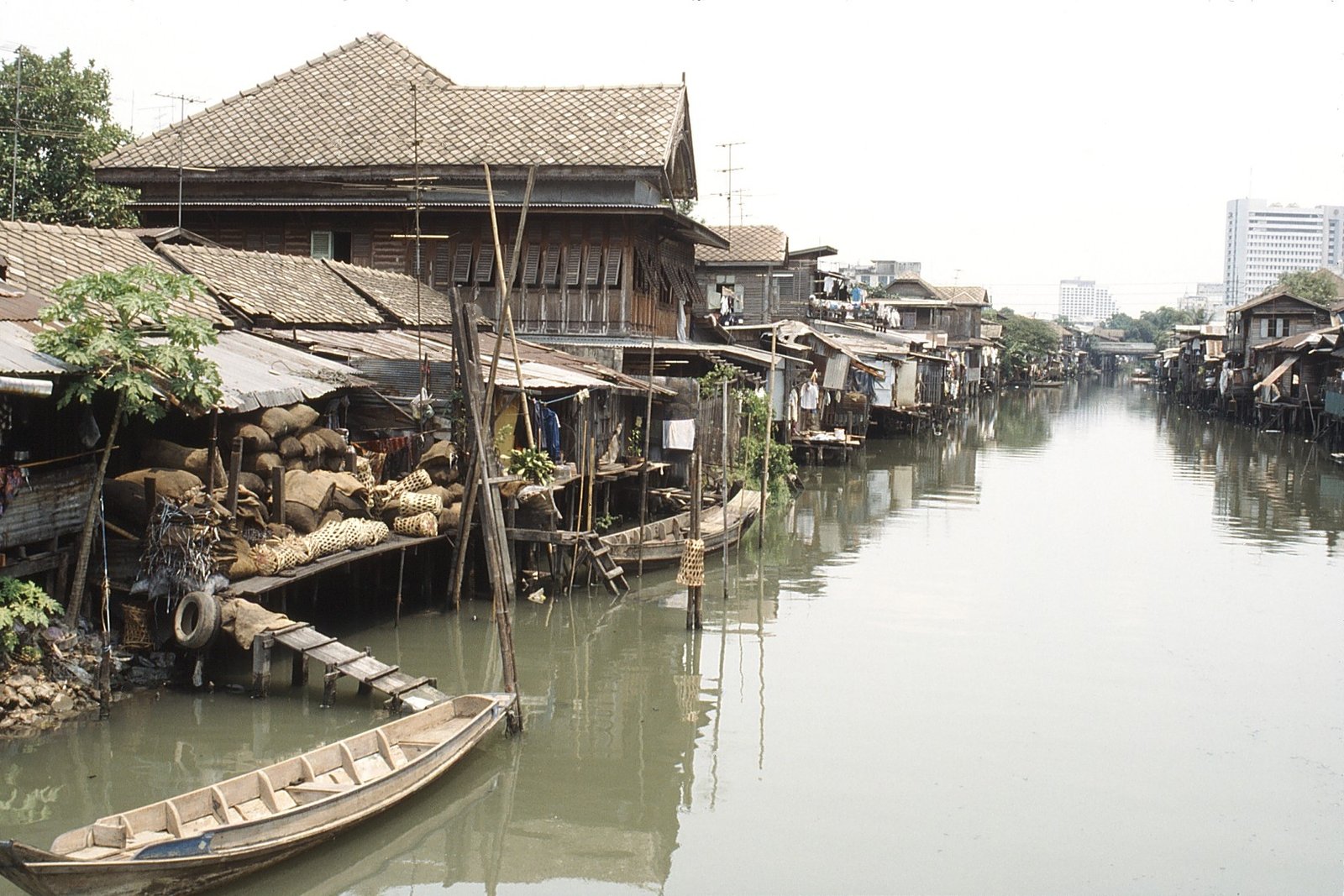
For much of its history, Bangkok was a water city. People lived along khlongs — canals. They traded from boats. They travelled by long-tail boat.
That is why visitors called it the Venice of the East. 🌊
In the 1800s, Bangkok started to change. Charoen Krung Road opened in 1861. It was the city’s first modern road.
Kings Rama IV and Rama V pushed modernisation. They brought in steam engines, railways, schools, and Western ideas.
But the old city survived. The Grand Palace stood grand. Wat Pho and Wat Arun kept their gold. Markets buzzed on the riverbanks.
The Middle: Traffic, Boom, and the Sky Train 🚇
By the 1980s, Bangkok was booming — and choking.
Cars flooded streets that were never built for them. In the mid-1980s, average traffic speed was about 20 km/h.
By 1992, it had fallen to just 6 km/h. Walking speed. People spent hours stuck in traffic jams. 😖
The city needed a new way to move. The answer came from above — and below.
On December 5, 1999, the BTS Skytrain opened. Two elevated lines crossed the city centre. For the first time, Bangkokians could glide over the traffic.
Then on July 3, 2004, the MRT Blue Line opened. It ran underground from Bang Sue to Hua Lamphong. It linked the old and new city.
Air travel changed too. On September 28, 2006, Suvarnabhumi Airport opened. It replaced old Don Mueang as the main international gateway.
The skyline kept climbing. In December 2016, King Power Mahanakhon opened. At 314.2 metres, it became Thailand’s tallest building.
Its pixel-style glass design looked like blocks cut from the tower. Locals nicknamed it the Pixel Building. 🧊
Like Shanghai, Bangkok proved an Asian city could rebuild itself in one generation. Like Seoul, it mixed old palaces with new technology.
But Bangkok kept its own flavour. Street food stalls stayed beside shopping malls. Tuk-tuks shared roads with sky trains.
Bangkok Now 🌆
Today, Bangkok is one of the world’s biggest cities. About 10 million people live in the city itself.
Its official Thai name is Krung Thep Maha Nakhon. Its full ceremonial name is one of the longest place names on Earth.
The city covers 1,568.7 square kilometres in the Chao Phraya delta. It sits about 40 km from the Gulf of Thailand.
Tourism is huge. Bangkok drew around 30 million international visitors in 2025. It ranks among the most visited cities on the planet. ✈️
What do visitors find? Temples and towers, side by side.
The Grand Palace still draws crowds. Wat Pho’s giant reclining Buddha still amazes. Wat Arun still shines across the river at sunset.
But now there are mega-malls too. ICONSIAM opened on November 9, 2018, on the Chao Phraya riverbank. It mixes luxury brands with a floating-market-style food hall.
Rooftop bars glow above Sukhumvit and Silom. The Chao Phraya ferries still run. The khlong boats still weave through canals.
Bangkok is still affordable for many travellers. Street food can cost less than a coffee back home. Hotels range from tiny guesthouses to riverside luxury.
Is it perfect? No. Traffic still jams. Air pollution still spikes. Flooding still threatens in rainy season.
But Bangkok has done what few cities manage. It became modern without erasing itself.
From canals to sky trains. From wooden boats to 314-metre towers. From the Venice of the East to a 21st-century megacity. 💪
Bangkok did not just grow. It transformed — and stayed Bangkok.
FAQs
How has Bangkok changed?
Bangkok changed from a canal city to a rail-and-skyline megacity. The BTS Skytrain opened in 1999, the MRT Blue Line in 2004, and Suvarnabhumi Airport in 2006. Skyscrapers like King Power Mahanakhon (2016) and malls like ICONSIAM (2018) reshaped the skyline — while temples, markets, and khlong boats survived.
What is Bangkok famous for?
Bangkok is famous for its temples (Grand Palace, Wat Pho, Wat Arun), street food, floating markets, Chatuchak Weekend Market, rooftop bars, and the Chao Phraya River. It mixes old Thai culture with modern shopping and nightlife.
Is Bangkok cheap or expensive?
Bangkok is generally affordable, especially for street food, local transport, and guesthouses. Luxury hotels, rooftop dining, and high-end malls cost much more. Prices vary a lot by area and style of trip.
What is Bangkok called in Thai?
Bangkok is officially called Krung Thep Maha Nakhon in Thai. Locals often shorten it to Krung Thep, which means “City of Angels.”